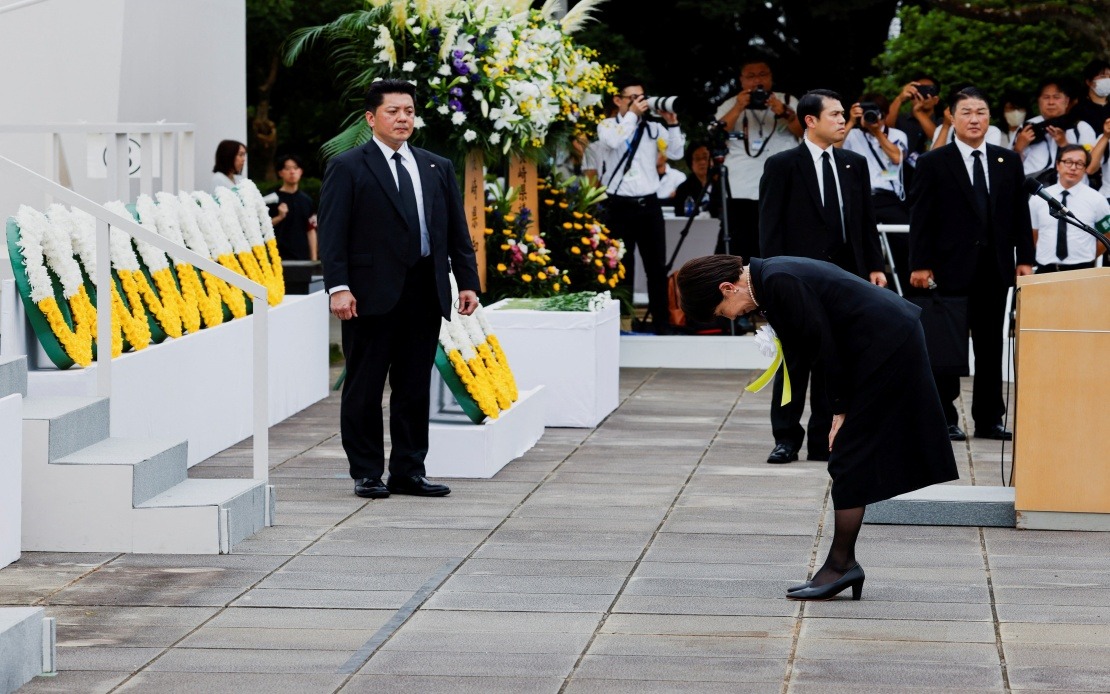
Nagasaki held solemn commemorations on Sunday to remember the devastating atomic bombing that devastated the southwestern Japanese city 81 years ago, an event that killed approximately 74,000 residents by year's end and remains humanity's last experience of nuclear warfare. The ceremony, held as international tensions over nuclear weapons continue to escalate, brought together survivors, government officials, and dignitaries to reflect on the enduring consequences of nuclear conflict and to advocate for a weapons-free future. The timing of the memorial carried particular weight given the contemporary geopolitical landscape, where several nations have renewed strategic emphasis on nuclear arsenals and the debate over nuclear deterrence has gained traction even within traditionally pacifist contexts.
The August 9, 1945 bombing of Nagasaki came merely three days after the destruction of Hiroshima, effectively bookending humanity's experience with atomic weapons in warfare. At 11:02 a.m. during the ceremony, organisers observed a moment of silence coinciding with the exact time the US B-29 bomber released its plutonium device, known as "Fat Man," across the city. This precision in commemoration underscores how deeply the attack has been embedded in Japanese collective memory, with every detail preserved as a testament to the unimaginable toll of nuclear weapons and a warning against their future use.
Mayor Shiro Suzuki used the platform to deliver an impassioned appeal to world leaders, emphasising that coexistence between humanity and nuclear weapons remains impossible. His message transcended the historical moment, speaking directly to contemporary policymakers grappling with strategic decisions about nuclear postures in response to regional tensions and rivalries. The mayor's words reflected a broader consensus among survivors and peace advocates that the lessons of 1945 must inform twenty-first century foreign policy, particularly as emerging powers and established nuclear states reconsider their strategic doctrines in light of geopolitical uncertainty.
Prime Minister Sanae Takaichi attended the ceremony and is expected to reinforce Japan's commitment to nuclear disarmament, a position that carries particular significance given recent discussions questioning Japan's adherence to its three non-nuclear principles. These foundational policies—prohibiting the production, possession, or introduction of nuclear weapons into Japanese territory—have anchored the nation's security strategy for decades. However, mounting security concerns in the Indo-Pacific region, particularly regarding China and North Korea's nuclear capabilities, have prompted some policymakers and strategists to re-examine whether these principles remain viable in contemporary circumstances.
The government's stated position remains unambiguous: Japan continues to uphold its non-nuclear principles without deviation. Prime Minister Takaichi reiterated this commitment following Hiroshima's earlier anniversary ceremony, signalling that despite internal debate, official policy will not shift toward nuclear weapons acquisition or deployment. This public reaffirmation serves multiple purposes domestically and internationally—it reassures Japan's pacifist constituencies of the government's fundamental commitments while signalling to regional partners and allies Japan's continued adherence to established frameworks.
A statement from United Nations Secretary-General António Guterres was read aloud during the ceremony, reflecting the international dimension of the Nagasaki observance. The UN's participation underscores how the atomic bombings remain central to global discussions about weapons of mass destruction, non-proliferation, and disarmament. The statement likely emphasised the organisation's ongoing efforts to prevent nuclear proliferation and advance disarmament agendas, themes that have grown more urgent as regional conflicts and superpower competition have created environments where nuclear escalation risks have risen measurably.
The timing of this year's commemoration coincided with deteriorating outcomes at the Nuclear Non-Proliferation Treaty review conference held in May. For the third consecutive five-year cycle, participating nations failed to reach consensus on a final document, an outcome that troubling observers view as symptomatic of deepening international divisions on how to manage nuclear weapons. The monthlong negotiations in New York exposed fundamental disagreements between nuclear weapons states seeking to preserve strategic flexibility and non-nuclear nations demanding accelerated disarmament commitments. This impasse directly undermines the collective non-proliferation regime that has, for five decades, served as the primary legal framework constraining nuclear weapons spread.
The hibakusha—survivors of the atomic bombings—have emerged as the human custodians of these historical lessons, and their advancing age presents an urgent challenge for memory transmission. The officially recognised survivors now average 86 years old, meaning that direct testimony to the catastrophic human consequences of nuclear warfare will increasingly become unavailable to future generations. Hibakusha and supporting organisations have accelerated efforts to document oral histories, create educational materials, and establish memorial programmes that will preserve authentic firsthand accounts of nuclear warfare's devastation long after living survivors have passed.
For Southeast Asian audiences, Nagasaki's commemoration carries particular resonance given the region's proximity to nuclear powers and its vulnerability to any regional nuclear conflict. As China advances its nuclear arsenal, North Korea's weapons programme defies international pressure, and strategic competition intensifies across the Indo-Pacific, Southeast Asian nations remain non-nuclear but acutely aware of their positioning within a nuclear-armed neighbourhood. Japan's continued adherence to non-nuclear principles, despite security pressures, offers a model that regional nations may reference as they navigate similar strategic dilemmas about security independence versus reliance on nuclear-armed allies.
The broader context of this year's anniversary involves ongoing discussions about whether international frameworks for nuclear restraint remain adequate for contemporary security challenges. North Korea's continued weapons development, Iran's nuclear programme, and doctrinal shifts among established nuclear powers have prompted a searching reassessment of whether the post-Cold War non-proliferation regime can withstand twenty-first century pressures. Nagasaki's annual commemorations serve as recurring reminders that nuclear weapons, whenever deployed or proliferated, carry consequences that transcend strategic calculations—they represent the potential destruction of entire urban populations and the psychological trauma that persists across generations.
Japan's position within this global debate remains distinctive: as the only nation to have experienced nuclear warfare, yet possessing sophisticated technical capabilities and close alliances with nuclear powers, Japan occupies a uniquely influential position in discussions about nuclear futures. The country's commitment to disarmament rhetoric combined with practical dependence on the extended nuclear deterrent provided by the United States creates inherent contradictions that policymakers and activists continuously debate. This tension shapes how Japan approaches both national security and its advocacy role within international forums addressing nuclear weapons.
The ceremony's emphasis on preventing nuclear weapons proliferation reflects recognition among Japanese policymakers that containing the nuclear club remains essential to global stability. As emerging economies develop technical capabilities and regional tensions increase access to weapons-relevant technologies, preventing new nations from crossing the nuclear threshold has assumed paramount importance. Japan, having deliberately forgone nuclear weapons despite possessing abundant technical capacity, positions itself as an advocate for this principle while simultaneously depending on nuclear extended deterrence—a paradox that animated much of Sunday's commemoration.

