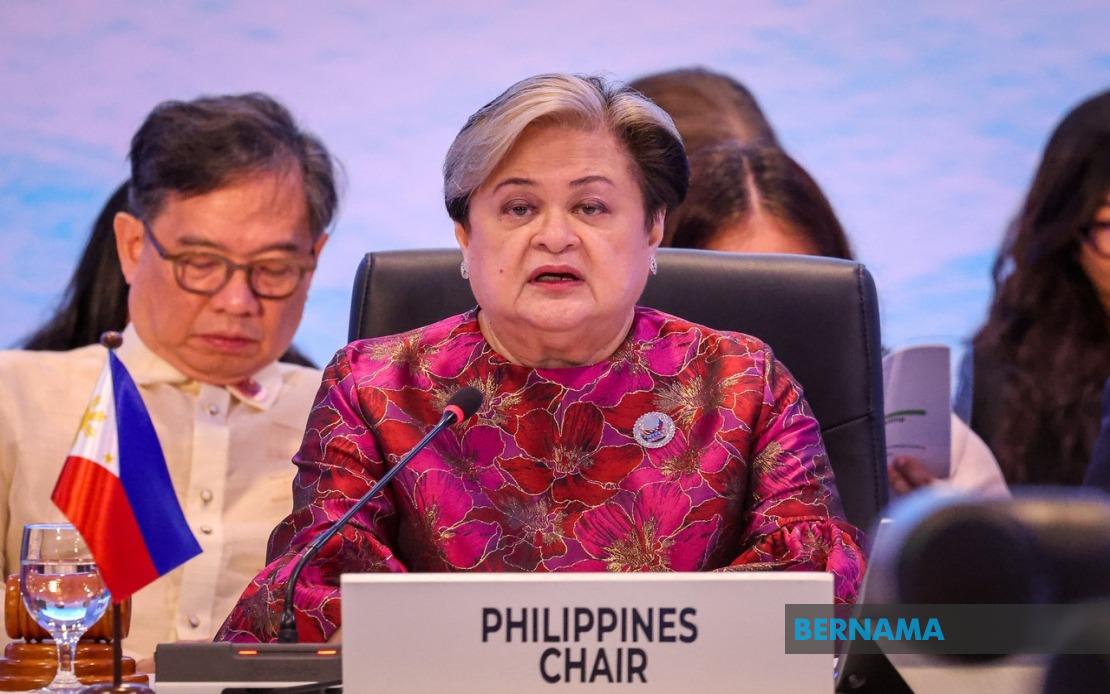
Myanmar's pathway back into the regular operations of Southeast Asia's premier multilateral organisation has hit a prolonged impasse, according to Philippine Foreign Secretary Ma. Theresa Lazaro, who stressed that Naypyidaw's commitment to agreed-upon diplomatic commitments will ultimately determine when it can resume full participation in ASEAN meetings. Speaking at a press conference following the 59th ASEAN Foreign Ministers' Meeting in Pasay City on Thursday, Lazaro underscored that fundamental questions persist regarding the Myanmar junta's adherence to the Five-Point Consensus, the regional framework that has governed ASEAN's response to the country's political turmoil since 2021.
The Five-Point Consensus, established as ASEAN's foundational approach to the Myanmar crisis, sets out clear benchmarks for stability and dialogue that the bloc expects Naypyidaw to honour. Lazaro made clear that this document remains the essential yardstick by which ASEAN evaluates progress, and that no timeline for Myanmar's restoration to the diplomatic calendar can be established until meaningful compliance materialises. Her comments reflect the cautious optimism mixed with persistent scepticism that characterises the regional bloc's engagement with Myanmar's military government, a stance rooted in repeated disappointments over the past years.
During substantive exchanges with Myanmar's foreign minister at the regional gathering, ASEAN representatives raised extensive concerns about implementation of the Five-Point framework. Lazaro acknowledged that while violations continue to surface, the bloc maintains a deliberately patient posture, avoiding confrontational stances that might further entrench positions or close off diplomatic channels. This measured approach reflects ASEAN's core philosophy of consensus-building and non-confrontation, even when dealing with governments whose actions contravene regional expectations.
Crucially, Lazaro refuted suggestions that opposition to Myanmar's participation stems from particular member-states harbouring objections to the junta's legitimacy or political composition. Rather, she framed the issue as purely performance-based, stating that restoration of Myanmar's seat at ASEAN's official table hinges entirely on demonstrable compliance with the agreed standards. This positioning allows ASEAN to maintain the fiction of collective, principle-driven decision-making while deflecting criticism from countries sympathetic to Myanmar's military leadership.
Beyond the formal diplomatic architecture, the Philippine delegation flagged humanitarian access as another critical dimension of engagement with Naypyidaw. Lazaro confirmed plans to lead a delegation into Myanmar during the fourth quarter of 2026, with the explicit aim of reaching vulnerable populations in areas administered by ethnic armed organisations. This initiative signals ASEAN's determination to support civilian welfare regardless of the political stalemate at the governmental level, a distinction that preserves engagement channels while maintaining principled distance from the junta's authority.
The humanitarian mission reflects acknowledgment that Myanmar's civilian population faces severe deprivation as a consequence of the political breakdown. Accessing communities controlled by ethnic organisations rather than the central authorities represents an implicit vote of no-confidence in the junta's willingness or capacity to facilitate international relief work. Lazaro noted that even these humanitarian activities will require formal authorisation from the military government, illustrating how deeply political fractures penetrate every dimension of engagement with Myanmar.
Coordination with the ASEAN Humanitarian Centre in Jakarta and partnerships with established international agencies including the United Nations Office for the Coordination of Humanitarian Affairs, Médecins Sans Frontières, and the World Food Programme will shape the mission's operational framework. This multi-layered institutional approach distributes responsibility across recognised humanitarian actors and provides diplomatic cover for activities that might otherwise provoke accusations of interference in Myanmar's internal affairs.
The Philippines' cautious stance reflects broader ASEAN dynamics around Myanmar, where member-states harbour divergent views about engagement strategies. While countries like Indonesia and Thailand favour gradual diplomatic opening, others question whether the junta demonstrates genuine commitment to the Five-Point framework. The repeated emphasis on compliance suggests growing frustration within ASEAN capitals at what many perceive as token gestures rather than substantive policy shifts from Naypyidaw.
For Malaysia and other Southeast Asian observers, the Myanmar impasse underscores the limitations of ASEAN's non-interference principle when confronted with humanitarian crises and regional instability. The slow-moving diplomatic machinery cannot match the urgency of conditions on the ground, where displacement, economic collapse, and violence persist regardless of ASEAN's procedural deliberations. Myanmar's isolation from regional forums, while politically meaningful, offers little concrete benefit to civilian populations caught in the ongoing conflict.
The trajectory outlined by Lazaro suggests that resolution remains years away, contingent on developments that the current junta appears unwilling to initiate. Unless Naypyidaw demonstrates significant shifts in its governance approach or its handling of democratic aspirations and opposition groups, Myanmar will likely remain suspended in a state of incomplete participation within ASEAN mechanisms. This prolonged limbo serves neither the country's reintegration nor the regional bloc's credibility as an effective force for stability and dialogue in Southeast Asia.

