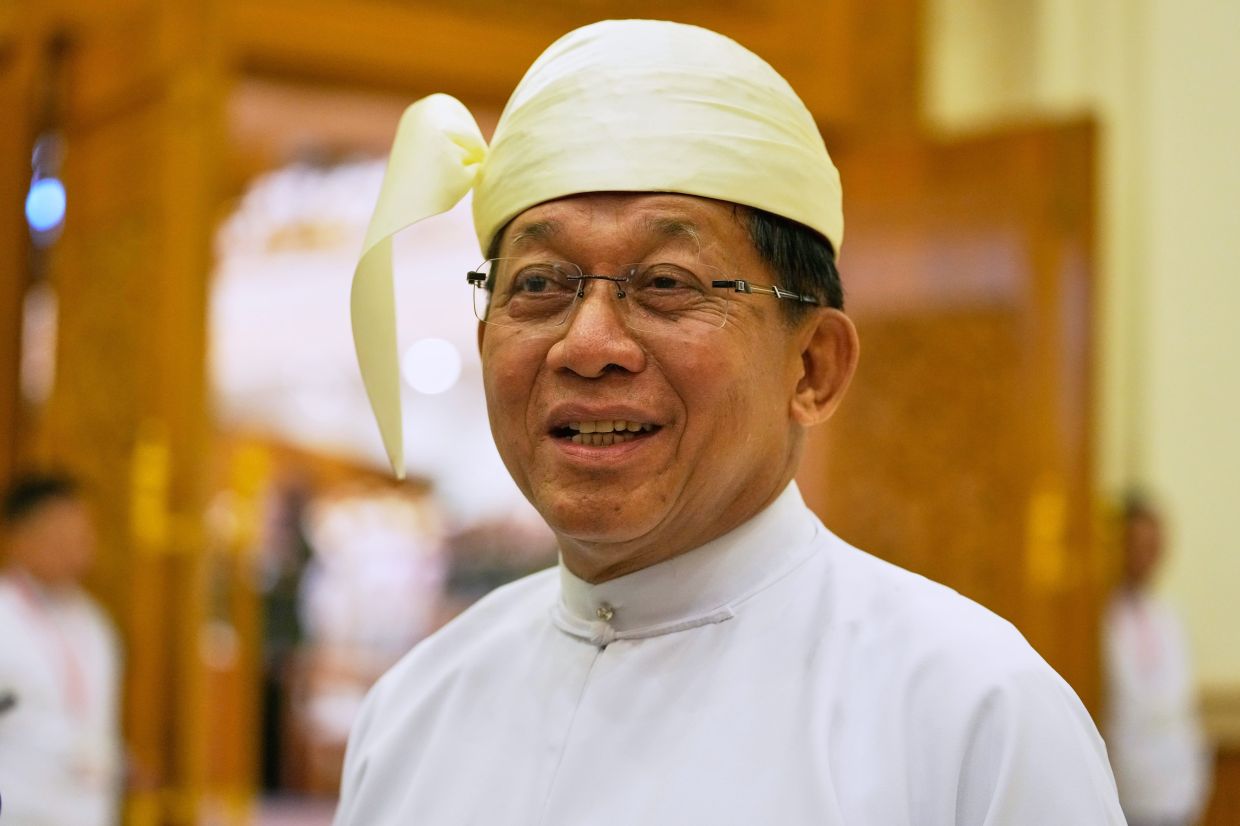
Myanmar's former junta chief Min Aung Hlaing arrived in Thailand on Thursday for his inaugural visit as civilian president, marking a significant step in his broader campaign to pull his isolated nation back into the diplomatic mainstream. The visit underscores how dramatically Myanmar's political positioning has shifted in the three years since his military coup, from pariah status to active engagement with regional capitals seeking to rebuild relationships with Naypyidaw.
Min Aung Hlaing's ascent to civilian leadership followed a 2021 military coup that deposed democratic leader Aung San Suu Kyi and unleashed a protracted civil conflict. The ensuing violence has claimed an estimated 100,000 lives across competing armed factions and the military, making it one of the region's most destabilising conflicts. Yet in April this year, he was installed as president through elections that international observers and Western democracies universally dismissed as orchestrated theatrics designed to furnish the military regime with a civilian veneer. The translation from general to civilian suit represents a calculated public relations strategy rather than any meaningful democratic transition.
Thailand's role as chief architect of Myanmar's regional rehabilitation has become increasingly central to Asean dynamics. As the bloc's current diplomatic leader on Myanmar matters, Bangkok has spearheaded efforts to bring Naypyidaw back into the fold, recognising both strategic imperatives and historical ties. The neighbouring country hosts millions of Myanmar refugees and faces constant security challenges from spillover violence along their porous border, making engagement pragmatically necessary regardless of moral considerations.
Min Aung Hlaing's diplomatic trajectory since donning civilian garb reveals the depth of international interest in rehabilitating Myanmar's image. Beyond his Thai visit, he has already travelled to India and China—securing their recognition—and to Laos, consolidating relationships with key regional actors. These moves form part of a calculated strategy to demonstrate governmental legitimacy and international acceptance before pursuing a more contested goal: Asean readmission.
Asean's position on Myanmar remains fractured, with member states divided between engagement advocates and those concerned about endorsing military rule. Myanmar's leadership has persistently rejected the bloc's "five-point consensus," a framework aimed at facilitating dialogue between all parties to end the conflict. This intransigence creates a peculiar paradox: Min Aung Hlaing wishes to be perceived as a responsible regional stakeholder while simultaneously dismissing the principal mechanism through which Asean addresses Myanmar's crisis. Myanmar specialists view this as pure status-seeking, with the junta prioritising international legitimacy over substantive peace-building.
During his Bangkok visit, Min Aung Hlaing will receive the ceremonial trappings of state recognition, including an honour guard at Government House and formal meetings with Prime Minister Anutin Charnvirakul. Beyond protocol niceties, the two governments are expected to negotiate practical arrangements, specifically a memorandum of understanding on labour cooperation. This prosaic focus on bilateral mechanics illustrates how Thailand is compartmentalising engagement—advancing concrete cooperation while carefully avoiding validation of the regime's political legitimacy.
Thailand's willingness to engage stems from acute security imperatives that transcend ideological opposition to military rule. The border region has become a nexus for transnational criminal activity, with cyberscam operations and narcotics trafficking networks exploiting Myanmar's ungoverned spaces to target Thai citizens and regional neighbours. During Min Aung Hlaing's visit, Thailand's Foreign Minister Sihasak Phuangketkeow plans to press Naypyidaw on combating these scam networks, linking diplomatic normalisation to tangible security cooperation. For Bangkok, engagement offers leverage to address these challenges where isolation would guarantee continued vulnerability.
The refugee crisis adds another layer of complexity to Thai-Myanmar relations. Thailand currently hosts approximately two million Myanmar nationals, ranging from recognised refugee camp populations to undocumented workers integrated into Thai society. The ongoing conflict perpetuates population movements and humanitarian costs, creating pressure on Thai infrastructure and resources. Normalisation of relations, coupled with dialogue on ceasefire agreements, offers theoretical pathways to reducing displacement pressures, though Min Aung Hlaing's rejection of inclusive peace mechanisms undermines such hopes.
International observers remain deeply sceptical of Min Aung Hlaing's transformation narrative. The International Criminal Court has issued arrest warrants for crimes against humanity, and multiple Western nations maintain sanctions. Human rights organisations note that civilian dress disguises fundamentally unchanged military control structures. Yet from Beijing, New Delhi, and now Bangkok's perspective, engaging with the status quo represents strategic rationality—acknowledging that immediate removal of Myanmar's military leadership appears unfeasible and that practical cooperation on shared challenges offers more realistic returns than isolation.
Significantly, recent developments suggest marginal shifts in Myanmar's stance. Aung San Suu Kyi, who has remained under house arrest since the coup, was permitted to meet an International Committee of the Red Cross representative, marking her first documented encounter with a foreign official since her detention. While this gesture remains strictly controlled and staged, it indicates potential openness to international scrutiny, possibly reflecting diplomatic pressure from countries like Thailand engaged in constructive engagement.
Asean's prospective reintegration of Myanmar would theoretically unlocking pathways to broader international normalisation, with Western countries potentially softening positions if the bloc collectively endorsed Myanmar's membership. However, analysts argue this carries less strategic weight than Min Aung Hlaing supposes. Recognition from India, China, Russia, and Thailand already provides Myanmar with essential diplomatic and economic oxygen, rendering Asean readmission as desirable prestige rather than structural necessity.
The deeper stakes of Min Aung Hlaing's Thai visit thus extend beyond bilateral mechanics. His diplomatic campaign tests whether international accommodation of military rule—anchored on pragmatic security arguments and engagement logic—can succeed despite fundamental democratic deficits. For Malaysian and Southeast Asian observers, the question remains whether regional stability through pragmatic engagement with authoritarian actors represents prudent statecraft or dangerous precedent-setting that weakens collective commitments to democratic governance.
Thailand's approach, mirroring positions adopted by Vietnam and other Asean members, reflects a deliberate calculus: maintaining diplomatic channels, addressing immediate security concerns, and pursuing bilateral interests while declining to formally validate or legitimise the military regime. Whether this measured engagement strategy ultimately contributes to Myanmar's political transformation or simply props up military rule remains the fundamental strategic uncertainty shaping regional dynamics.

