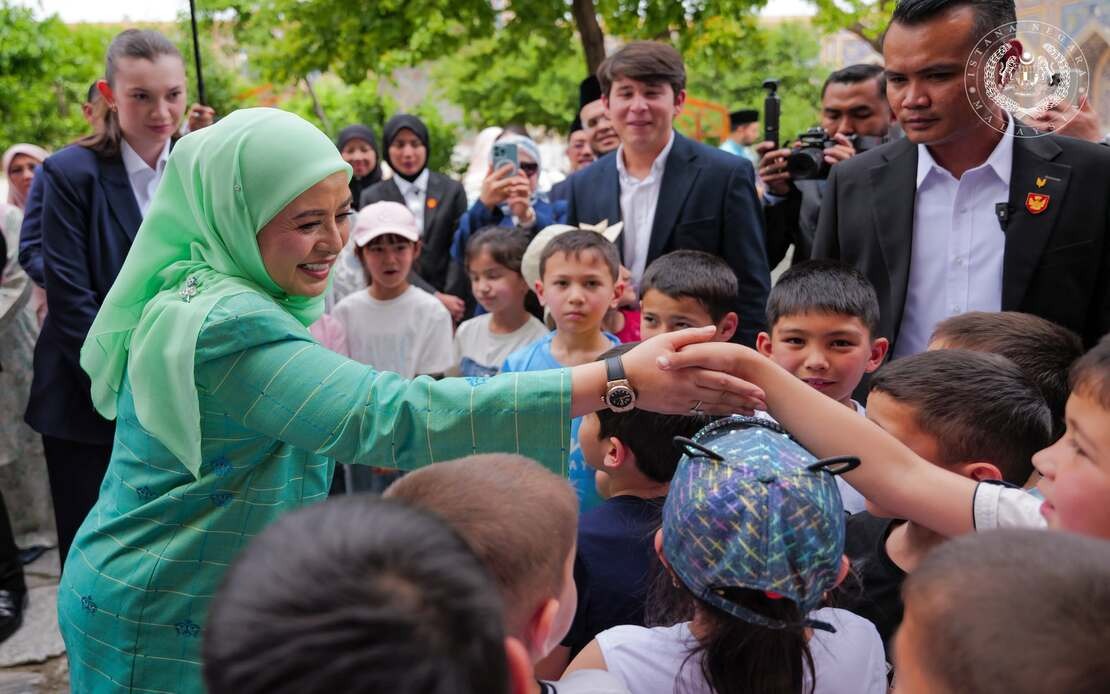
Queen Raja Zarith Sofiah of Malaysia has underscored the critical importance of mutual respect as a bedrock principle sustaining the nation's social cohesion and national well-being. Speaking through an official statement posted on the Facebook page of Sultan Ibrahim Sultan Iskandar, Her Majesty reflected on values that have long anchored Malaysia's multicultural identity, positioning respect and courtesy as essential elements that bind Malaysians across diverse communities.
The Queen's remarks come at a time when societies across the region grapple with rising polarisation and fractious social discourse. Her emphasis on foundational virtues speaks to a broader concern about maintaining the interpersonal bonds that enable pluralistic nations to function effectively. In Malaysia's context, where citizens of different faiths, ethnic backgrounds, and cultures coexist within a single polity, the articulation of these principles from the highest levels carries particular resonance and authority.
Central to Her Majesty's message was an Islamic teaching that she drew upon to reinforce her point. She recalled a hadith transmitted through the authoritative collection of Al-Bukhari, in which the Prophet Muhammad articulated a principle encompassing three dimensions of ethical conduct. The teaching, narrated by Abu Hurairah RA, establishes that genuine faith necessitates refraining from harming one's neighbours, honouring guests, and maintaining constructive speech—or observing silence when words might cause harm. This formulation bridges personal conduct with social responsibility, suggesting that respect operates at multiple levels simultaneously: in household relations, in the reception of visitors, and in public communication.
The hadith itself carries profound implications for contemporary Malaysian society. The injunction against harming one's neighbour transcends mere physical safety, encompassing respect for dignity, property, and wellbeing. The imperative to honour guests reflects a cultural value deeply embedded in Malaysian tradition across various communities, promoting hospitality as a marker of civilisation. The counsel regarding speech—either speaking good or remaining silent—offers a practical framework for social media age discourse, where unfiltered commentary frequently damages social cohesion without advancing substantive conversation.
Her Majesty grounded these abstract principles in concrete action, recalling an encounter from February when she welcomed over one hundred international tourists at the main entrance of Istana Negara. The interaction illustrated her personal commitment to the values she advocated, demonstrating that graciousness toward visitors represents not merely protocol but an expression of national character. The episode conveyed Malaysia's openness to the world while simultaneously modelling the courteous treatment of outsiders that the Queen advocated.
This gesture holds significance beyond mere ceremonial function. Tourism represents a vital economic sector for Malaysia, generating substantial foreign exchange and employment. When the nation's highest figures personally embody warm reception toward visitors, the message reverberates through government agencies and hospitality sectors, establishing tone for how Malaysia presents itself globally. The Queen's warm interaction with diverse international guests simultaneously reinforces Malaysia's brand as a welcoming destination and demonstrates the practical application of the mutual respect doctrine in cross-cultural contexts.
The Queen's intervention in this discourse also carries symbolic weight regarding religious leadership and values education. By explicitly drawing on Islamic teachings—the hadith tradition that constitutes a fundamental corpus within Islamic jurisprudence—while articulating principles with universal application, Her Majesty positioned religion as a resource for social harmony rather than division. This represents a deliberate articulation that Islam, as practised and understood in Malaysia, emphasises ethical obligations toward all persons regardless of their own faith commitments.
For Malaysian readers, particularly those engaged in public life, commerce, or governance, the Queen's remarks offer a timely reminder that short-term advantage gained through discourtesy or disrespect generates long-term social costs. The fragmentation of discourse, the erosion of institutional trust, and the polarisation observable in neighbouring countries and globally demonstrate the cumulative damage wrought when mutual respect dissolves. Malaysia's relative stability compared to several regional peers owes substantially to mechanisms of restraint and consideration that have historically characterised Malaysian public culture.
The statement also addresses itself specifically to Muslim Malaysians, acknowledging the religious leadership's responsibility in promoting ethical behaviour rooted in Islamic tradition. This targeted appeal suggests recognition that religious communities, when mobilised around shared values, can serve as vectors for social cohesion. The strategy of anchoring calls for national unity in religious principle rather than secular nationalism represents a pragmatic approach suited to Malaysia's particular composition and historical experience.
Looking forward, the Queen's emphasis on mutual respect and the specific invocation of Islamic teachings provide resources for addressing contemporary challenges. As Malaysia navigates the pressures of rapid economic transformation, digital disruption, and shifting regional dynamics, the foundational principles Her Majesty articulated remain relevant. They offer a framework for managing diversity, promoting inclusive governance, and building resilience against sectarian or ethnic conflict.
The articulation of these values from the institution of the monarchy carries institutional weight that transcends individual opinion. The monarchy in Malaysia functions partly as guardian of national values and constitutional principle, lending her remarks particular authority. When Her Majesty speaks of mutual respect as a foundation of harmony, she speaks from a position embedded within the constitutional and symbolic architecture of the state.
For Southeast Asian observers, Malaysia's continued emphasis on these integrative principles offers a model for societies navigating similar challenges of managing diverse populations and promoting social harmony. The region's trajectory will depend substantially on whether nations succeed in maintaining respect across lines of difference, and whether leadership articulates and models the virtues necessary for that maintenance. The Queen's remarks contribute to that ongoing effort, reminding Malaysians of the values upon which their national project depends.

