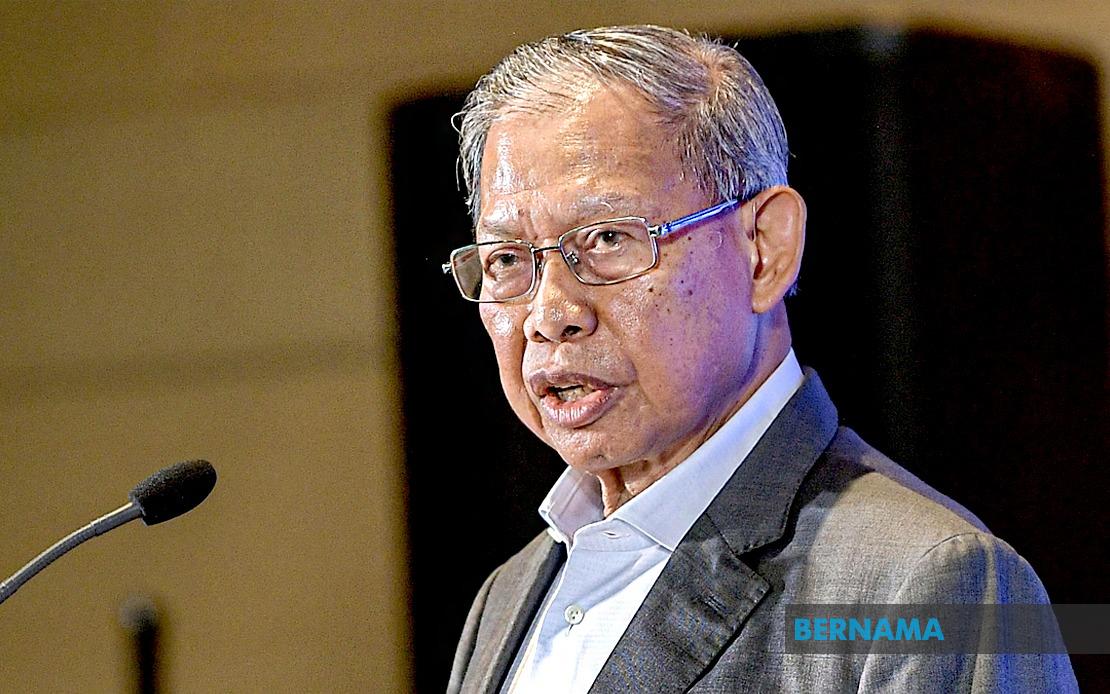
Datuk Seri Mustapa Mohamed, the seasoned politician who once served as Minister of International Trade and Industry, has decisively closed the door on any electoral ambitions in the 16th General Election, signalling a generational shift within UMNO. Speaking at a "Welcome Home" event and Independence Month celebration organised by the Council of Former Kelantan Elected Representatives in Pasir Mas, the 76-year-old former Jeli Member of Parliament made clear that his advancing years and diminishing physical capacity make it inappropriate for him to seek another term.
Mustapa's reaffirmation carries particular weight given his recent political journey. After departing UMNO in September 2018 to join Bersatu during a period of significant turbulence within the coalition landscape, he made a decisive return to UMNO in June this year. His homecoming was interpreted by party observers as a strategic move to reinforce UMNO's bench strength, yet his current stance suggests he views his role differently. Rather than seeking electoral validation, he has positioned himself as a custodian of institutional knowledge and a mentor figure.
The former trade minister articulated his reasoning with candour, acknowledging that advancing age naturally diminishes physical stamina required for electoral campaigning. "I am now 76 years old, and my gait is no longer steady," he explained to assembled journalists, emphasising that it would be inequitable for any political party to deny younger cadres their rightful opportunity to emerge and assume leadership responsibilities. This perspective reflects a broader recognition within mature political establishments that generational renewal is not merely a slogan but an operational necessity for sustained organisational vitality.
Mustapa's comments acquire additional significance within the Malaysian political context, where senior politicians frequently extend their electoral involvement into their seventies and beyond. His willingness to step aside sends a clear signal that merit and capability should determine candidacy rather than longevity or accumulated influence. For UMNO, rebuilding its electoral fortunes after the 2022 general election setbacks requires precisely this kind of calculated repositioning—making space for emerging figures while retaining the strategic counsel of experienced practitioners.
However, Mustapa was equally emphatic that his withdrawal from electoral competition does not constitute a departure from active political engagement. He articulated a commitment to bolstering UMNO's organisational capacity through non-electoral channels, emphasising his intention to share accumulated experience, strategic perspectives, and operational insights with younger party colleagues. This repositioning reflects a more nuanced understanding of political influence: recognising that direct electoral participation is not the only, or necessarily the most effective, mechanism through which experienced politicians can shape their party's trajectory.
The veteran politician outlined an expanded portfolio of contributions aimed at strengthening UMNO's institutional foundations. Beyond party-specific activities, he indicated his intention to leverage academic platforms as vehicles for knowledge transmission, envisioning himself as a contributor to public and private higher education institutions where he could engage with student populations and share both practical political experience and theoretical frameworks. This emphasis on educational engagement suggests a longer-term vision of influencing Malaysian political culture beyond the immediate electoral cycle.
Mustapa's stance also reflects pragmatic recognition of the Malaysian electorate's evolving expectations. Younger voters, who comprise an increasingly significant portion of the electoral base, have demonstrated receptiveness to candidates who represent generational change and fresh perspectives rather than recycled faces from previous political eras. By voluntarily stepping aside, senior figures like Mustapa facilitate the emergence of candidates whose demographic profiles align more closely with contemporary voter aspirations, potentially strengthening UMNO's competitive position in marginal constituencies.
The timing of his announcement, delivered during Independence Month celebrations, carries symbolic weight. By framing his withdrawal within a narrative of national renewal and intergenerational responsibility, Mustapa positioned his personal political decision as aligned with broader Malaysian development trajectories. This rhetorical framework suggests that generational leadership transitions are not merely internal party management issues but reflect fundamental principles about institutional sustainability and national progress.
Within UMNO specifically, Mustapa's statements may influence broader party dynamics surrounding candidate selection for GE16. His explicit endorsement of younger leadership aspirations could embolden party divisions advocating for genuine generational renewal, potentially creating pressure on party leadership to implement more substantive mechanisms for youth advancement rather than maintaining symbolic gestures. The contrast between his willingness to step aside and the behaviour of other senior politicians may intensify internal discussions about optimal succession strategies.
For Malaysian politics more broadly, the significance extends beyond UMNO's internal calculations. If Mustapa's principled stance gains traction within other major political organisations, it could establish precedent-setting expectations regarding the appropriate age profiles for electoral candidates. This would align Malaysian political practice more closely with international democratic norms emphasising deliberate generational succession planning rather than the ad hoc, personality-driven transitions that have historically characterised the region's political systems.
Mustapa's explicit articulation that he remains committed to Malaysia's developmental trajectory, regardless of whether he contests elections, underscores an important distinction: retirement from electoral politics does not necessitate withdrawal from political engagement or national contribution. His intended focus on mentoring, strategic guidance, and educational activities represents a different, potentially more sustainable model of elder statesman engagement. For younger UMNO aspirants, his willingness to serve as an adviser and knowledge source could prove invaluable as they navigate the considerable complexities of Malaysian electoral politics and party management.

