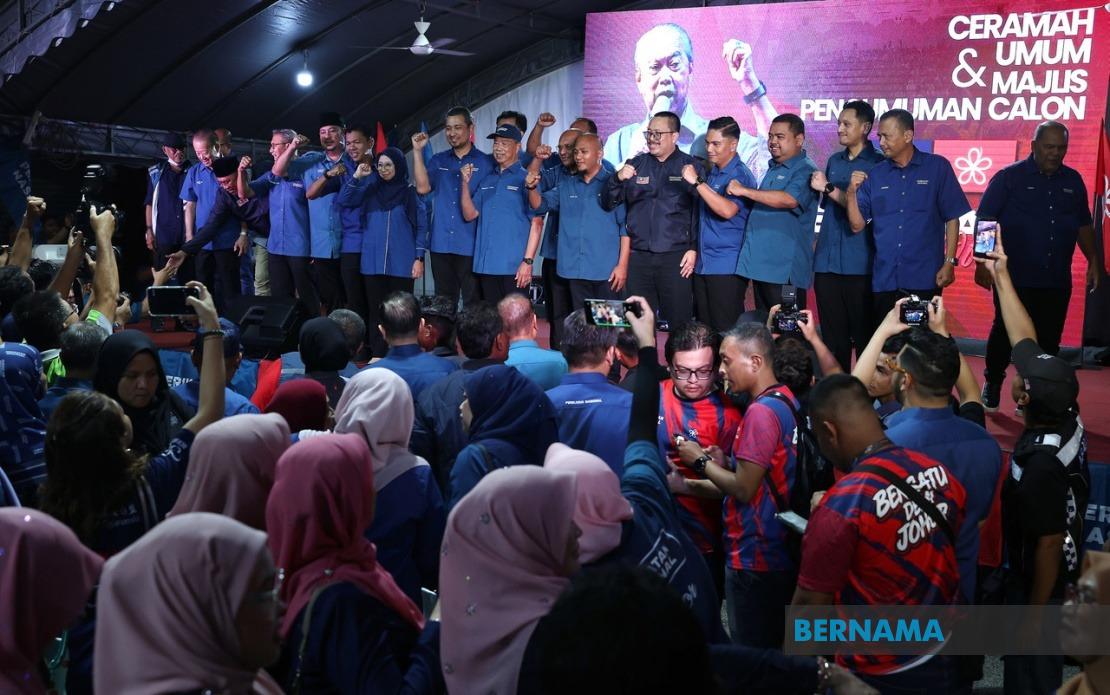
Tan Sri Muhyiddin Yassin, president of Parti Pribumi Bersatu Malaysia, has formally announced the party's 16-candidate slate for the 16th Johor State Election during a public event held at the Pagoh Parliamentary Service Centre in Taman Pagoh Jaya. The announcement marks a significant step in Bersatu's participation in what is expected to be a closely watched state-level contest in Malaysia's second-largest economy by output.
The timing of the candidate announcement comes as the state election machinery moves into high gear. The Election Commission has designated June 27 as nomination day, giving registered parties and independent candidates three days to formally submit their candidacies before the electoral process advances to the polling phase. This compressed timeline reflects the accelerated schedule established following the dissolution of the Johor State Assembly on June 1, which triggered the need for fresh elections across all 56 state seats.
With polling scheduled for July 11, voters will have approximately two weeks from nomination day to engage with candidates and make their electoral decisions. The July 11 polling date sets the stage for a decisive moment in Johor politics, where the outcome will have implications beyond the state itself. Johor remains a crucial battleground in Malaysian electoral politics, given its size, demographic diversity, and historical importance as a bastion of UMNO support, though recent electoral cycles have demonstrated growing competition from opposition and alternative coalition partners.
Bersatu's decision to contest 16 seats represents a measured approach to the election, suggesting the party is targeting constituencies where it believes it has competitive advantages or existing organizational strength. The inclusion of Bukit Pasir as a contested seat, with Mohd Idzharruddin Mohd Nasirruddin as the designated candidate, demonstrates the party's strategic focus on constituencies within its traditional areas of influence. This selective participation strategy is characteristic of Bersatu's approach in state elections, where it often acts as part of broader political coalitions rather than mounting a comprehensive challenge across all available seats.
The Johor State Election carries particular significance for Bersatu's political standing within Malaysia's broader coalition dynamics. The party's performance in Johor will provide important indicators of its electoral viability and grassroots support, especially as Malaysian politics continues to navigate post-2022 realignments. Bersatu's presence in the contest also reflects the complex negotiations that occur between coalition partners regarding seat allocation and candidate selection, with the 16-seat allocation likely representing a negotiated outcome rather than an arbitrary decision.
For Malaysian voters and political observers, the Johor election serves as a barometer of sentiment toward various political blocs competing for power at the state level. The composition of Bersatu's candidate list, encompassing individuals from different backgrounds and constituencies, may reveal the party's strategic priorities regarding demographic representation and geographic reach. These decisions often reflect broader party calculations about which constituencies offer the best prospects for either consolidating support or expanding into new areas.
The public ceramah element of the announcement event underscores Bersatu's emphasis on direct engagement with voters and grassroots mobilization. By unveiling candidates in a public setting rather than through purely administrative channels, the party signals its commitment to transparency and attempts to generate momentum among party members and sympathetic voters. Such events typically serve multiple functions, including candidate introduction, policy messaging, and organizational activation in the lead-up to nomination day.
Bersatu's participation in the Johor election occurs within a broader context of Malaysian politics where state elections have assumed heightened importance. The fragmentation of the political landscape following the 2022 general election has elevated the role of state-level contests as venues where smaller parties can demonstrate relevance and build political capital. For Bersatu specifically, strong performance in state elections like Johor can strengthen its negotiating position within whatever political coalition it aligns with ahead of the next federal general election.
The three-day period between nomination and polling will be critical for campaign execution. Candidates will need to rapidly establish voter contact programs, clarify policy positions, and address local concerns that dominate electoral discourse in individual constituencies. The compressed campaign timeline favors parties with existing organizational infrastructure and established candidate profiles, potentially advantaging Bersatu if its selected candidates possess strong local roots or previous electoral experience.
As Johor moves toward its election date, the state's outcome will be closely monitored by political analysts and coalition leaders nationwide. The performance of Bersatu's 16 candidates will contribute to the broader narrative surrounding the party's trajectory and its role in Malaysian politics going forward. Whether the party emerges as a significant force in the new Johor State Assembly will depend not only on campaign effectiveness but also on broader electoral currents affecting voter sentiment across all competing political organizations vying for support.

