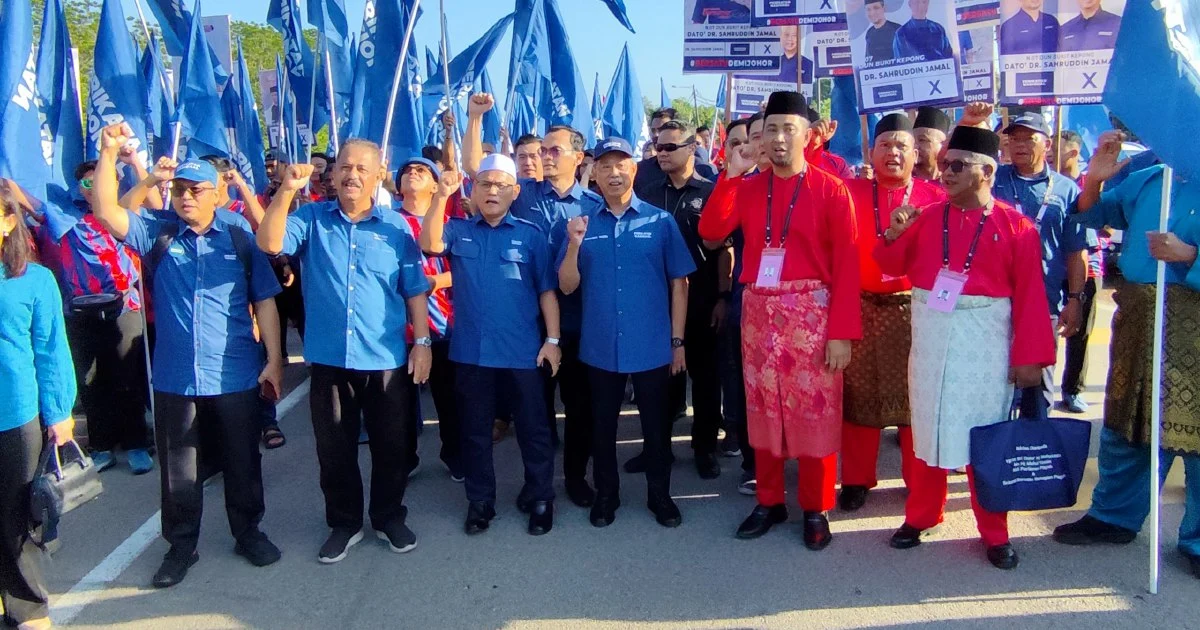
The Johor state election campaign gained momentum when Bersatu president Tan Sri Muhyiddin Yassin made a high-profile appearance at the nomination centre in Pagoh, arriving at 8.45 am at the Pagoh Sports Complex Hall. His presence at the event underscored the party's commitment to the race in Bukit Kepong, one of several seats Bersatu is contesting in the upcoming state elections. The timing and visibility of Muhyiddin's attendance signals a coordinated political strategy by the party to energise its grassroots support and demonstrate organisational confidence heading into the polling phase.
The Bukit Kepong constituency holds particular significance within Johor's political landscape. Situated in the heartland of one of Malaysia's most politically competitive states, the seat represents a test of Bersatu's ground strength following the party's repositioning within the broader ruling coalition. The nomination process, which culminates in the official campaign period, has become a showcase for party machinery and voter mobilisation efforts. By flanking his candidate during this critical juncture, Muhyiddin publicly reinforced Bersatu's investment in winning this territory.
Muhyiddin's political profile carries considerable weight in Johor politics. His long tenure in state and national politics, combined with his current position as Bersatu president, makes his campaign appearances strategically valuable for elevating candidate visibility and lending authority to the party's electoral prospects. For many grassroots party members and local voters, witnessing the party president's direct involvement at nomination events conveys a message of seriousness about contest outcomes and resource allocation.
The Johor state elections themselves represent a significant electoral moment for Malaysia's political landscape. As one of the nation's largest states by population and economic output, Johor's voting patterns often provide insights into broader shifts in public sentiment. The state has traditionally alternated between different political coalitions, and recent years have seen considerable realignment as parties recalibrate their strategies and alliances. Bersatu's performance in Johor will offer clues about the party's electoral viability at the state level and its standing within its broader political partnership.
Bersatu's positioning ahead of these elections reflects the party's evolution since its formation. As a relative newcomer to Malaysia's political firmament—having been established only a few years ago—the party has worked to establish itself as a credible electoral force while managing its relationships with longstanding coalition partners. The party's decision to field candidates in multiple Johor seats demonstrates its ambition to expand beyond its initial strongholds and contest for greater legislative representation.
The nomination process itself carries important procedural and symbolic weight in Malaysian electoral campaigns. It represents the formal launch of each candidate's campaign machinery and provides the first major public opportunity for parties to demonstrate their organisational capabilities. Crowds, speeches, and the presence of senior party figures at nomination centres create the political theatre through which candidates build momentum. For Sahruddin and other Bukit Kepong contenders, the nomination event marks the transition from internal party selection processes to direct public campaigning.
Campaign visibility during this period proves consequential for several reasons. Voters in Bukit Kepong and across Johor will be assessing not merely individual candidates but also the broader party machinery behind them. The appearance of senior figures like Muhyiddin helps frame a candidate as being backed by established political structures and resources. This becomes particularly important for younger or less-known candidates seeking to build credibility among sceptical voters or those accustomed to longer-serving representatives.
The Johor electoral cycle also reflects broader patterns of competition affecting Malaysian politics. Multiple parties across the political spectrum are fielding candidates in the state, creating a genuinely competitive environment in numerous constituencies. This multiplicity means that no single party can take victory for granted, regardless of historical patterns or perceived strengths. Bersatu's efforts to put its leadership visibly behind candidates therefore address the realistic challenge that even well-resourced campaigns require sustained momentum and clear messaging.
For Malaysian observers and analysts tracking political developments, the Johor elections serve as a crucial barometer of coalition stability and voter preferences. The presence of Muhyiddin alongside Sahruddin exemplifies how parties attempt to manage these elections through coordinated strategies involving senior leadership. The weeks ahead will determine whether such efforts translate into electoral success, but the groundwork being laid during nomination events establishes the foundation upon which campaigns will build in the coming weeks.

