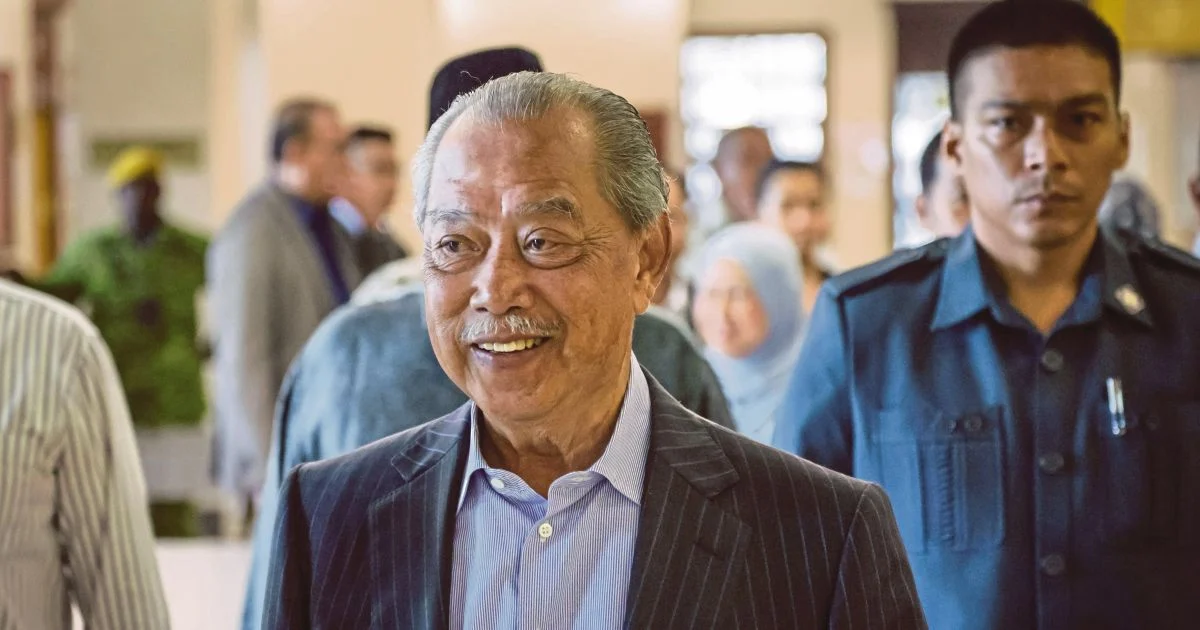
Bersatu president Tan Sri Muhyiddin Yassin has signalled optimism that Perikatan Nasional retains a realistic pathway to govern Johor, despite the opposition coalition's decision to contest only 33 seats in the upcoming state election. The remarks, made in Pagoh, underscore PN's strategic calculation that quality of candidate placement and voter sentiment in specific constituencies may outweigh numerical disadvantage on the ballot.
The decision to field a limited slate of candidates represents a notable tactical shift for PN, which must now focus its organisational resources and campaign momentum on carefully selected battlegrounds. This concentrated approach mirrors strategies employed in other regional contests where opposition coalitions have prioritised electoral efficiency over blanket participation. For Malaysian political observers, the move signals PN's confidence in its ground machinery and suggests confidence in opinion polling showing competitive races in key constituencies.
Johor's political landscape has undergone substantial transformation in recent years. The state, traditionally a powerhouse for the ruling federal coalition, has seen rising dissatisfaction with governance and economic management. PN's limited candidate pool places particular emphasis on selecting representatives with strong local credibility and independent followings capable of mobilising voters without reliance on broader party infrastructure. Muhyiddin's assertion that fewer candidates can still produce a winning coalition indicates the party believes it can convert strong performance in targeted seats into sufficient legislative numbers to claim the mandate to form government.
The mechanics of state politics in Johor add complexity to PN's calculation. Independent candidates, cross-party negotiations, and post-election coalition mathematics often determine which faction commands the statehouse. Malaysia's political environment has normalised the concept of governments forming through arrangements negotiated after voting concludes rather than through simple majority wins. PN's confidence may rest partly on expectations that supportive independent candidates or defections from rival coalitions could supplement its legislative base following polling day.
For Southeast Asia's broader political context, Johor's election matters significantly. As Malaysia's second-most economically important state and a region with substantial cross-border economic ties to Singapore, governance effectiveness in Johor influences investor confidence and regional stability. PN's ability to translate limited candidate numbers into electoral success would validate its claim as a viable governing force capable of competing with the long-entrenched ruling coalition in major state contests.
Muhyiddin's confidence also reflects Bersatu's own organisational evolution. The party, which emerged from turmoil within UMNO and has navigated multiple coalition configurations, has progressively refined its campaign capabilities. The decision to concentrate resources on 33 seats rather than contest comprehensively suggests leadership belief in sophisticated data analytics and voter profiling that allows identification of winnable constituencies. This represents evolution from older Malaysian political practice of automatic, statewide saturation candidacy.
The state election arrives amid broader shifts in Malaysian electoral behaviour. Urban voters increasingly split tickets across party lines, and rural constituencies display less monolithic voting patterns than historical norms. These dynamics potentially favour a focused opposition campaign that can dominate specific districts rather than a spread-thin incumbency dependent on loyalty voting. PN's approach seems calibrated to exploit these changing electoral realities.
However, significant obstacles confront the opposition coalition's ambitions. The ruling federal government controls substantial state administration apparatus and resources that typically confer electoral advantages. Established machinery, administrative capacity, and the credibility gap between incumbent performance and opposition promises remain formidable barriers. PN's limited seat contestation simultaneously reduces its ability to construct visible presence across the state and may disadvantage grassroots volunteers seeking campaign roles.
Muhyiddin's remarks require scrutiny regarding the actual mathematical pathway to government. With 56 seats comprising the Johor state assembly, 33 candidates represents barely 59 per cent participation. Even should PN capture all contested seats, it would need substantial support from independent victors or defecting members to reach the 29-seat majority required to command government. This dependency on post-election arithmetic introduces uncertainty that contrasts with normal majority-seeking strategies.
The confidence expressed by PN's leadership may also serve psychological functions beyond literal electoral mechanics. Public assertion of victory prospects influences media coverage, volunteer enthusiasm, and voter perception of momentum. In competitive elections, campaigns often become self-fulfilling prophecies wherein apparent frontrunner status generates coverage and enthusiasm that translates to votes. PN's optimism, even when mathematically constrained, constructs narrative momentum beneficial to mobilising supporters.
For Malaysian political analysts and international observers, Johor's election outcome will provide crucial signals regarding whether Malaysia's opposition coalitions have evolved sufficient sophistication to compete effectively against entrenched incumbents. PN's willingness to stake significant political capital on a limited-seat strategy, championed publicly by its leader, suggests the coalition calculates meaningful probability of success. Whether that confidence reflects genuine voter preference or overconfident leadership will become apparent when Johor voters exercise their franchise.

