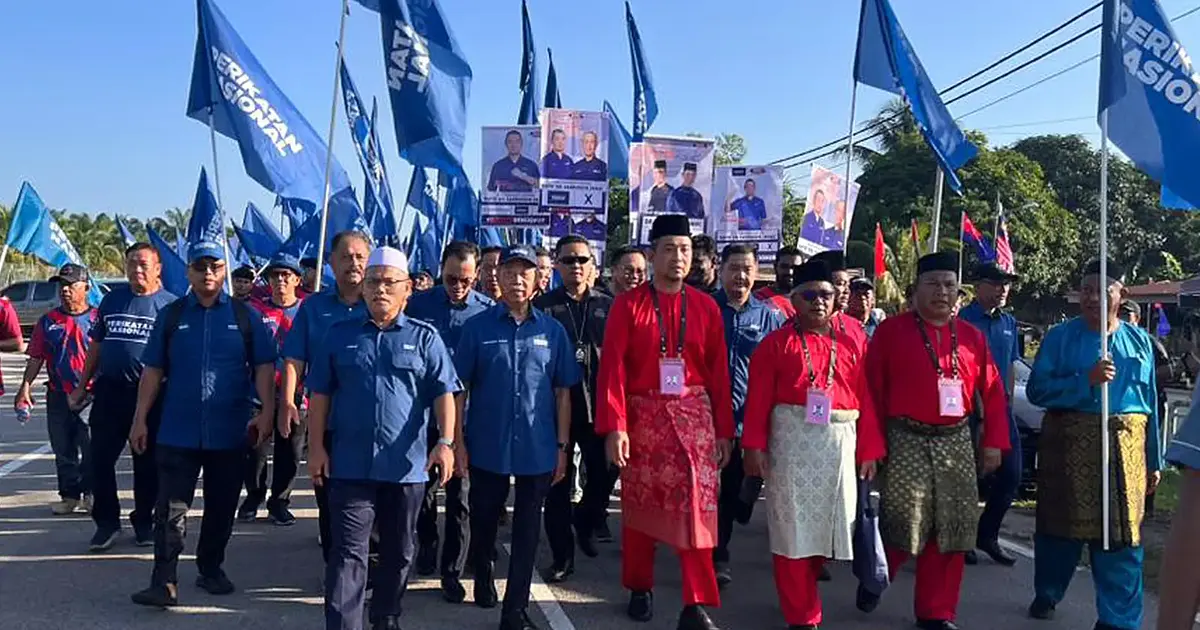
Former Prime Minister Muhyiddin Yassin led a substantial show of strength at Bukit Kepong, appearing alongside hundreds of Perikatan Nasional supporters to energise the campaign machinery for Dr Sahruddin Jamal, who represents Bersatu's bid to retain the state assembly seat. The gathering underscores PN's determination to consolidate backing in what has become a closely watched constituency, with senior party figures lending personal momentum to ground-level efforts.
Dr Sahruddin Jamal's track record as a two-term assemblyman positions him as an incumbent with demonstrated electoral appeal and legislative experience. His re-candidacy reflects Bersatu's confidence in his ability to hold the seat despite the shifting political terrain across Malaysian politics in recent years. The party's decision to field him again signals continuity in representation and an attempt to leverage his local standing and familiarity with constituent concerns.
Muhyiddin's direct participation in the campaign event carries symbolic weight within PN circles. As a former prime minister and influential voice within the coalition, his presence serves to validate the candidate and reinforce party messaging at a critical stage of campaigning. Such high-profile endorsements typically aim to energise volunteer networks, attract media coverage, and signal to voters that party leadership considers the contest consequential.
The mobilisation of several hundred supporters reveals the logistical capacity PN has cultivated at the grassroots level in this constituency. Large campaign gatherings require substantial coordination across party machinery, suggesting the coalition has invested resources in building organisational depth in Bukit Kepong. This concentration of manpower indicates either a competitive race or strategic priority within PN's electoral calculations for the broader state contest.
Bukit Kepong's political significance extends beyond its individual seat. As a state assembly constituency, it reflects broader trends in Malaysian electoral behaviour and coalition positioning. The intensity of PN's campaign efforts there suggests the party views the seat as potentially emblematic of its performance across the state, making it a proxy battleground for competing narratives about political momentum and voter sentiment.
PeKatan Nasional's approach of fielding an experienced incumbent like Dr Sahruddin combines defensive strategy with confidence. Rather than ceding ground to opponents, the coalition opts to reinforce its position through high-level campaigning and substantial supporter turnout. This posture contrasts with scenarios where parties retreat or reduce visible presence, and instead projects an image of strength and contested dominance.
The wider political context matters considerably here. Malaysian state and federal politics have experienced significant flux, with coalition configurations shifting and voter loyalty becoming increasingly volatile. In this environment, demonstrated grassroots support and high-profile leadership engagement serve psychological and practical functions—energising supporters who may feel fatigued or uncertain, while communicating resolve to undecided voters.
For Bersatu specifically, Bukit Kepong represents terrain where the party has established footing and credibility. The decision to back Dr Sahruddin's re-election and to commit senior leadership visibility to the campaign reflects the party's calculation that defending this seat matters to its broader state-level prospects. Bersatu's coalition within PN depends partly on demonstrating electoral viability, and retaining seats it currently holds becomes crucial to that narrative.
The gathering also reflects how Malaysian political campaigns have evolved to incorporate visible mass mobilisation as a core strategy. Beyond traditional media engagement or policy announcement, parties increasingly orchestrate large supporter gatherings to generate momentum, create newsworthy moments, and provide participants with a sense of communal belonging and shared political purpose. Such events serve contemporary Malaysian audiences accustomed to visual political messaging.
Muhyiddin's participation illustrates how senior figures within PN coordinate efforts across the coalition. His willingness to campaign for Bersatu candidates indicates either personal relationship with the party's leadership or a calculated decision that PN's overall performance depends on strong results from all coalition component parties. This collaborative dimension, while publicly presented as unity, also reflects internal negotiations about seat allocations and campaign resource distribution.
Looking ahead, the intensity demonstrated at Bukit Kepong suggests PN anticipates a competitive contest. Neither confident landslide nor resigned acceptance typically generates the scale of high-level political engagement witnessed here. Instead, the rally pattern indicates a race perceived as winnable but requiring active effort and sustained focus. For voters in the constituency, this dynamic has already begun shaping the local political narrative and determining which candidates and parties command visible resources and leadership attention.

