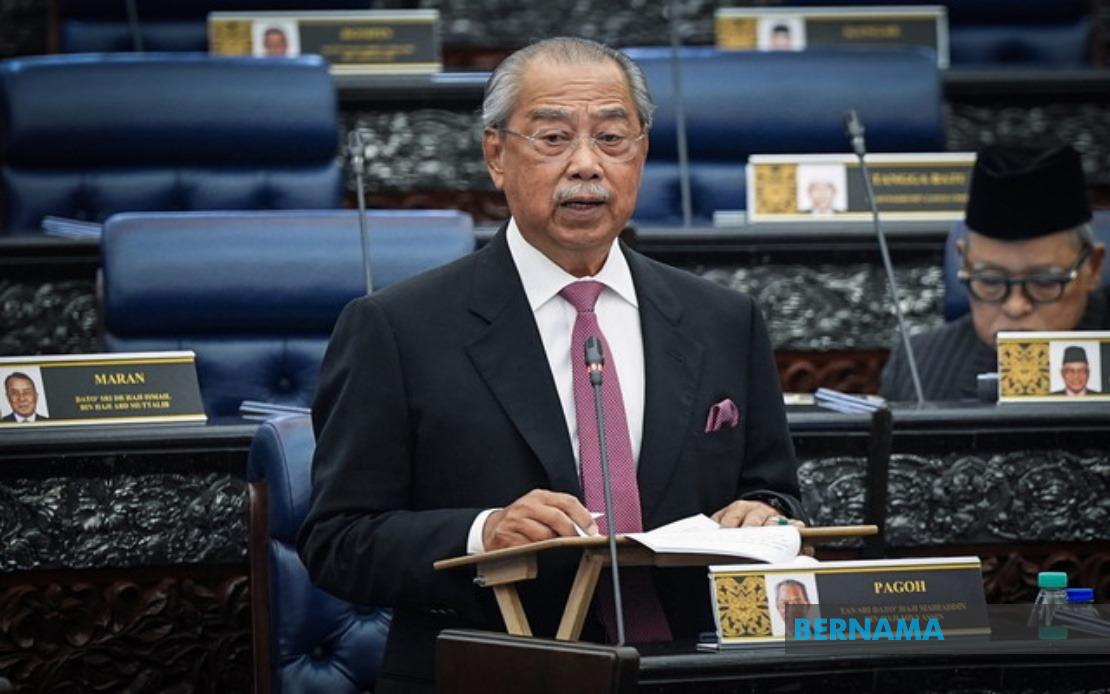
Tan Sri Muhyiddin Yassin, the Pagoh MP and former prime minister, has demanded that Malaysia's government launch a thorough and transparent forensic investigation into the management of Lembaga Tabung Haji funds, insisting the audit should be completed within twelve months. His intervention came during parliamentary debate on the Royal Commission of Inquiry report into the institution, a document that has exposed troubling gaps in how the organisation oversaw pilgrimage savings entrusted to it by Muslim Malaysians.
The former premier's pushback reflects growing political pressure to take decisive action on one of Malaysia's most significant financial institutions. The RCI report, made public on July 29 after the government decided disclosure was in the public interest, catalogued weaknesses in governance and financial controls spanning 2014 to 2020. Most striking among the findings was evidence of cumulative losses estimated between RM10 billion and RM12.6 billion during this period—a figure that represents the retirement hopes of thousands of ordinary Malaysians who had invested their earnings in Tabung Haji schemes.
Muhyiddin argued that an independent forensic audit represents the essential next step, emphasising that such an examination would allow authorities to follow the money trail systematically, uncover potential fraud, identify instances of abuse of authority, and determine where negligence may have contributed to losses. He stressed that any individual found to have caused financial damage to Tabung Haji through dishonest means, misuse of position, or careless oversight must face legal accountability. His remarks carried particular weight given his status as Bersatu president and his position in parliamentary debate, signalling that cross-party concern about Tabung Haji's management has reached the highest levels of Malaysia's political establishment.
The dimension of lost investor capital cannot be overstated. Tabung Haji functions as a savings vehicle for Malaysians preparing for the Hajj pilgrimage, meaning the RM10 billion to RM12.6 billion in losses directly affected ordinary Malaysians' ability to fulfil this important religious obligation. For many contributors, these savings represented decades of disciplined financial commitment, making the scale of mismanagement particularly acute from a social perspective.
Beyond Muhyiddin's intervention, other parliamentarians have proposed additional investigative mechanisms. Syed Saddiq Syed Abdul Rahman, the MUDA representative for Muar, advocated for establishing a Multi-Agency Task Force specifically tasked with investigating fourteen problematic Tabung Haji investments that the RCI had flagged as problematic. This approach would bring together enforcement agencies including the Malaysian Anti-Corruption Commission, police, and the Inland Revenue Board, ensuring that investigations operate in coordinated fashion rather than in isolated silos. Syed Saddiq further suggested that forensic audits be conducted on the fourteen investments themselves, and that the inquiry's scope be extended to examine related bodies including Felda, FGV, and Eagle High—institutions that have faced their own governance questions in recent years.
The significance of Syed Saddiq's proposal lies in its recognition that institutional failures rarely occur in isolation. By broadening the investigative lens beyond Tabung Haji alone, parliamentarians are acknowledging that weaknesses in governance and financial oversight appear to have characterised multiple government-linked institutions during the 2014-2020 period. This comparative approach could yield insights into systemic vulnerabilities that require correction across Malaysia's state-controlled enterprise landscape.
Backing this sentiment, Datuk Seri Hasni Mohammad of Simpang Renggam went further in proposing a mechanism for sustained parliamentary oversight. He called on the MACC, police, and relevant enforcement bodies to furnish regular progress updates within clearly specified timeframes regarding all investigations stemming from the RCI's recommendations. More ambitiously, Hasni proposed that the special parliamentary sitting serve as the inauguration point for continuous, bipartisan, and institution-based parliamentary scrutiny ensuring that implementation of all RCI recommendations receives consistent monitoring and regular reporting to the Dewan Rakyat.
This emphasis on sustained oversight addresses a perennial weakness in Malaysian governance—the tendency for initial investigations and inquiries to generate recommendations that subsequently languish without systematic follow-through. By institutionalising regular reporting requirements and establishing bipartisan parliamentary responsibility for tracking progress, Hasni's proposal seeks to prevent the RCI report from becoming another archived document gathering dust once parliamentary attention shifts elsewhere.
The RCI itself contained twenty-five recommendations for institutional improvement, of which seventy-five percent had reportedly been implemented by Tabung Haji as of July 30. While this implementation rate appears respectable at first glance, the quality of implementation remains uncertain, as does the timeline and adequacy of remaining reforms. The forensic audit that Muhyiddin and others are advocating for would provide a mechanism to verify whether implemented recommendations have actually addressed root causes or merely involved cosmetic adjustments to procedures.
The political moment proves significant because the parliamentary debate and investigative calls indicate that Tabung Haji's governance failure has transcended partisan divisions. Voices from Bersatu, MUDA, and Barisan Nasional all converge on the need for rigorous investigation and sustained oversight. This bipartisan consensus strengthens the moral authority for government action and suggests that public pressure—driven by the scale of losses and media coverage of the RCI report—has made inaction politically untenable.
For Malaysian pilgrims and Tabung Haji contributors, the implications are profound. The institution holds over RM70 billion in accumulated assets, yet the RCI findings raise fundamental questions about whether management can be trusted to preserve and grow these funds responsibly. A comprehensive forensic audit would either restore confidence by identifying and addressing governance failures, or would provide further evidence that deeper structural reform is necessary. Either way, the investigation's outcomes could reshape how Malaysia approaches oversight of state-linked institutions managing citizens' savings, particularly those tied to religious obligations where the stakes carry both financial and spiritual significance for Muslim Malaysians.

