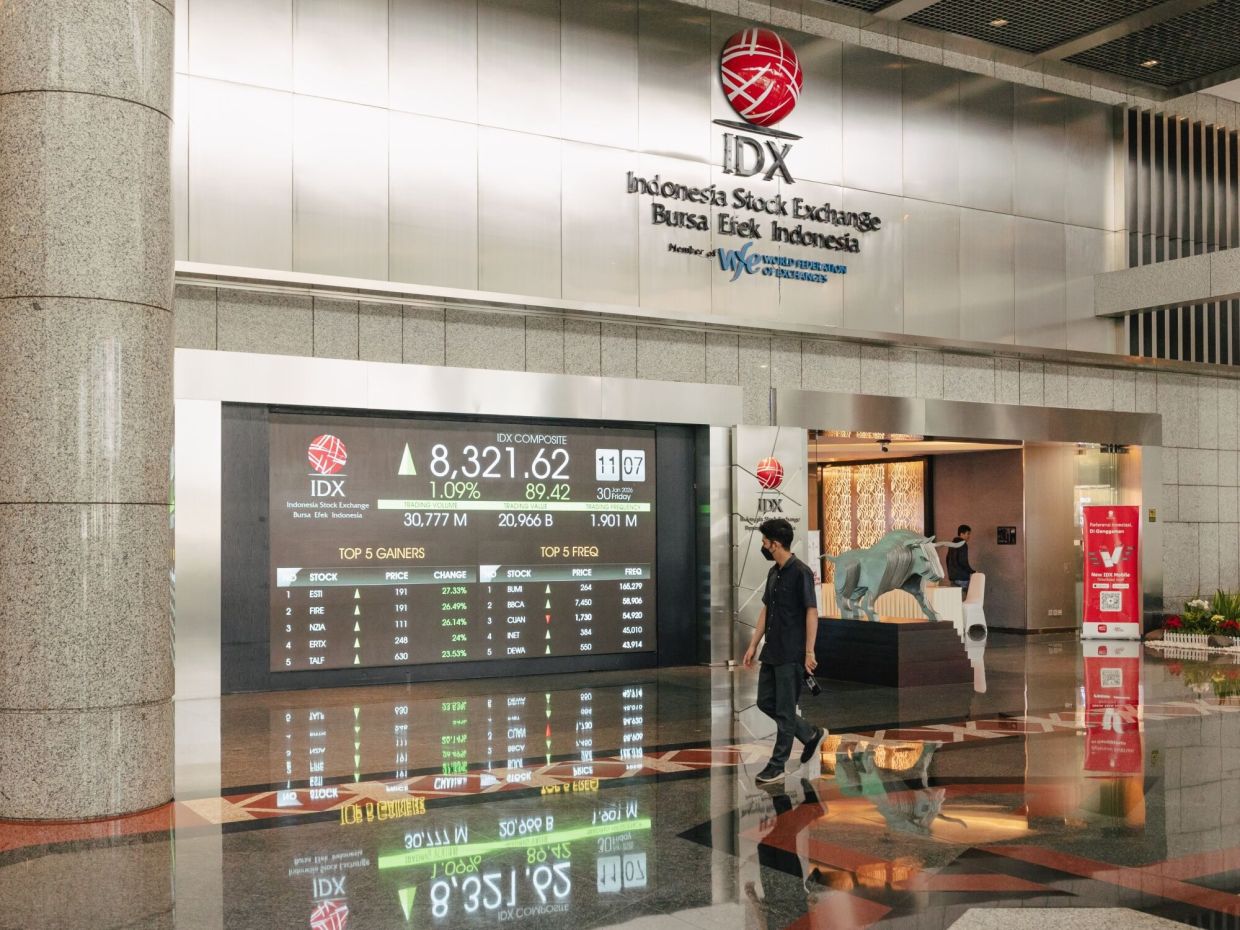
Indonesia's beleaguered stock market faces renewed pressure as the world's largest index provider, MSCI, has escalated concerns about market transparency and investor protection mechanisms, setting the stage for what could be a landmark reclassification next week. The warning, released Thursday in MSCI's market accessibility review, specifically targets the opacity of shareholding structures and patterns of coordinated trading activity that the index giant argues undermine the proper discovery of asset values and limit the ability of global investors to assess what portion of companies' shares are genuinely available for trading on the open market.
The timing of this announcement amplifies anxiety in Jakarta, as MSCI prepares to deliver its verdict on a potential downgrade of Indonesia from emerging market status to frontier market classification. Such a move would represent a dramatic loss of prestige for the Southeast Asian economy and could precipitate a wave of asset sales from passive investment funds that automatically track MSCI indexes. Analysts estimate that a downgrade could unleash forced selling of as much as $13 billion worth of Indonesian equities, compounding an already dire situation for a market that has shed nearly a third of its value during 2026 alone.
The deterioration of Indonesia's investment appeal has been swift and severe. Since January, when MSCI first publicly aired transparency reservations and hinted at a possible downgrade, the Jakarta stock exchange has experienced relentless pressure. In its latest assessment, MSCI specifically downgraded Indonesia's information flow criterion to negative, pointing to deficiencies in how ownership data is disclosed and how trading activity is recorded. These gaps matter enormously because transparent information about who owns what and how trading unfolds allows international investors to calculate the true liquidity available in a given stock and to price assets accurately.
However, not all observers believe MSCI's latest move signals an imminent downgrade. Mohit Mirpuri, a fund manager at SGMC Capital in Singapore, argued that the review merits a more nuanced reading than the headlines suggest. He noted that only one accessibility measure moved into negative territory, whereas Indonesia continues to maintain respectable scores relative to major emerging market peers including South Korea, China and India across multiple critical dimensions. Mirpuri's base case scenario still envisions Indonesia retaining its emerging market classification, suggesting that some professional investors view the MSCI review as a warning shot rather than a prelude to reclassification.
The Indonesian authorities responded to the January warning by rolling out a series of market reforms aimed at addressing MSCI's concerns. Most notably, they doubled the minimum free float requirement for listed companies to fifteen percent, a move designed to ensure that a meaningful portion of company shares are available to the general investing public rather than locked in the hands of controlling shareholders and their associates. The reform effort was so urgent that the top executives of both the Indonesia Stock Exchange and the country's Financial Services Authority resigned on the same day in January, signalling the government's commitment to addressing the crisis.
Yet these reforms appear insufficient to reverse investor sentiment. In April, MSCI extended its formal review period, and in May the index provider removed six companies from its flagship indexes, many of which had close ties to prominent Indonesian business tycoons. Each piece of negative news from MSCI has triggered fresh selling pressure, creating a vicious cycle where investor confidence erodes further with each disclosure.
The significance of an MSCI downgrade extends far beyond sentiment. As one of the world's most influential index builders, MSCI serves as the reference point for billions of dollars in passively managed funds. A downgrade would automatically trigger a cascade of forced sales, as index-tracking portfolios must divest Indonesian holdings to realign with their benchmarks. Even active fund managers who use MSCI indexes as their performance baseline would face pressure to reduce their exposure to avoid tracking error.
Beyond the technical transparency issues that MSCI has highlighted, Indonesia confronts a broader confidence crisis rooted in macroeconomic deterioration. President Prabowo Subianto's administration has pursued populist economic policies while also facing mounting fiscal pressures, a combination that has unnerved capital markets accustomed to more orthodox policymaking. The rupiah has fallen to successive record lows against the US dollar, compelling Bank Indonesia to implement aggressive interest rate increases in recent weeks in an attempt to stabilize the currency and defend reserves.
The currency weakness and policy concerns have not escaped the notice of global rating agencies. Both Moody's and Fitch downgraded their outlooks for Indonesia's sovereign debt to negative during 2026, explicitly citing deteriorating policymaking credibility. For an economy valued at $1.4 trillion, this represents a particularly acute problem, as negative rating outlooks often presage actual credit rating cuts if conditions do not improve. The combination of slowing investor confidence and rising borrowing costs could constrain the government's ability to fund social and infrastructure programmes, creating further economic headwinds.
Indonesia's predicament is especially striking given that the nation was considered a darling of emerging market investors just years ago, benefiting from favourable demographics, abundant natural resources and previously credible institutions. The deterioration has been remarkably rapid, suggesting that the market is repricing the risks associated with institutional performance and policy direction rather than any fundamental shift in the underlying assets. Foreign investors have already voted with their feet, offloading approximately $3.65 billion worth of Indonesian shares during the first part of 2026.
Another structural vulnerability that MSCI has underlined involves currency market constraints. The index provider noted that Indonesia lacks an efficient offshore foreign exchange market whilst onshore currency trading faces various restrictions and barriers. This matters because international investors require the ability to easily convert rupiah proceeds back to their home currencies without facing artificial frictions or price distortions, a requirement that is especially critical during periods of capital outflow stress.
As next week's MSCI decision approaches, all eyes in Southeast Asia will focus on whether the index provider formally initiates the downgrade process. If confirmed, the move would send shockwaves through regional capital markets, potentially forcing a reassessment of other emerging economies' stability and governance standards. For Malaysia and other neighbours, the Indonesia situation offers a cautionary tale about the importance of institutional credibility and transparent market infrastructure in maintaining investor confidence.

