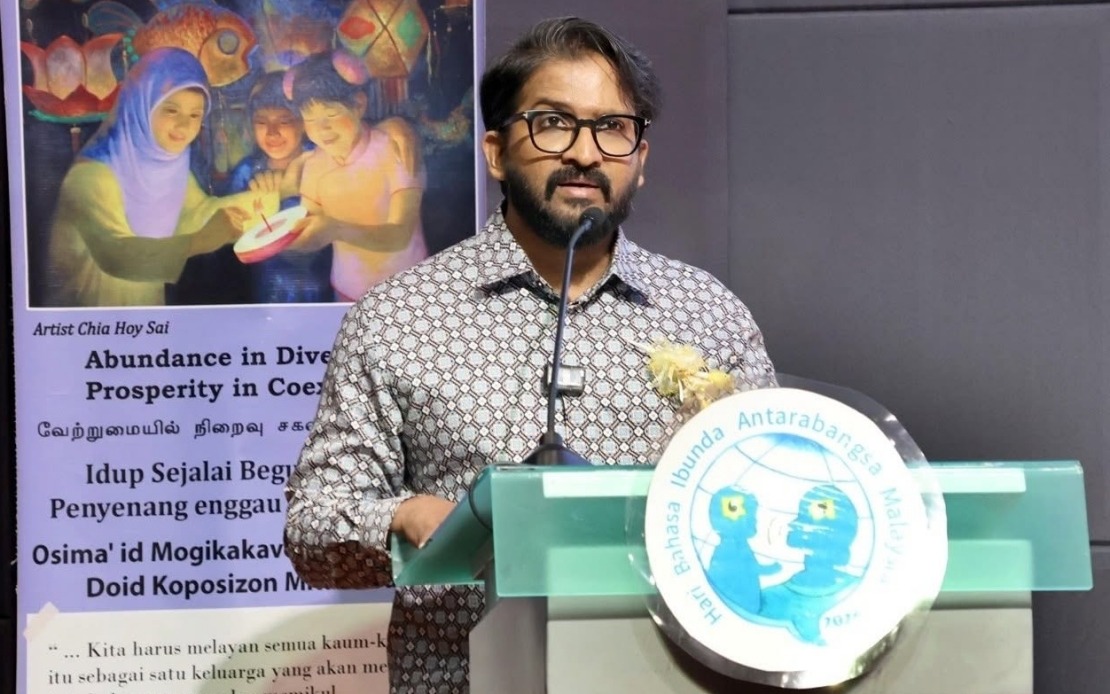
Deputy National Unity Minister R. Yuneswaran has made a compelling case for revitalising mother-tongue education, framing language proficiency as a crucial tool in combating the divisive 3R issues—encompassing race, religion and royalty—that regularly surface on Malaysian social media platforms and threaten national cohesion.
Yuneswaran's intervention addresses a growing concern among policymakers about how online discourse has become a flashpoint for intercommunal tensions. Rather than attributing these conflicts solely to malicious intent or misinformation, he identifies a foundational knowledge gap as the root cause. His position suggests that ignorance of one another's linguistic, historical and cultural contexts creates fertile ground for misunderstandings that rapidly escalate into heated polarisation within digital spaces. This diagnosis resonates with longstanding observations from social cohesion researchers, who have consistently noted that superficial familiarity with neighbouring communities often breeds suspicion and defensive reactions.
The minister articulates an expansive understanding of what language represents beyond its utilitarian function as a communication tool. In his formulation, languages embody identity, heritage and the values that constitute the fabric of distinct communities. This framing is particularly significant for Malaysia, where linguistic heritage intertwines intimately with religious, ethnic and cultural identity markers. By elevating mother-tongue proficiency, Yuneswaran implicitly argues that citizens who are secure in their own cultural foundations are better positioned to appreciate and respect the equally valid foundations of others.
Malaysia's linguistic landscape is extraordinarily rich, with approximately 130 languages spoken across the archipelago. This diversity, which could theoretically be perceived as a centrifugal force pulling communities apart, is reframed by Yuneswaran as a collective asset that should strengthen rather than fragment the nation. His recharacterisation challenges the historically dominant narrative in Malaysian policy circles, which has often treated cultural pluralism with cautious ambivalence, emphasising assimilationist approaches or treating diversity as something to be managed rather than celebrated.
Yuneswaran's personal background lends credibility to his assertions. As an Indian Malaysian educated across Chinese and national school streams, he embodies the multilingual, multicultural identity that he advocates. His lived experience serves as concrete testimony that proficiency in multiple languages and cultural contexts does not dilute national patriotism or commitment to the national language. Rather, his trajectory demonstrates that deep roots in one's mother tongue can coexist harmoniously with proficiency in Bahasa Malaysia and other languages, creating individuals with richer cognitive and cultural resources.
This perspective challenges a long-standing anxiety in Malaysian education policy—the fear that emphasising mother-tongue languages might weaken Bahasa Malaysia or fragment national unity. Yuneswaran's counter-argument, grounded in educational and cognitive research, suggests that linguistic competence in one's foundational language actually enhances capacity to learn subsequent languages and navigate cultural contexts. This reversal of conventional wisdom could have significant implications for educational planning if adopted by decision-makers in the Ministry of Education.
The National Unity Ministry's mandate under the 13th Malaysia Plan specifically targets nation-building through mechanisms centred on understanding, respect and mutual learning. Yuneswaran positions mother-tongue education as instrumental to achieving these objectives. This framing transforms language learning from a narrow academic or cultural preservation exercise into a strategic intervention for national cohesion. It suggests that the ministry may be exploring unconventional leverage points for addressing polarisation, moving beyond conventional reconciliation initiatives toward foundational educational approaches.
For Southeast Asian observers, Yuneswaran's thesis carries broader regional resonance. Neighbouring countries like Singapore, Thailand and Indonesia grapple with analogous challenges regarding how to maintain cultural pluralism while sustaining social unity. Singapore's approach to mother-tongue languages within a multilingual framework, and Indonesia's complex relationship with regional languages alongside Bahasa Indonesia, offer comparative context for understanding Malaysia's ongoing negotiation of these tensions.
Yet implementing this vision presents substantial practical challenges. Strengthening mother-tongue education requires sustained investment in teacher training, curriculum development and educational materials across numerous languages. It demands political will to resist pressures from constituencies favouring English-medium or national-language-centric approaches. It also requires careful design to ensure that mother-tongue education operates complementarily rather than competitively with national language instruction, a balance historically difficult to achieve in Malaysian educational contexts.
The social media dimension of Yuneswaran's argument deserves particular scrutiny. While cultural understanding undoubtedly matters, 3R conflicts online are often amplified by platform algorithms, weaponised by political actors, and inflamed by coordinated disinformation campaigns. Attributing these phenomena principally to insufficient cultural knowledge risks overlooking systemic factors embedded in digital infrastructure and political economy. Mother-tongue proficiency may be necessary but is unlikely to be sufficient for addressing polarisation in an environment where divisive content is algorithmically promoted and politically instrumentalised.
Nevertheless, Yuneswaran's framing represents a valuable intellectual reorientation within Malaysian policy discourse. By centring language and cultural literacy as solutions rather than obstacles, he opens space for educational and cultural interventions that acknowledge rather than suppress Malaysia's pluralistic character. Whether this thinking translates into concrete policy shifts and resource allocation will determine whether mother-tongue strengthening becomes a genuine nation-building strategy or remains aspirational rhetoric.

