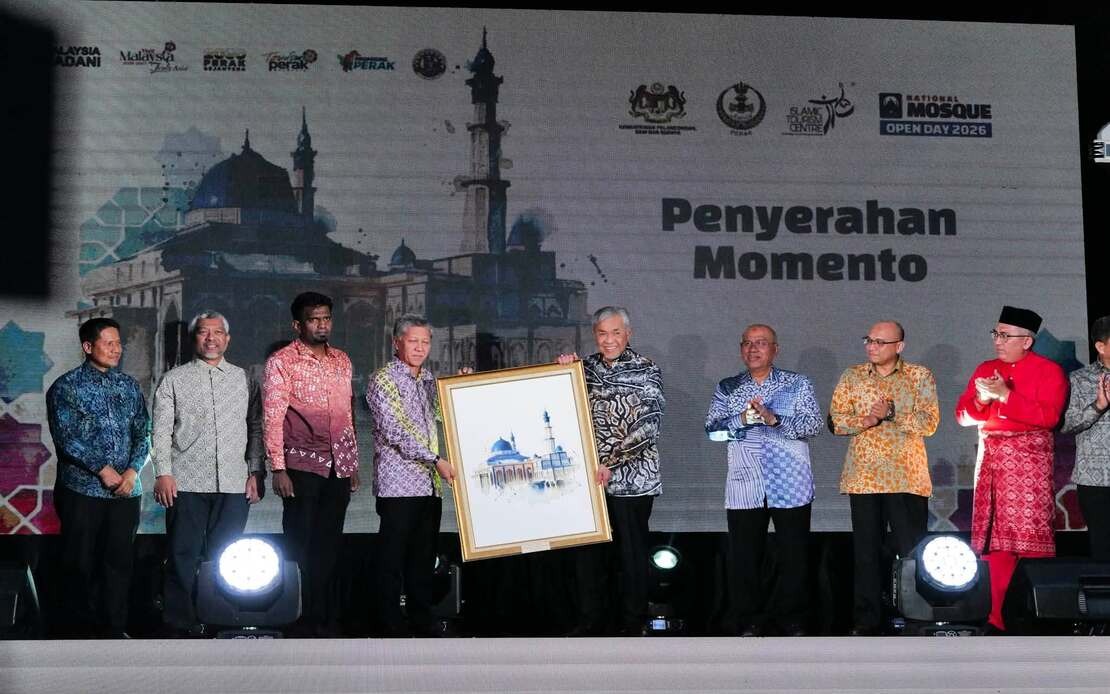
Deputy Prime Minister Datuk Seri Dr Ahmad Zahid Hamidi has articulated a vision for Malaysia's mosque network that extends beyond traditional religious boundaries, proposing that these sacred spaces become anchors in the country's tourism infrastructure without compromising their spiritual mission. Speaking at the official launch of the National Mosque Open Day 2026 in his constituency of Bagan Datuk, Ahmad Zahid emphasised that mosques could simultaneously function as places of worship, centres of Islamic learning, and gateways for visitors seeking to understand Malaysia's rich cultural heritage and civilisational contributions.
The Deputy Prime Minister's remarks signal a strategic pivot in how Malaysia's tourism sector engages with religious institutions. Rather than viewing mosques solely as spaces reserved for devotional practice, Ahmad Zahid framed them as repositories of historical narrative and living embodiments of Islamic values that deserve prominence in visitor itineraries. He underscored that international and domestic tourists arriving in Malaysia should depart not merely with photographic souvenirs of architectural splendour, but with meaningful experiences that reflect the hospitality and Islamic principles embedded within Malaysian society.
Ahmad Zahid specifically highlighted the significance of programmes like the National Mosque Open Day, which he characterised as essential platforms for fostering interfaith dialogue and mutual respect. By creating structured opportunities for people of diverse backgrounds, ages, and religious affiliations to engage with mosque institutions in inclusive environments, such initiatives address a critical gap in cultural understanding. The initiative reflects broader efforts to present Islam not through abstract theology but through tangible expressions of welcome, service, and community engagement that resonate across religious and cultural boundaries.
The practical implications of this tourism-oriented approach extend beyond ceremonial gestures. Ahmad Zahid argued that by inviting outsiders into mosque spaces, Malaysia creates opportunities for visitors to dispel misconceptions about Islam and to witness firsthand the religion's foundational values of compassion, wisdom, and benevolence. This direct engagement strategy potentially serves as a more effective counter-narrative to stereotypes than conventional public diplomacy, as it allows visitors to experience Islamic hospitality within its natural institutional setting.
A significant endorsement of this vision came through the Islamic Tourism Centre's recognition of Masjid Tuminah Hamidi in Bagan Datuk—a structure completed in 2023 as an endowment honouring Ahmad Zahid's parents—as Malaysia's 98th designated Tourism Mosque. The designation underscores how individual mosques with distinctive architectural characteristics and educational galleries can be systematically incorporated into a broader tourism ecosystem. Masjid Tuminah Hamidi's selection particularly rested on its contemporary design and its function as a centre for Islamic knowledge dissemination, suggesting that tourism mosques need not be exclusively historic structures but can include modern facilities that serve both devotional and educational purposes.
The Islamic Tourism Centre's Director-General Mohammad Faisal Abu Suaib Khan provided sobering context by noting that Malaysia possesses 6,851 mosques, of which only a handful have been formally designated as tourism venues. This disparity reveals considerable untapped potential, provided participating mosques meet baseline standards and possess distinctive features warranting visitor attention. Khan's ambition to expand the Tourism Mosque portfolio reflects recognition that Islam's material and cultural contributions remain underrepresented in mainstream tourism marketing, despite their historical and contemporary significance throughout Southeast Asia.
Supporting institutional infrastructure for this initiative is being developed collaboratively among the Islamic Tourism Centre, the Department of Islamic Development Malaysia, and state-level Islamic religious authorities. These coordinating bodies are establishing guidelines that ensure participating mosques maintain appropriate standards whilst accommodating visitor engagement, a delicate balance requiring clear protocols around photography, prayer times, dress codes, and visitor conduct. The administrative apparatus surrounding this tourism integration demonstrates that presenting mosques as public attractions requires substantial organisational scaffolding to protect sacred spaces from commodification whilst enabling genuine cross-cultural exchange.
The Islamic Tourism Centre has complemented its Tourism Mosque designation with supporting initiatives such as the Muslim-Friendly Tourism and Hospitality Assurance and Recognition programme and the Muslim-Friendly Tourist Guides scheme. These parallel efforts operationalise the concept of "Muslim-friendly, not Muslim-only" tourism, suggesting that Malaysia's approach to Islamic tourism destinations aims to be inclusive rather than insular. By training guides and certifying hospitality providers in cultural sensitivity, these programmes embed religious and cultural literacy throughout the visitor experience, multiplying the impact beyond individual mosque visits.
The National Mosque Open Day 2026, held across three days in August at Masjid Tuminah Hamidi and surrounding public spaces, exemplified how mosque tourism can be structured around programming that appeals to diverse demographics. The event incorporated spiritual activities, community engagement opportunities, cultural performances, recreational elements, and family-friendly attractions, essentially treating the mosque complex as a multipurpose venue that accommodates various motivations for visitation. This programming approach recognises that tourism audiences are heterogeneous, encompassing spiritual seekers, cultural enthusiasts, history buffs, and families seeking recreational experiences.
For Malaysia, this reframing of mosques as tourism assets carries regional implications. As Southeast Asian nations compete for religious tourism revenues, positioning Islam's material culture and values system as central to national identity tourism offerings could differentiate Malaysia's positioning. Countries like Turkey and Indonesia have successfully leveraged Islamic heritage tourism, generating substantial economic returns whilst building cultural soft power. Malaysia's systematisation of this approach through government agencies and coordinated mosque participation suggests institutional commitment to this sector.
The initiative also addresses a challenge facing Malaysia's multicultural society: fostering genuine understanding of Islam among non-Muslim populations whilst simultaneously strengthening Muslim communities' pride in their religious heritage. By transforming mosques into spaces where non-Muslims encounter Islam through hospitality rather than abstraction, Ahmad Zahid's vision potentially contributes to social cohesion through experiential rather than rhetorical means. This approach acknowledges that stereotypes and misunderstandings persist not from malice but from insufficient contact and contextual knowledge.
Yet successfully implementing mosque tourism requires navigating several tensions. Excessive commercialisation could transform sacred spaces into commodities, potentially undermining their spiritual integrity. Unmanaged tourist traffic during prayer times or during sensitive religious observances could disrupt devotional practices. The funding models for maintaining tourism infrastructure in mosques whilst preserving their primary religious function remain unclear, as do questions about how revenue generated through tourism activities should be allocated and governed.
Moving forward, the expansion of Malaysia's Tourism Mosque network will likely depend on whether mosque communities themselves embrace this role, and whether government support addresses practical challenges including infrastructure upgrading, guide training, and visitor management systems. The vision articulated by Ahmad Zahid represents a sophisticated integration of religious, cultural, and economic objectives, but its realisation will require sustained commitment from both governmental institutions and mosque communities across the nation.

