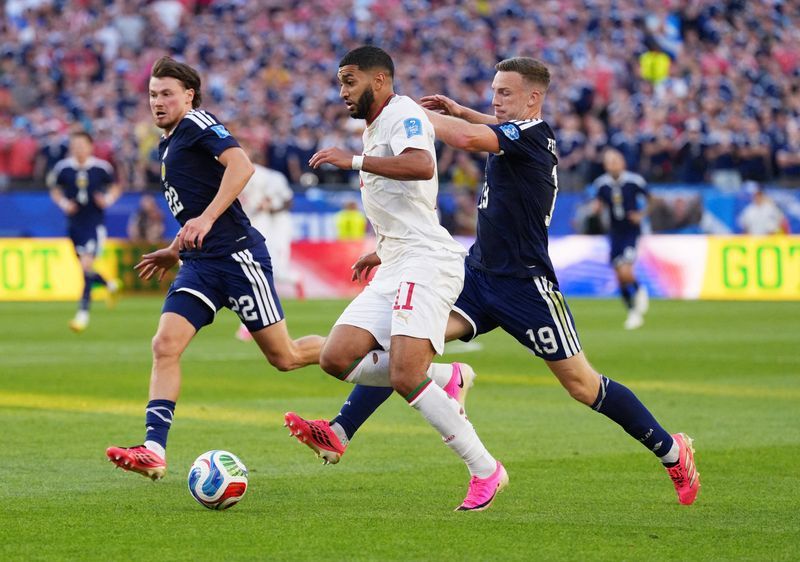
In a commanding performance at Foxborough, Massachusetts, Morocco delivered an early statement of intent by dismantling Scotland 1-0 in their World Cup Group C encounter on Friday. The North Africans struck with remarkable efficiency, with Ismael Saibari netting the tournament's fastest goal after just 71 seconds to seize control of the group and move into top spot heading into the final round of matches.
The dominance Morocco exhibited extended far beyond the scoreline, which only partially reflected their superior play across both halves. The Scots, buoyed by their first World Cup victory in 36 years against Haiti in their opening match, found themselves overwhelmed by a Moroccan side that pressed relentlessly, won the midfield battle convincingly, and broke through the Scottish defence with alarming regularity. The visitors rarely allowed their opponents to settle into any rhythm, turning the contest into a one-directional affair where Scotland was perpetually on the back foot.
Saibari's breakthrough arrived almost before the Scottish fans could take their seats properly. The midfielder exploited a critical defensive lapse when central defender Grant Hanley stepped forward prematurely, leaving space behind the backline. A perfectly weighted cross from Brahim Diaz found Saibari arriving unmarked, and his powerful finish gave goalkeeper Angus Gunn no chance. The goal proved especially significant for the 25-year-old, who has now scored in consecutive World Cup matches following his contribution in Morocco's 1-1 draw against Brazil last week. His accomplishment places him among elite company, becoming only the second African player to score in his first two World Cup appearances, after Egypt's Mohamed Salah.
What makes Morocco's performance particularly noteworthy is the context of their recent trajectory in international football. As semi-finalists in Qatar four years ago, they have continued developing as a formidable force, and this display suggested they remain serious contenders for another deep tournament run. The physical intensity and tactical discipline they imposed on Scotland created numerous additional opportunities that narrowly went begging. Azzedine Ounahi orchestrated a dangerous left-wing move that invited two teammates into the box simultaneously, yet neither could finish, while Bilal El Khannouss fired over the bar after another slick Moroccan movement.
Scotland's inability to generate attacking threat proved particularly troubling. The home crowd waited until deep into the first-half stoppage time before witnessing their first shot on goal, illustrating how thoroughly Morocco controlled proceedings. When the Scots did finally attempt to impose themselves in the latter stages, they lacked the cutting edge needed to trouble the North African defence. Their recent confidence following the Haiti victory evaporated quickly, replaced by frustration as they chased shadows for much of the encounter.
The narrative surrounding this fixture extended beyond the 90 minutes of play. Morocco captain Achraf Hakimi faced audible displeasure from Scottish supporters, reflecting the controversy surrounding his ongoing rape trial. Saibari, meanwhile, has been the subject of transfer speculation after reportedly passing a medical with German champions Bayern Munich, adding another layer of intrigue to his match-winning performance.
The point distribution now sees Morocco sitting comfortably in pole position with four points from two matches, while Scotland holds three points from their opening two games. Morocco's final group-stage opponent is Haiti on Wednesday, a fixture they will approach as overwhelming favourites. Scotland faces the considerably more daunting prospect of confronting five-time champions Brazil on the competition's final matchday, a scenario that presents minimal margin for error given their current standing.
The qualifying mathematics work in Morocco's favour. The top two teams from each group advance automatically to the round of 32, alongside the eight best third-placed finishers. With two matches remaining, Morocco's commanding position provides them substantial comfort, though their players have already indicated ambitions extending beyond mere qualification. Ounahi's public declaration that his team aims to reach the final drew attention earlier this week, and their clinical display against Scotland suggests such aspirations are not merely rhetorical flourishes.
Brazil's concurrent fixture against Haiti later Friday adds another variable to Group C's evolving narrative. The established football powerhouse remains capable of reshaping the standings rapidly, and their two remaining matches against Morocco and Scotland could prove decisive in determining final placings. For Scottish football enthusiasts, the path to qualification has narrowed considerably, transforming their encounter with Brazil into a genuine do-or-die proposition rather than a balanced three-team contest for advancement.
Morocco's victory exemplifies how quality teams convert first-half dominance into tangible results, avoiding the trap of outplaying opponents only to see narrow margins cost them in knockout football or in tight group situations. The North Africans have now demonstrated they possess not merely technical ability but also the psychological resilience and clinical edge necessary to compete at football's highest level. As the group stage enters its final chapter, all three remaining matches carry significant weight in determining which sides advance and potentially which unfold surprising World Cup narratives.

