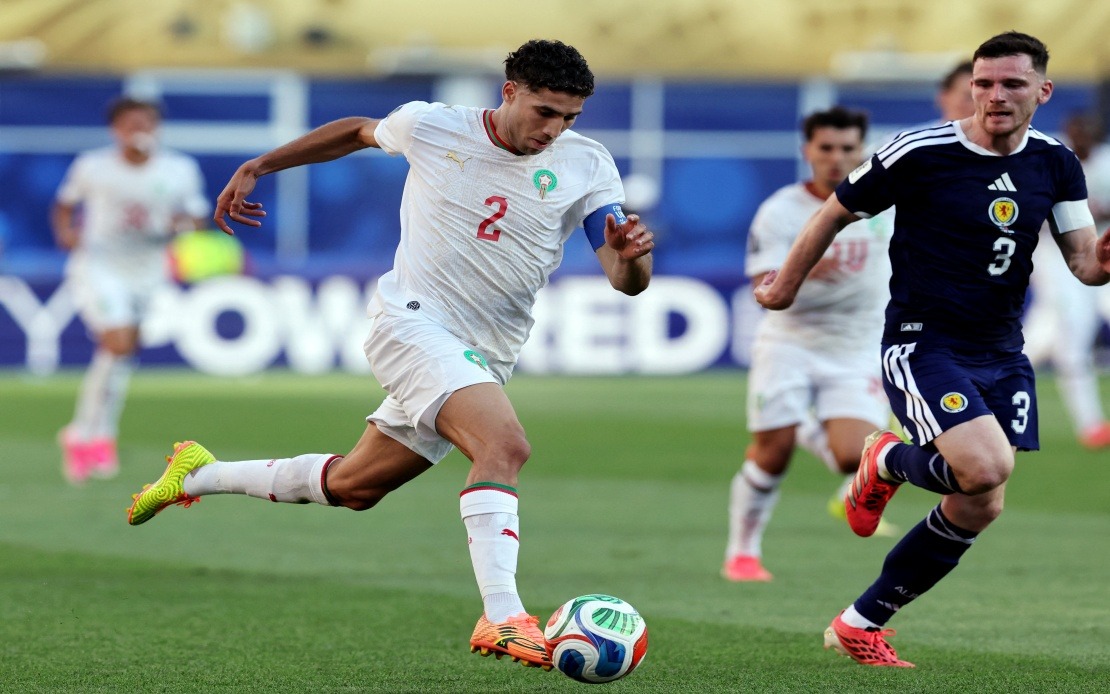
Morocco's coach Mohamed Ouahbi has publicly supported Achraf Hakimi in the wake of hostile crowd reactions during Friday's 1-0 World Cup victory against Scotland in Foxborough, Massachusetts. The match proved momentous not merely for the three points secured, but for the charged atmosphere surrounding the captain's involvement, as news of pending legal proceedings overshadowed the sporting contest. Ouahbi's resolute backing suggests an internal resolve to compartmentalize off-field complications from on-field performance, a delicate balancing act confronting international teams when key players face serious allegations.
The backdrop to Morocco's triumph was unusually turbulent. A French court had announced hours before kick-off that Hakimi, Paris Saint-Germain's prominent right back, must stand trial on rape charges. The timing intensified pre-match tension, and when team lineups were announced, sections of the Foxborough crowd directed sustained jeers and whistles toward the Moroccan skipper. This pattern of hostility persisted throughout the match whenever Hakimi engaged with the ball, creating an uncomfortable dynamic that reflected broader societal concerns about professional athletes facing criminal allegations.
Hakimi's response on the pitch, according to Ouahbi's assessment, was notably resilient. The coach emphasized that the player demonstrated strength despite the intimidating reception, suggesting that focusing on sporting excellence became a coping mechanism and defiant statement. Ouahbi's characterization of Hakimi as "very strong" and "relaxed" attempts to shift narrative emphasis toward performance metrics, effectively arguing that vindication through superior play transcends courtroom proceedings. This framing resonates with a longstanding sports tradition of letting actions speak louder than accusations, though such approaches carry inherent risks when serious criminal charges are involved.
The underlying legal situation carries substantial gravity. The Versailles appeal court's decision mandated that Hakimi face trial on charges stemming from an alleged 2023 incident involving a 24-year-old woman at his residence. This represented an appellate affirmation of an investigating judge's earlier determination, suggesting the French judiciary considered sufficient evidence to proceed. The progression through France's legal system indicates institutional confidence in the case's merit, lending weight to the proceedings despite Hakimi's denials.
Hakimi has consistently maintained his innocence, categorically denying all accusations. Following the court's announcement, he posted on social media expressing relief that he would finally have opportunity to present his defence, framing the legal process as an avenue for vindication rather than persecution. This strategic communications approach mirrors how many accused individuals attempt to reclaim narrative control when facing public allegations, transforming a judicial proceeding into a platform for asserting innocence. The player's positioning suggests confidence in exoneration, though the legal journey ahead remains unpredictable and protracted.
What distinguishes Ouahbi's stance is his deliberate avoidance of engaging substantive aspects of the allegations. Rather than defending Hakimi's character or disputing factual claims, the coach maintained strict separation between sportive and juridical domains. He emphasized that the squad maintains unified support for their captain and that internal team conversations had not focused on the legal controversy. This compartmentalization strategy reflects institutional pragmatism—maintaining squad cohesion while respecting presumption of innocence, yet studiously avoiding commentary that might exacerbate controversies or appear dismissive of serious allegations.
Teammates similarly refrained from public comment, suggesting disciplined media management and perhaps deliberate coaching guidance to prevent compounding complications. In contemporary sports environments, silence often constitutes the safest institutional response when criminal allegations emerge, protecting both individual players and team brands from additional scrutiny. Moroccan football authorities appear to have implemented clear protocols limiting public discourse beyond essential acknowledgments.
The incident illuminates broader tensions within international football when facing dual narratives: competitive performance and off-field conduct. For Malaysian and Southeast Asian audiences, this dynamic carries particular resonance given regional football's growing prominence and increasing international scrutiny of player conduct standards. The World Cup platform amplifies both sporting achievements and personal controversies, creating intense pressure on involved parties.
Ouahbi's invocation of Hakimi's status as potentially the world's finest right back represents an attempt to frame the player's identity through athletic excellence rather than legal jeopardy. This rhetorical strategy prioritizes sporting credentials over controversies, arguing implicitly that exceptional talent merits continued opportunity and support. However, such positioning inevitably proves complicated when serious criminal allegations remain unresolved, raising ongoing questions about institutional accountability and societal standards regarding athlete conduct.
The Scotland match victory demonstrates that teams can maintain competitive focus despite turbulent circumstances, yet the sustainability of such compartmentalization remains uncertain as legal proceedings develop. Morocco's World Cup campaign unfolds within this complex context, where every subsequent Hakimi appearance will invite fresh scrutiny and reaction. The legal process in France will proceed independently, potentially generating fresh headlines that further intersect with sporting competition.
Ultimately, Ouahbi's defence reflects institutional solidarity and strategic pragmatism, emphasizing that presumption of innocence and team unity warrant continued support for the player. Whether this approach withstands evolving legal developments and maintains internal cohesion throughout a prolonged judicial process remains contingent on forthcoming circumstances. The convergence of elite sports performance and serious criminal allegations creates unprecedented challenges for modern football, transcending traditional boundaries between pitch and courtroom.

