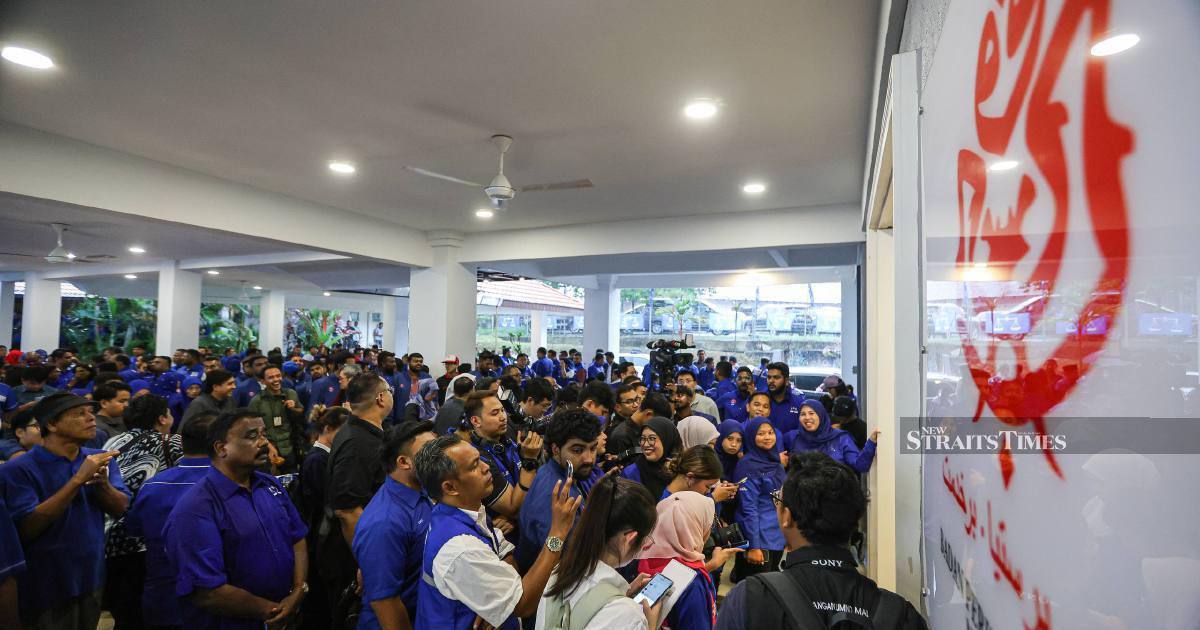
The Barisan Nasional coalition began its formal campaign preparations in Johor Baru with an energetic gathering at Umno headquarters, where party leadership and rank-and-file members assembled to unveil the candidate slate for the 16th Johor state election. The atmosphere at the venue reflected the strategic importance of the contest, with supporters congregating in anticipation of the official announcements that would shape the political landscape for the coming months.
Johor's electoral significance extends beyond state boundaries, carrying implications across the wider Malaysian political ecosystem. As the nation's second-most populous state and home to major economic corridors, the outcome in Johor typically influences broader regional political dynamics and can signal voter sentiment ahead of federal-level contests. The Barisan Nasional coalition's performance here serves as a barometer for its electoral viability, making candidate selection a matter of considerable deliberation and scrutiny within the organisation.
The convergence of party machinery and grassroots energy at the announcement event underscores the resource deployment that precedes electoral contests. Candidate selection represents one of the most consequential decisions a political coalition can make, determining which individuals will carry the party's mandate into territory where each seat carries weight in determining government composition. The careful choreography surrounding announcements reflects both the competitive nature of Malaysian electoral politics and the organisational discipline required to mount effective campaigns across diverse constituencies.
For Johor voters, these announcements carry immediate practical significance. The candidates selected by Barisan Nasional will shape the quality of representation available to constituents, influence the types of policy platforms advanced during campaigning, and determine the human faces of the coalition's appeal. Voter choice ultimately depends on the individual quality, track record, and accessibility of those put forward, making the announcement moment a critical juncture where political parties reveal their strategic thinking about which leaders they believe can win critical contests.
The participation of senior Barisan Nasional figures at the gathering signals the coalition's commitment to the Johor contest and its recognition that securing the state remains central to its long-term political prospects. The presence of multiple hierarchical levels within the party structure—from federal coordinators to state operatives to local volunteer networks—demonstrates the integration required to function as a cohesive electoral force across a geographically dispersed state.
Johor's political history reveals a pattern of competitive contests where incumbency provides no guarantee of electoral success. Previous election cycles have demonstrated that voter preferences can shift significantly based on candidate quality, campaign effectiveness, and local grievances. The candidates announced at this gathering will therefore shoulder considerable responsibility for translating the coalition's organisational resources and national political standing into actual seat gains at the constituency level.
The timing of candidate announcements typically aligns with strategic calculations about electoral momentum and campaign duration. By publicly revealing its lineup, Barisan Nasional signals readiness to commence campaigning and implicitly challenges opposing coalitions to similarly clarify their positions. The announcement serves as both an internal morale-boosting event for party members and a public communication aimed at broader voter audiences, condensing messaging about party leadership confidence and forward momentum into a concentrated moment of media attention.
For Malaysian political observers, the composition of Barisan Nasional's candidate slate offers insights into internal power dynamics within the coalition and its constituent parties. Decisions about which individuals receive winnable seat allocations, which are placed in challenging contests, and which are passed over entirely reveal the relative influence of different factions and regions within party hierarchies. Johor's complex internal politics—encompassing urban constituencies with educated electorates, semi-urban areas with mixed demographics, and rural regions with distinct concerns—necessitate nuanced candidate selection reflecting diverse constituent requirements.
The broader electoral environment surrounding the Johor contest shapes how voters will receive these candidate announcements. National political developments, economic conditions, and sentiment toward Barisan Nasional's federal leadership all filter into voter assessments of state-level contests. Candidates announced today will therefore inherit both the strengths and vulnerabilities of their coalition's broader political position, requiring strategic communication that addresses both party-level narratives and localised constituency concerns.
Southeast Asian political observers frequently note Malaysia's sophisticated campaign infrastructure and organisational capacity among established coalitions like Barisan Nasional. The gathering at Johor Umno headquarters exemplifies this institutional depth, where candidate announcement events serve simultaneously as internal party events, media spectacles, and voter communication platforms. The careful orchestration involved in such occasions reflects decades of electoral experience and professional campaign management within Malaysia's mature political system.

