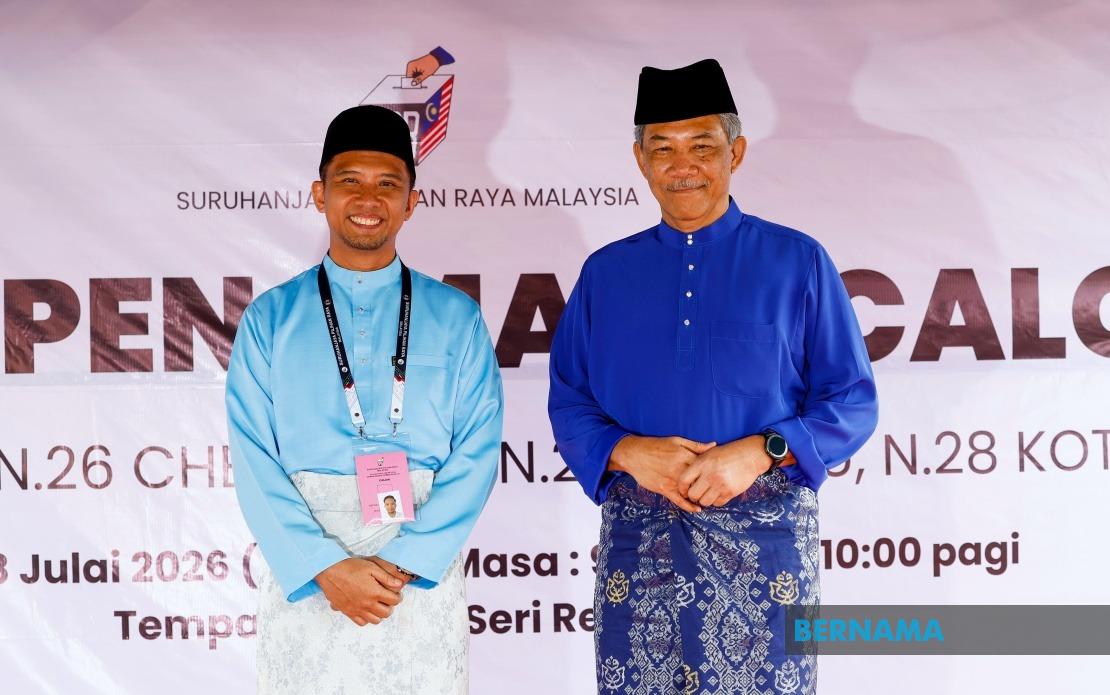
The 16th Negeri Sembilan state election is shaping up as a significant contest, with nominations concluded for several key state seats including a prominent straight fight in Rantau where Foreign Minister and Barisan Nasional state chairman Datuk Seri Mohamad Hasan will defend his constituency against Pakatan Harapan candidate Dr Azizul Hakim Mahdi. The returning officer confirmed the final candidate lineup after the nomination process wrapped up at Dewan Sri Rembau, setting the stage for an intense campaign period before voters head to the polls on August 1.
Mohamad's seat in Rantau has been a solid BN stronghold since 2004, when he first secured the mandate. His formidable position was underscored in the 2023 election, when he accumulated 16,957 votes against PH's Rozmal Malakan, who received 6,677 votes—a commanding 10,280-vote margin that reflected strong constituent support. However, the emergence of Dr Azizul as this year's PH challenger suggests the opposition is seeking to make inroads in the constituency by fielding a candidate with distinct professional credentials and a localized focus.
Dr Azizul, at 35 years old, presents himself as a fresh political choice grounded in healthcare expertise. Operating three medical clinics across Senawang, Puncak Alam, and Melaka, he brings practical experience in understanding the community's medical and wellness challenges. His campaign strategy centres on positioning himself as an accessible professional candidate willing to champion public health improvements, arguing that his decade-long medical career positions him to tackle grassroots healthcare deficiencies more effectively than career politicians. This approach reflects a broader opposition tactic of appealing to voters fatigued with conventional political operators.
Mohamad's response emphasizes BN's broader manifesto and organizational strength. As UMNO deputy president and the outgoing state administration's leader, he commands significant institutional machinery and can marshal party resources for ground-level campaigning. His public statements stress the importance of systematic, well-organised campaign work and faith in BN's grassroots capability. The contrast between Mohamad's appeal to organizational efficiency and established governance credentials versus Dr Azizul's emphasis on professional expertise and community-centric problem-solving encapsulates a key ideological divide shaping the Rantau race.
Beyond Rantau, the broader Negeri Sembilan election features multiple competitive contests with varying configurations. The Paroi seat will host a three-cornered race involving PH's Ahmad Shahir Mohd Shah, who serves as press secretary to the Menteri Besar, alongside Perikatan Nasional's Kamarol Ridzuan Mohd Zin and Bersatu's Mohd Nazree Mohd Yunus. This fragmentation introduces unpredictability, as vote-splitting could benefit the candidate with the most concentrated support base. Similarly, the Kota seat presents another three-way contest between BN incumbent Suhaimi Aini, PH's Muhammad Allif Ibrahim, and Bersatu's Akmal Noradzmi Abdul Rahim.
Chembong represents one of several straight fights on the ballot, pitting BN incumbent Datuk Zaifulbahri Idris against PH challenger Danish Nazran Murad. These two-candidate races typically produce clearer outcomes since votes cannot disperse among multiple candidates, making them pivotal in determining BN's final seat tally and overall state control. For Malaysian observers, such contests offer the clearest indication of voter sentiment regarding each coalition's performance and future direction.
The electoral stakes are substantial given Negeri Sembilan's 36-seat legislature and the current political realignment across Malaysia. The state has traditionally been BN-held, but recent years have witnessed growing PH competitiveness. The Election Commission's decision to dissolve the state assembly on June 5 initiated a compressed campaign cycle, with early voting scheduled for July 28 before the main polling day on August 1. This timeline compresses campaigning windows and can disadvantage challengers seeking to build momentum, typically benefiting incumbents with established voter networks.
The eligible electorate comprises 889,490 registered voters, subdivided into 867,151 ordinary voters, 16,884 military personnel and their spouses, and 5,455 police personnel designated as early voters. The military and police early voting provision, a consistent feature of Malaysian elections, potentially influences outcomes in states with significant security force deployments. These constituencies tend to favor incumbent administrations, adding a structural advantage to BN's overall position in the state election.
For Southeast Asian political observers, the Negeri Sembilan contest carries broader implications regarding Malaysia's two-coalition competition and internal dynamics within major political blocs. BN's maintenance of Negeri Sembilan would reinforce its narrative of recovery following the 2022 elections, while PH gains would signal sustained opposition momentum. Similarly, the performance of Perikatan Nasional and Bersatu—which contest independently in several seats rather than as coalition partners—will illuminate ongoing questions about the stability and coherence of Malaysia's political alternatives to BN-UMNO dominance.
The Rantau matchup epitomizes these broader tensions. Mohamad Hasan represents establishment continuity and institutional leverage, while Dr Azizul embodies an emerging opposition strategy of deploying professional-class candidates to challenge the traditional political hierarchy. The outcome will signal whether BN's organizational dominance and Mohamad's personal political capital remain sufficient to withstand challenges rooted in alternative governance philosophies and demographic appeals. As the campaign unfolds toward August 1, the Negeri Sembilan election will provide significant indicators of voter sentiment regarding Malaysia's competing political visions.

