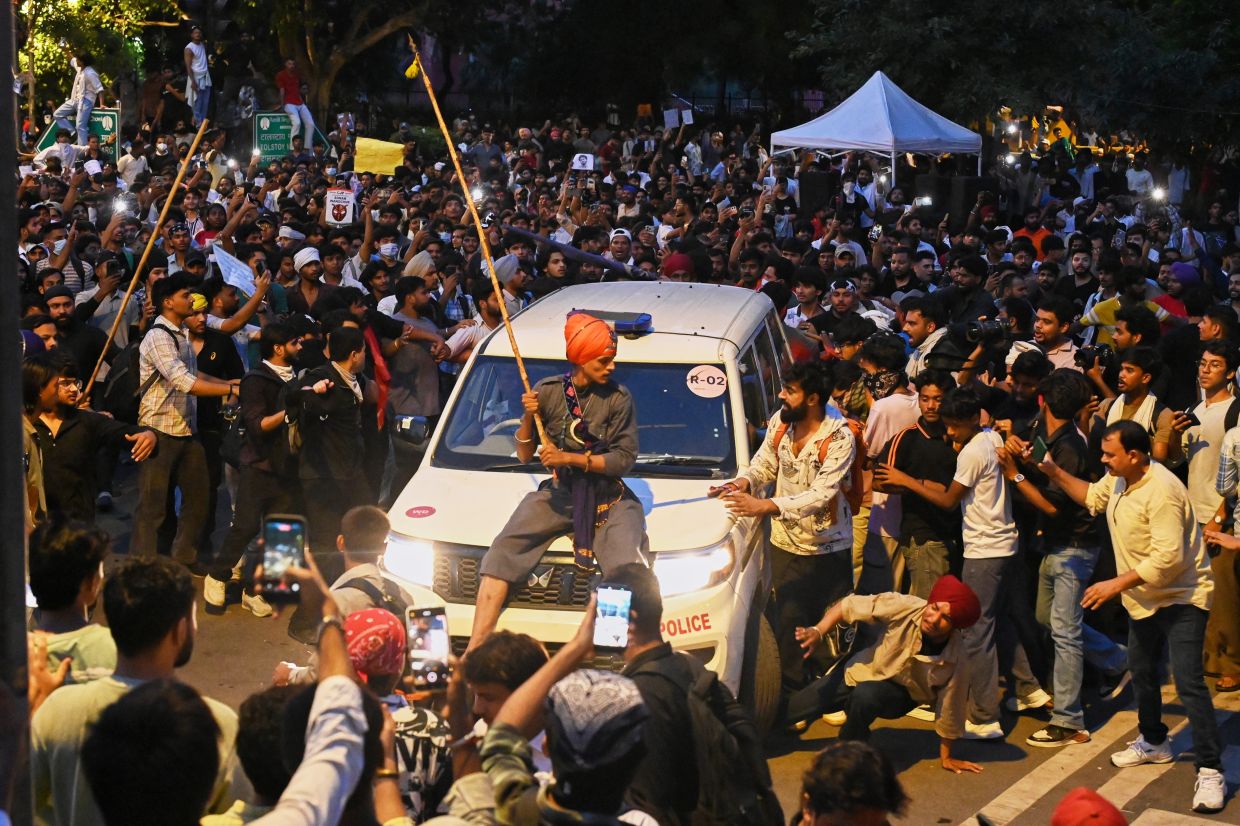
Indian Prime Minister Narendra Modi has pledged swift action against those responsible for exam fraud, making his first direct response to the burgeoning youth-led protest movement that has challenged his administration. Speaking on Thursday, Modi committed to establishing fast-track courts to prosecute those involved in question paper leaks, framing the issue as a matter of national importance for India's younger generation. His statement came after days of escalating tensions in the capital, where tens of thousands of demonstrators have taken to the streets demanding accountability from educational authorities.
The protests, which organisers describe as the largest in New Delhi within the past five years, erupted from a combination of grievances that extends far beyond exam irregularities. What began as anger over specific instances of question paper leaks has evolved into a broader movement expressing youth frustration with unemployment prospects, limited economic opportunities, and what activists characterise as increasingly authoritarian governance under Modi's administration. The demonstrations represent a significant political challenge to the Prime Minister, particularly following his re-election to a third term in 2024, when his political capital appeared strongest.
The trigger for the latest wave of street action came when police deployed tear gas and baton charges against demonstrators attempting to march to parliament during the opening day of the monsoon legislative session on Monday. Faced with police force, protesters responded by throwing stones and other projectiles, escalating the confrontation into prolonged clashes that left at least 178 people injured, including security personnel. The scale of violence marked an unusually significant breakdown in crowd control, signalling the intensity of public sentiment on the ground.
The movement itself has crystallised around the Cockroach Janta Party, or CJP, a digitally-native protest organisation that emerged from satirical social media commentary and has since transformed into a significant political force. The CJP originated in May as a response to remarks attributed to Chief Justice Surya Kant, who reportedly compared young people to insects and parasites during a court proceeding. Rather than remaining a narrow response to judicial rhetoric, the movement expanded its platform to encompass multiple youth concerns that had been building beneath the surface of Indian politics for years.
Institutional failures in the examination system have provided concrete focal points for the broader discontent. A leaked medical entrance examination forced more than two million candidates to retake the test, creating widespread disruption and undermining public confidence in the integrity of India's assessment mechanisms. Additional controversies surrounding online marking systems for high school examinations involving nearly two million students have compounded the damage to the credibility of educational institutions overseen by the central government.
For regional observers in Southeast Asia, the Indian protests carry particular significance given parallels with similar youth-driven political movements. Bangladesh experienced a dramatic example of student-led revolt in 2024 when campus demonstrations precipitated the downfall of Prime Minister Sheikh Hasina's government. In a gesture of solidarity that illustrates the transnational nature of youth activism, Bangladeshi student groups announced plans to hold torch rallies on Thursday evening in support of their Indian counterparts, demonstrating how grievances about governance and institutional accountability transcend national borders in the region.
The movement's digital infrastructure has proven instrumental to its rapid mobilisation. With millions of followers across social media platforms, the CJP has coordinated demonstrations across multiple Indian cities beyond the capital. Wednesday evening saw synchronized protests in major urban centres including Mumbai, Bengaluru, and Patna, indicating the movement's capacity to organise at scale despite police countermeasures. Internet shutdowns implemented by authorities to contain the unrest have become another flashpoint, with movement spokespeople documenting what they characterise as heavy-handed police tactics against unarmed protesters.
Opposition political parties have seized upon the momentum to challenge Modi's government within parliament and beyond. Congress leader Rahul Gandhi directly accused the Prime Minister of bearing responsibility for the destruction of India's education system, weaponising the youth grievances within formal political discourse. The disruption of parliamentary proceedings by opposition legislators indicates how thoroughly the issue has penetrated elite political calculations, forcing the government to respond at multiple institutional levels simultaneously.
The timing of these protests, arriving during Modi's third consecutive term with what appeared to be strengthened political authority, underscores the unpredictability of protest movements in large democracies. Despite majority electoral victories and strong institutional control, the government has found itself confronted by a decentralised, youth-driven challenge that traditional political hierarchies struggle to contain through conventional means. The movement's rootedness in educational grievances gives it particular legitimacy, as it addresses the fundamental question of whether public institutions can deliver on their core obligations to citizens.
For Malaysia and other Southeast Asian governments navigating education policy and youth engagement, the Indian experience offers cautionary lessons about the political consequences of systemic failures in examination integrity and institutional credibility. The capacity of young people to mobilise through digital networks and coordinate action across geographies suggests that perceived injustices in educational systems carry substantial political weight beyond immediate student constituencies. Modi's attempt to respond through promises of expedited justice and administrative reform reflects recognition that addressing technical failures in examinations may prove insufficient unless broader concerns about institutional governance receive equivalent political attention.

