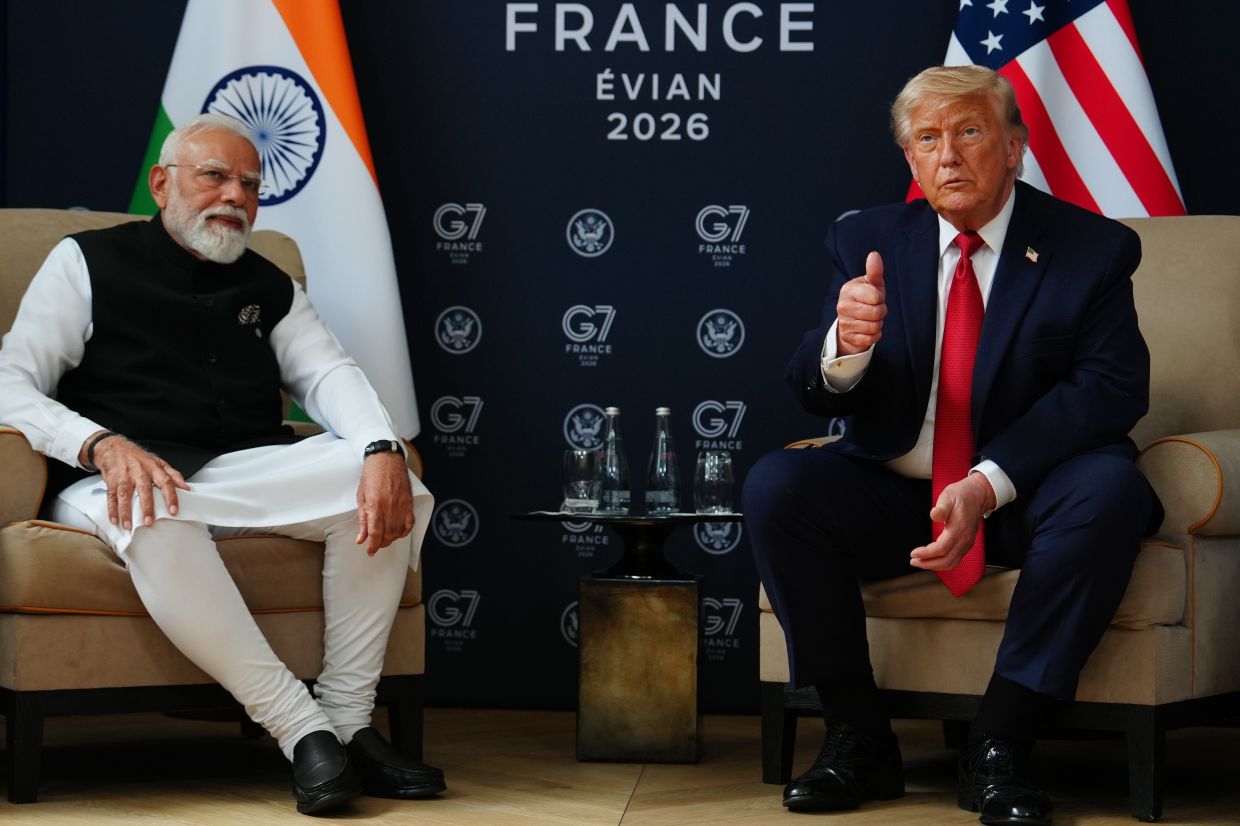
New Delhi and Washington have moved closer to a comprehensive trade accord, according to statements released Thursday after Prime Minister Narendra Modi's meeting with President Donald Trump at the G7 gathering in Evian, France. The two leaders held their first in-person discussion since February 2025, and both signalled optimism about resolving longstanding commercial disputes that have complicated their economic partnership. Trump told journalists in Evian that the two sides were "very close" to reaching a deal, while India's foreign ministry emphasised that officials had been instructed to complete negotiations on what it termed a "commercially meaningful agreement at the earliest."
The bilateral trade negotiations have stretched across multiple years, complicated by persistent disagreements over tariff schedules, market access in sensitive sectors, and differing regulatory standards. Both nations have ambitious targets embedded in their negotiations: establishing a framework that would increase two-way commerce to $500 billion annually by 2030 represents a substantial expansion of current trade volumes. The interim trade agreement under discussion would represent a significant diplomatic achievement for both administrations, particularly given the protectionist environment that has characterised recent US trade policy.
Trump's characterisation of Modi as "one of the toughest" negotiators underscored the complexity of the discussions, which have required extensive give-and-take on both sides. The Indian government's measured language about "significant progress" suggests cautious optimism rather than imminent conclusion, though senior officials have privately indicated that substantial groundwork has been completed. Commerce Minister Piyush Goyal stated in early June that the first phase of the agreement was approximately 99 per cent finalised, suggesting that remaining obstacles are relatively narrow in scope, though perhaps substantial in commercial importance.
The trajectory of these negotiations has reflected broader geopolitical realities and domestic political pressures. An initial understanding was reached in February, but subsequent momentum was disrupted when the US Supreme Court struck down Trump's wide-ranging tariff measures. The administration subsequently initiated investigations into alleged unfair trading practices by multiple countries, including India, while implementing a blanket 10 per cent duty on certain imports. These moves created uncertainty about Washington's ultimate trade objectives and complicated New Delhi's calculation of what concessions might be necessary to secure a final agreement.
US Trade Representative Jamieson Greer's planned visit to India in the week following the G7 meeting indicates that substantive negotiations will continue at the technical level, suggesting that outstanding issues remain unresolved despite the leaders' optimistic public statements. The involvement of trade officials typically indicates that negotiators are working through specific sectoral concerns, intellectual property provisions, and implementation timelines. India has historically sought improved market access for its technology services sector and agricultural products, while the US has prioritised opening Indian markets for manufactured goods and pharmaceuticals.
Beyond commercial considerations, Modi raised security concerns regarding seafaring personnel during his bilateral with Trump. Three Indian sailors were killed on 10 June when a US military strike struck a commercial vessel off Oman, an incident that highlighted the dangers posed to neutral maritime traffic by regional military escalation. India's geographic position and economic dependence on energy supplies transiting through the Middle East region place it in a uniquely vulnerable position during conflicts that disrupt shipping routes and supply chains. Modi stressed the importance of ensuring Indian seafarers' safety as part of any Iranian-American negotiations that might stem from broader conflict resolution efforts in the region.
The Middle East instability has created cascading economic consequences that reverberate throughout Asia, and India has been particularly hard hit. The closure of the Strait of Hormuz by Iran has throttled energy flows, disrupting Indian oil and gas supplies at a time when global energy markets remain tight and prices volatile. Beyond energy, the conflict has constrained supplies of critical fertilisers and disrupted food logistics corridors, creating inflationary pressures that have permeated Indian agriculture and manufacturing sectors. These supply-chain disruptions disproportionately affect India and other Global South economies that depend heavily on reliable, affordable energy and food imports.
Modi's warning that Middle Eastern instability would impose long-term economic costs on developing nations reflected New Delhi's particular vulnerability as an energy-importing economy with limited ability to cushion itself against global price shocks. While wealthy nations possess strategic reserves and alternative supply sources to weather disruptions, countries like India must absorb higher commodity costs directly through inflation and reduced economic growth. This structural disparity between Global North and Global South economies has become increasingly apparent during successive international crises, from pandemic-related supply-chain breakdowns to the current regional conflict.
The timing of Modi's emphasis on these security and economic concerns indicates that New Delhi views the G7 summit as an opportunity to elevate developing-nation interests within forums traditionally dominated by wealthy industrialised countries. India's recent elevation to full G7 membership, albeit invited status rather than permanent standing, provides a platform for articulating the distinct challenges facing the Global South. By linking trade negotiations with security and humanitarian concerns, Modi signalled that India seeks not merely commercial access but a broader economic partnership that acknowledges asymmetries in international economic architecture.
For Malaysian observers and those throughout Southeast Asia, the India-US trade negotiations carry significant implications. A successful conclusion could establish precedents for other regional economies seeking improved access to American markets or negotiating frameworks for addressing bilateral trade imbalances. Additionally, India's economic growth trajectory remains consequential for regional supply chains, investment flows, and technology partnerships. Stronger Indo-American commercial ties could reshape regional economic dynamics and influence the competitive landscape for trade and investment within Asia-Pacific markets.
The negotiations also occur within a broader context of strategic positioning in the Indo-Pacific region, where economic partnerships increasingly reflect geopolitical alignments. India's deepening trade relationships with the United States signal New Delhi's continued commitment to balancing its economic engagement across multiple major powers while maintaining its strategic autonomy. For Southeast Asian nations carefully navigating great-power competition, India's ability to sustain constructive commercial relationships with Washington while maintaining independent foreign policy demonstrates a pathway for managing complex international relationships.
As officials from both countries continue detailed negotiations in the coming weeks, the outstanding issues likely involve sectoral interests with significant domestic political constituencies on both sides. Agricultural producers, pharmaceutical manufacturers, technology companies, and labour-intensive industries all have stakes in the agreement's final terms. The pressure to conclude negotiations before year-end suggests both sides view the agreement as strategically important, though neither appears willing to sacrifice core interests to achieve agreement by an arbitrary deadline. The next phase of technical talks will reveal whether the remaining differences can be bridged through creative compromise or whether fundamental disagreements might yet prevent conclusion of an agreement that both leaders publicly describe as imminent.