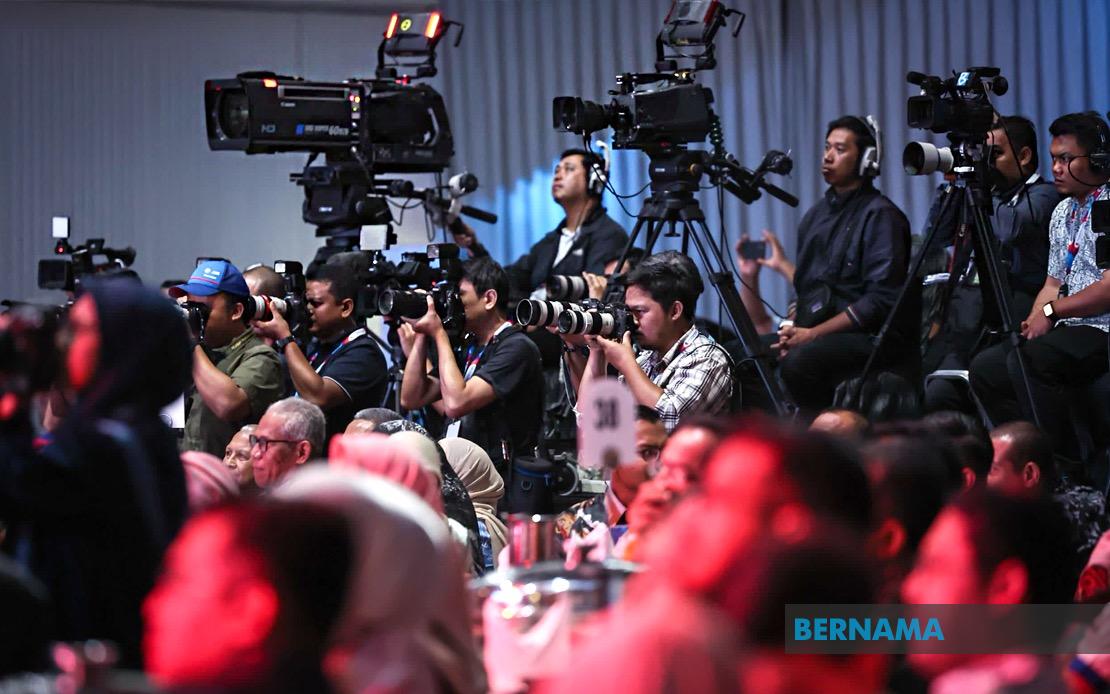
The Malaysian Media Council has given its backing to Prime Minister Datuk Seri Anwar Ibrahim's recent pronouncement that complaints targeting journalists employed by established news organisations ought to be submitted to the Council initially, rather than proceeding directly to law enforcement or court systems. This endorsement signals growing consensus around the importance of independent media self-regulation in Malaysia's evolving democratic landscape, particularly as the nation grapples with its international press freedom standing.
MMM characterised the Prime Minister's intervention as a significant validation of the Council's institutional standing and operational mandate. By prioritising the self-regulatory pathway, the government has effectively reaffirmed its commitment to balancing the dual imperatives of safeguarding journalistic practice whilst maintaining media accountability through transparent, professionally-administered processes rather than ad-hoc reactive measures.
The Council underscored that its role fundamentally differs from judicial or police functions. Rather than duplicating the work of courts or law enforcement bodies, MMM positions itself as a specialised forum equipped to assess disputes arising from journalistic conduct, editorial decisions, reporting accuracy, rights of response, and broader questions concerning responsible media practice. This differentiation proves crucial in preventing either unwarranted harassment of journalists or leaving legitimate grievances unaddressed through appropriate channels.
A cornerstone of MMM's argument rests on the premise that journalists, whilst remaining fully subject to Malaysian law, should not face automatic investigation or prosecution simply because a complaint has been filed by any interested party. The Council contends that contextual understanding is essential—complaints concerning journalistic work must be evaluated against the democratic function that free press serves, the media's public responsibilities, and established professional standards. Without such filtering, the organisation warns, journalists could become vulnerable to weaponised complaints designed to intimidate rather than remedy genuine wrongs.
The procedural framework MMM proposes begins with intake screening by its Secretariat, which determines whether incoming complaints fall within the Council's jurisdiction and genuinely relate to journalistic or media practice matters. Those meeting these criteria may then be referred to the relevant media organisation for response, clarification, or corrective action. Should preliminary resolution prove impossible, complaints advance to formal assessment under the Council's Code of Conduct and recognised journalism principles. This staged approach theoretically protects journalists from arbitrary pressure whilst providing complainants with structured recourse.
MMM has been careful to refute suggestions that its mechanism exists to shield the media from accountability. Instead, the Council frames its role as ensuring that media accountability operates through properly constituted, independent, and balanced processes rather than through informal pressure, public campaigns, or threat-based tactics. This distinction matters considerably for public confidence in both journalism and self-regulation—accountability that appears arbitrary or selective undermines rather than strengthens democratic institutions.
The Council has explicitly rejected the false dichotomy between media freedom and media responsibility, instead advocating that these principles ought to be strengthened in tandem. This framing responds to longstanding international criticism that press freedom cannot exist alongside journalistic negligence or ethical lapses. By positioning professional self-regulation as compatible with—indeed, supportive of—genuine freedom, MMM attempts to reorient the conversation around press freedom from a defensive posture to a constructive one.
The timing of MMM's statement carries particular significance given Malaysia's relatively weak World Press Freedom Index rankings, a reality the Prime Minister's announcement implicitly acknowledged. International assessments of press freedom often incorporate metrics regarding government interference with journalism, harassment of journalists, and the adequacy of legal protections. By directing complaints through a professional, independent self-regulatory channel rather than law enforcement mechanisms, Malaysia signals to international observers that it takes both freedom and responsibility seriously.
MMM has extended an invitation to all stakeholders—government agencies, politicians, public institutions, civil society organisations, and ordinary citizens—to utilise its complaints mechanism rather than resorting to extra-institutional pressure or punitive measures. This appeal addresses a recurring pattern in Malaysian discourse wherein disputes involving media coverage frequently escalate into public confrontations, threats, or informal sanctions before any formal complaint process activates. Normalising recourse to professional channels represents a potential cultural shift in how Malaysia processes media-related conflicts.
The Council's statement also implicitly critiques existing practices by advocating for replacement of ad-hoc public pressure campaigns and threats with structured professional processes. This suggests recognition within media circles that current dispute resolution methods—often characterised by social media mobilisation, political interference, or selective enforcement—have compromised both journalistic independence and public confidence in media institutions. The MMM framework attempts to depoliticise media complaints by routing them through a dedicated, specialised body.
For Malaysian media practitioners and organisations, MMM's reiterated mandate provides some operational clarity regarding which institutions will initially handle complaints. This reduces uncertainty about where journalists should focus responses and whether they face exposure to concurrent or contradictory investigation processes. The Council's explicit statement that complaints should undergo professional assessment rather than automatic referral to police or prosecution authorities offers journalists modest protection against weaponised complaints, though significant ambiguity remains regarding where accountability ultimately resides.
The Council has committed to coordinating with government entities, Parliament, media organisations, civil society, and the public to implement this approach effectively and consistently. Such coordination proves essential given that MMM's authority derives partly from institutional cooperation—if government agencies or police disregard the self-regulatory mechanism and proceed independently with complaints, the system collapses. Whether this commitment translates into binding protocols or remains voluntary remains unclear, though MMM's tone suggests preference for consensus-based implementation.
The broader implications for Southeast Asia merit consideration. Malaysia's press freedom challenges resonate throughout the region, where tensions between media freedom and government control generate recurring friction. If MMM's framework demonstrates that professional self-regulation can address legitimate media accountability concerns whilst protecting journalistic independence, the model might inform approaches elsewhere in the region. Conversely, if the mechanism proves ineffective or becomes instrumentalised, it could reinforce arguments for more direct government oversight. The coming months will test whether this institutional innovation can deliver on its dual promise of protecting journalists from arbitrary action whilst ensuring meaningful accountability.

