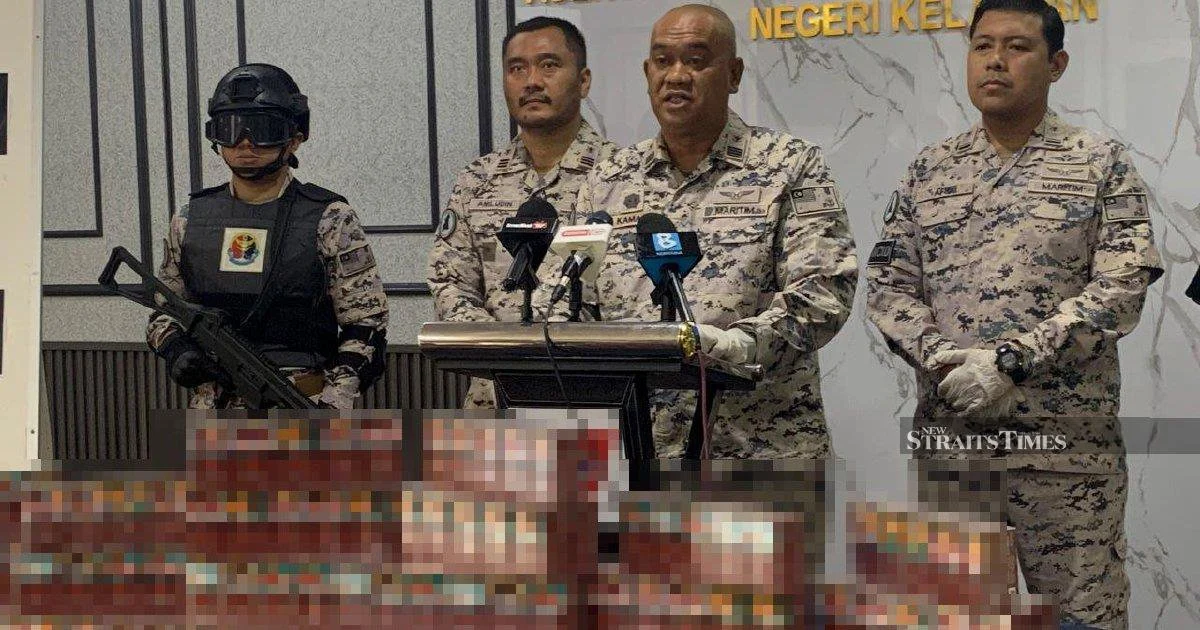
The Malaysian Maritime Enforcement Agency (MMEA) has successfully intercepted a significant consignment of contraband cigarettes during a recent enforcement operation along the Kelantan River. The seized merchandise, comprising 24 boxes of illegal cigarettes, carries an estimated market value of approximately RM212,000. The operation took place in the vicinity of Kampung Penambang in Pasir Puteh, highlighting the agency's continued vigilance in patrolling waterways that remain vulnerable to smuggling activities.
This interception represents another notable success in MMEA's ongoing battle against contraband trafficking along Malaysia's maritime and riverine boundaries. The Kelantan River, like several other natural watercourses in the northern states, has historically served as a conduit for illicit goods entering the country. Smugglers leverage these water routes to circumvent conventional border checkpoints and port facilities, making them persistent targets for enforcement agencies. The operation demonstrates the agency's commitment to disrupting these illegal supply chains before contraband reaches domestic markets.
Contraband cigarettes represent a significant economic concern for the Malaysian government beyond the criminal element. The illicit tobacco trade undermines legitimate domestic industries, erodes excise tax revenues that fund public health initiatives, and creates distorted market conditions that disadvantage lawful traders. Each successful seizure removes product that would otherwise compete with legally manufactured and properly taxed cigarettes sold through authorised distribution channels. The RM212,000 valuation suggests substantial quantities that, if left unchecked, would have generated substantial losses in government revenue.
The enforcement operation reflects MMEA's expanded mandate in combating transnational smuggling networks. While historically associated with maritime security and fisheries enforcement, the agency has progressively strengthened its role in detecting and intercepting smuggled goods. Personnel involved in these river operations require specialised training to identify suspicious vessels, recognise concealment methods, and conduct proper documentation of seized materials. The success at Kampung Penambang underscores the operational effectiveness of these enhanced capabilities.
Smuggling networks operating through northern Malaysian water routes typically maintain sophisticated logistics systems. These organisations often employ local knowledge to identify optimal crossing points, time operations according to tidal patterns and weather conditions, and maintain lookout systems to monitor law enforcement activities. The scale of the seized consignment—24 boxes representing a substantial commercial quantity—suggests an organised operation rather than opportunistic smuggling. Such discoveries provide intelligence that helps authorities understand trafficking patterns and identify key nodes in criminal networks.
The geographic location of Pasir Puteh in Kelantan places it within the broader northeastern maritime security landscape. This region encompasses multiple states and international boundaries, creating complex enforcement challenges across land and sea. The Thai border lies in proximity to Kelantan's northern reaches, and bilateral maritime cooperation has proven essential in addressing cross-border smuggling. Successful operations like the MMEA seizure demonstrate the importance of maintaining robust patrols and enforcement capabilities across these sensitive frontier zones.
Regional considerations further contextualise this enforcement action. Southeast Asia has emerged as a significant hub for tobacco smuggling, with contraband flowing between countries with differing tax structures and regulatory frameworks. Malaysia, with its relatively high excise duties on tobacco products, remains an attractive target market for smugglers sourcing cheaper supplies from neighbouring jurisdictions. The resulting price differentials create substantial profit margins that incentivise criminal entrepreneurs to invest in sophisticated smuggling operations.
The MMEA operation also reflects broader government anti-smuggling strategy that coordinates multiple agencies. Customs, police, and maritime authorities maintain information-sharing protocols and joint task forces targeting major commodity flows. Cigarette smuggling, while perhaps less politically prominent than drug trafficking, consumes considerable enforcement resources and generates consistent intelligence about broader smuggling infrastructure. Arrests and seizures in tobacco cases often lead investigators toward larger criminal organisations involved in multiple illicit commodities.
For consumers and legitimate retailers, contraband cigarettes present additional complications beyond legal consequences. Illicit products frequently lack proper manufacturing oversight, quality control, and ingredient verification. Health risks multiply when consumers purchase unregulated tobacco products of unknown provenance. The underground market creates consumer protection gaps that authorities struggle to monitor effectively. Combating smuggling therefore serves not merely fiscal purposes but also protects public health by preventing substandard products from reaching vulnerable populations.
Looking forward, the Kampung Penambang seizure reinforces the resource allocation patterns within MMEA's operational planning. Successful enforcement actions provide justification for sustained funding of maritime patrols and specialised training programmes. Personnel engaged in these operations gain experience identifying trafficking indicators and developing investigative leads that extend beyond individual seizures. Each operation generates data that refines future enforcement strategies and contributes to understanding evolving smuggling methodologies.

