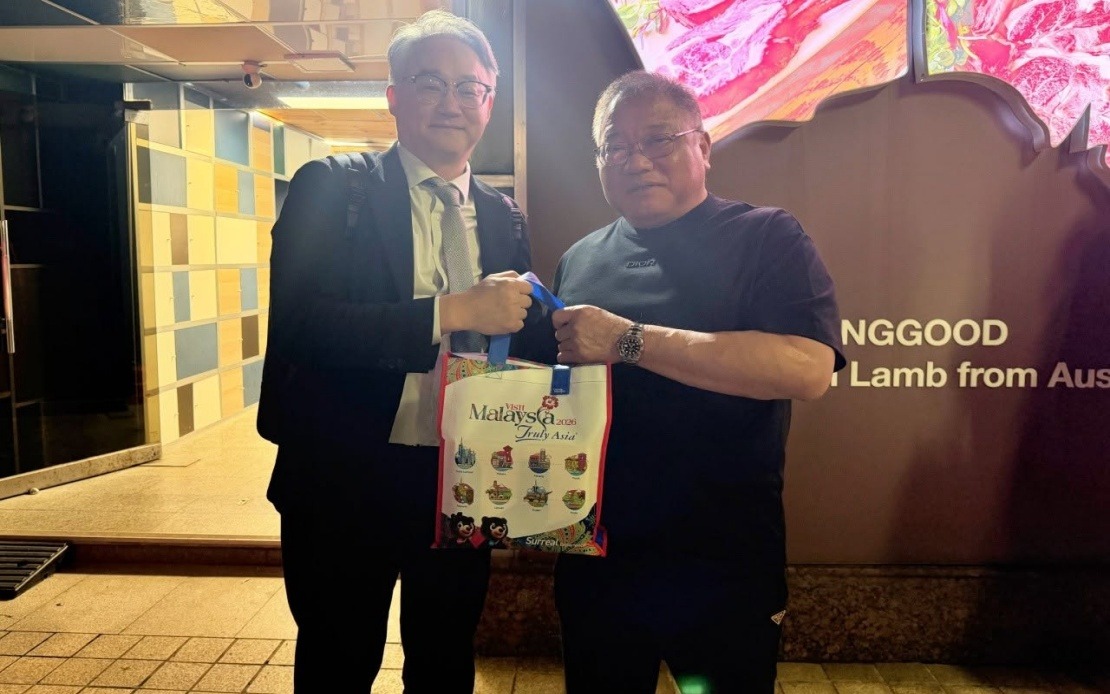
Tourism, Arts and Culture Minister Datuk Seri Tiong King Sing has issued a pointed reminder to Malaysia My Second Home (MM2H) Programme agents that holding a Malaysian operating licence provides no exemption from regulatory compliance in foreign markets. Speaking following discussions with the Malaysian Association in the Republic of Korea, Tiong stressed that agents cannot assume their domestic credentials satisfy the legal obligations of countries where they recruit participants and conduct promotional activities.
The minister's intervention addresses growing concerns about inconsistent oversight and questionable practices among MM2H intermediaries operating across international markets. Tiong explained that during his recent Korean visit, association representatives highlighted instances where Malaysian-based agents appeared unfamiliar with Korea's regulatory framework, instead dealing directly with local individuals who claimed capability to process MM2H applications. This informal arrangement has created a fragmented market vulnerable to misrepresentation and fraud, undermining confidence in what should be a carefully managed programme.
Understanding the distinction between holding a Malaysian licence and meeting overseas regulatory obligations proves critical for programme integrity. When MM2H agents expand internationally, they enter jurisdictions with distinct consumer protection laws, foreign investment regulations, and licensing requirements. Operating without proper local authorisation—even with valid Malaysian credentials—places applicants at risk and damages Malaysia's reputation as a trustworthy destination. Tiong indicated he would personally remind all MM2H agent companies upon returning to Malaysia that compliance encompasses every country where they conduct business.
The minister articulated a fundamental principle that should guide the programme's development: volume of applicants matters far less than protecting individual participants and maintaining market integrity. This statement represents a measured pivot toward quality oversight rather than aggressive expansion metrics. Establishing transparent, legally compliant operations in foreign markets actually strengthens long-term growth by building reliable pathways for legitimate applicants and deterring fraudulent intermediaries.
Korea represents a particularly significant market for MM2H expansion, attracting retirees specifically interested in spending Malaysian winters in warmer climates. The Korean demographic—affluent seniors with disposable income and lifestyle flexibility—aligns precisely with MM2H objectives. However, Korea also maintains rigorous regulatory standards and consumer protection frameworks that any credible agent must navigate properly. Tiong's emphasis on the Korean market's potential was coupled with the expectation that agents elevate their professionalism and compliance standards accordingly.
Establishing clearer cooperation mechanisms between Malaysian agents and local Korean industry partners emerges as a practical solution to current ambiguity. Rather than individual agents operating ad-hoc arrangements with Korean contacts, formalised partnership structures with vetted local firms would create accountability chains and reduce opportunities for misrepresentation. Such partnerships would establish clear communication protocols, shared compliance responsibilities, and professional standards benefiting applicants across both markets.
The underlying issue reflects broader challenges facing international lifestyle programmes globally. As destination countries attract cross-border interest, intermediaries proliferate across multiple jurisdictions, creating regulatory gaps. Without proactive coordination between home-country oversight bodies and foreign regulatory authorities, fraudsters and incompetent intermediaries exploit ambiguity. Malaysia's experience demonstrates that domestic licensing alone provides insufficient protection when agents operate internationally.
Fraud prevention and market confidence enhancement represent interconnected objectives. Prospective foreign applicants researching MM2H encounter bewildering variations in pricing, processes, and representations across different agents. Establishing uniform compliance standards across markets would provide applicants reassurance about legitimacy and reduce confusion that currently disadvantages honest agents competing against unscrupulous rivals offering unrealistic promises.
The minister's position implicitly acknowledges that the MM2H programme's success depends ultimately on satisfied participants and positive word-of-mouth, particularly within wealthy retiree networks where reputation circulates readily. Single instances of fraud or mishandled applications generate negative stories that deter far larger pools of potential applicants. Conversely, consistently professional experiences create referral chains generating sustained, high-quality applications.
Moving forward, implementation requires coordination between Malaysia's tourism ministry, MM2H programme administrators, and foreign regulatory authorities in key markets. Tiong's statements suggest this conversation has begun with Korean authorities and industry associations. Extending similar dialogues to other significant source markets—Singapore, Hong Kong, China, Australia—would establish comparable frameworks. Agents seeking international operations would then navigate clearly defined requirements rather than operating in regulatory grey zones.

