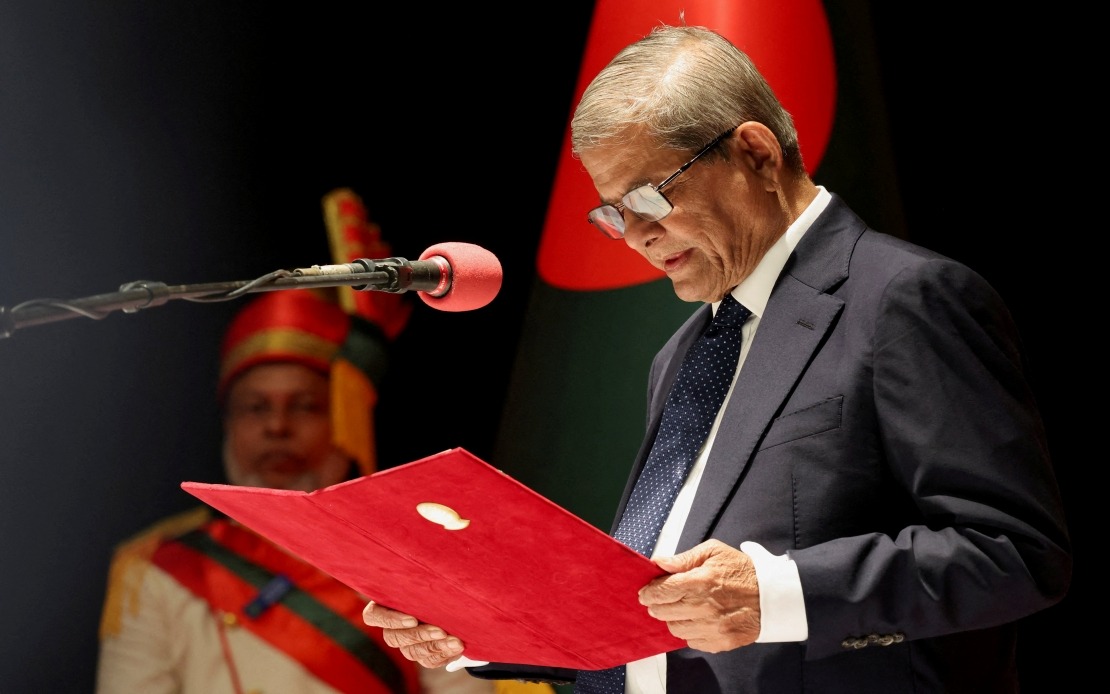
Mirza Fakhrul Islam Alamgir formally assumed office as Bangladesh's 23rd president on Friday evening, marking a significant moment in the country's ongoing political restructuring. The oath-taking ceremony unfolded at 7.30 pm at the Darbar Hall of Bangabhaban, the official presidential residence in Dhaka, with Acting Speaker Barrister Kayser Kamal administering the constitutional oath.
The transition reflects the broader institutional changes underway in Bangladesh following recent political upheaval. Fakhrul's election to the presidency represents recognition of his stature within the country's political establishment, particularly given his longstanding association with the Bangladesh Nationalist Party (BNP), where he previously served as secretary-general. His appointment carries weight beyond ceremonial considerations, as the presidency functions as a constitutional anchor during periods of governance transformation.
The formal proceedings included careful protocol elements that underscored the solemnity of the constitutional transfer. Upon his arrival at Bangabhaban, the president-elect received formal welcomes from senior state functionaries, followed by an official greeting from Acting President Hafiz Uddin Ahmad Bir Bikram. This choreography of reception and handover reflects Bangladesh's emphasis on maintaining institutional continuity and constitutional legitimacy during transitional phases.
The attendance list at the ceremony encompassed Bangladesh's principal power holders and institutional representatives. Prime Minister Tarique Rahman's presence carried particular significance, establishing the working relationship between the chief executive and the newly sworn-in president. The gathering also included the chief justice, cabinet members, parliamentary representatives, and senior military and civil service officials, demonstrating the breadth of institutional acknowledgment given to Fakhrul's elevation. Foreign diplomatic envoys attended as well, signalling international recognition of the constitutional proceedings.
The physical symbolism embedded in the ceremony held substantive meaning for constitutional governance. Following the oath administration, the newly sworn president and the outgoing acting president exchanged their official positions and seating arrangements—a ritualized representation of formal power transfer. This carefully orchestrated moment, while symbolic, served to publicly authenticate the succession and reinforce the constitutional framework governing presidential succession in Bangladesh.
Fakhrul completed the formal requirements by affixing his signature to both the oath of office and the oath of secrecy, binding him to constitutional obligations regarding confidentiality and faithful discharge of presidential duties. The conclusion of proceedings with the national anthem provided ceremonial closure while reaffirming national institutional symbolism.
Fakhrul's path to the presidency reflects his evolution as a senior statesman within Bangladesh's complex political landscape. As a former BNP secretary-general, he occupies a position of considerable influence within the country's largest opposition party and represents establishment conservatism within the broader political spectrum. His election by parliament in accordance with constitutional procedures underscores the formal legitimacy of the process, even as Bangladesh navigates significant political transitions.
For Malaysian observers and the broader Southeast Asian region, Fakhrul's presidency carries implications for Bangladesh's international positioning. As a figure associated with the BNP's traditional foreign policy orientation, his presence in the presidency may influence how Bangladesh calibrates its diplomatic relationships, including those with neighbouring countries and regional organizations. The stability signified by completing constitutional succession processes contributes to regional confidence regarding institutional resilience in one of Asia's most populous democracies.
The inauguration ceremony itself demonstrates Bangladesh's commitment to constitutional formalism and institutional procedure during turbulent political periods. The presence of multiple institutional actors—parliament, judiciary, executive, and security apparatus—alongside international observers reinforces the constitutional character of the transition. This emphasis on procedural legitimacy becomes particularly important when political circumstances are contested or unstable.
Looking forward, Fakhrul's presidency will require careful navigation of ceremonial responsibilities alongside substantive constitutional powers. The president's relationship with Prime Minister Tarique Rahman will shape how executive authority functions during what appears to be a transformative period in Bangladesh's governance. Presidential choices regarding ceremonial duties, constitutional interventions, and statecraft will inevitably set precedents for future occupants of the office.
The smooth execution of the oath-taking ceremony, undisturbed by logistical complications or institutional friction, provides a foundation for his presidency to proceed without immediate crisis. However, the broader political context—encompassing ongoing demands for accountability, institutional reform, and democratic consolidation—will test whether ceremonial legitimacy translates into substantive public confidence and effective governance. Fakhrul's tenure will unfold against these pressures, determining whether the presidency under his leadership becomes a stabilizing force or another contested element within Bangladesh's still-unsettled political trajectory.

