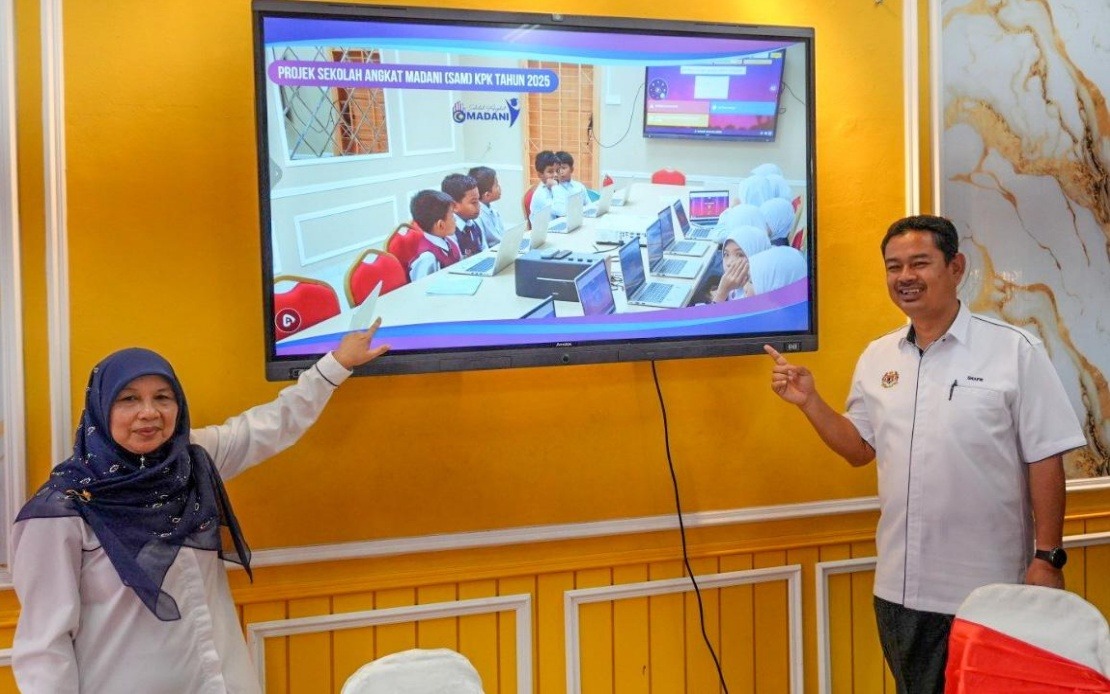
The Ministry of Plantation and Commodities has channelled RM100,000 towards comprehensive improvements at Sekolah Kebangsaan Bendang Kering in Kuala Kangsar, marking another step in the government's initiative to elevate educational standards in rural communities. The funds were formally handed over during a ceremony at the school attended by Shafie Taib, the ministry's deputy secretary-general for Strategic Planning and Management, underscoring the importance the ministry places on this development.
The Malaysian Rubber Board is serving as the implementing agency for this adoption scheme, demonstrating how different government entities can collaborate to support the national education agenda. This partnership reflects a broader strategy within the ministry to strengthen educational infrastructure and human capital development beyond urban centres, where resource disparities often limit student opportunities. The adoption model allows specialised agencies to leverage their expertise and networks in supporting schools that might otherwise struggle to access modern learning resources.
The tangible improvements already implemented at the school reveal a comprehensive approach to upgrading facilities. The assembly area and main hall have undergone renovations, creating more functional spaces for school activities and gatherings. Reading corners have been established to encourage a culture of literacy amongst the student population, while preschool classrooms have been refurbished to provide appropriate learning environments for younger children. These foundational spaces are critical because they shape the overall learning atmosphere and student experience.
Technology integration forms a significant component of the upgrade strategy. Interactive smartboards have been installed in classrooms, equipping teachers with modern tools to deliver more engaging and dynamic lessons. This investment in educational technology is particularly important for rural schools that have historically lagged behind their urban counterparts in access to such resources. The smartboards enable more collaborative and creative teaching methodologies, allowing educators to adapt content delivery to diverse learning styles and make complex concepts more accessible to students.
Comfort and functionality have also received attention, with the installation of air conditioning units throughout the school premises. This upgrade addresses a critical challenge in Malaysian education—many rural schools operate in challenging climatic conditions that can impede concentration and learning. Educational signage has been added to support navigation and reinforce learning messages, while new classroom furniture provides ergonomically appropriate seating and workspace for students of varying ages. These seemingly incremental improvements collectively contribute to creating an environment conducive to sustained academic engagement.
Beyond infrastructure, the programme encompasses structured academic support systems designed to boost performance in key subjects. A dedicated academic improvement scheme targeting Malay, English, Science, and Mathematics has been implemented, with incentives and support mechanisms in place to recognise and motivate high-achieving students. This targeted approach addresses areas where rural students frequently experience achievement gaps relative to their urban peers, helping to level the educational playing field across the country.
Character development and leadership training form an equally important dimension of the initiative. The Student Leadership Motivation Camp and Student Talent Development Camp are designed to cultivate skills that extend beyond academic achievement. These programmes recognise that students require exposure to opportunities that develop confidence, communication abilities, and collaborative skills—competencies increasingly valued in Malaysia's evolving economy. By identifying and nurturing talent early, such initiatives can unlock potential that might otherwise remain undeveloped in resource-constrained settings.
The selection of SK Bendang Kering reflects deliberate government policy to ensure that rural areas receive proportionate attention in the modernisation of educational facilities. Rural schools often serve communities with limited economic resources, making government-led initiatives essential for ensuring equitable access to quality education. This school adoption approach demonstrates that closing infrastructure gaps requires direct intervention and sustained commitment rather than reliance on market forces or local fundraising efforts that may be limited in less affluent areas.
For Malaysian and regional education stakeholders, this initiative offers insights into how government agencies can systematically address rural education deficits. The integrated approach—combining infrastructure development, technology adoption, academic support, and character building—represents a holistic understanding of what contemporary quality education requires. Rather than treating school improvement as a single-dimensional problem, the programme addresses physical environment, technological capability, pedagogical support, and student development simultaneously.
The implications for similar rural schools across Perak and neighbouring states are significant. This model demonstrates viability and provides a template that could be replicated, adapted, and scaled to benefit other communities. As Malaysia continues pursuing middle-income and high-income development aspirations, ensuring that rural students have equivalent opportunities to acquire knowledge and skills becomes increasingly critical for maintaining social cohesion and achieving inclusive growth objectives.
The ministry's confidence in the programme's potential to drive measurable improvements rests on its multifaceted nature and focus on sustainability through developed human capacity. By combining facility upgrades with systems that motivate academic excellence and leadership development, the intervention addresses both the immediate resource deficit and the longer-term human development pipeline. This approach acknowledges that infrastructure alone cannot transform educational outcomes without accompanying investments in pedagogical support and student motivation.

