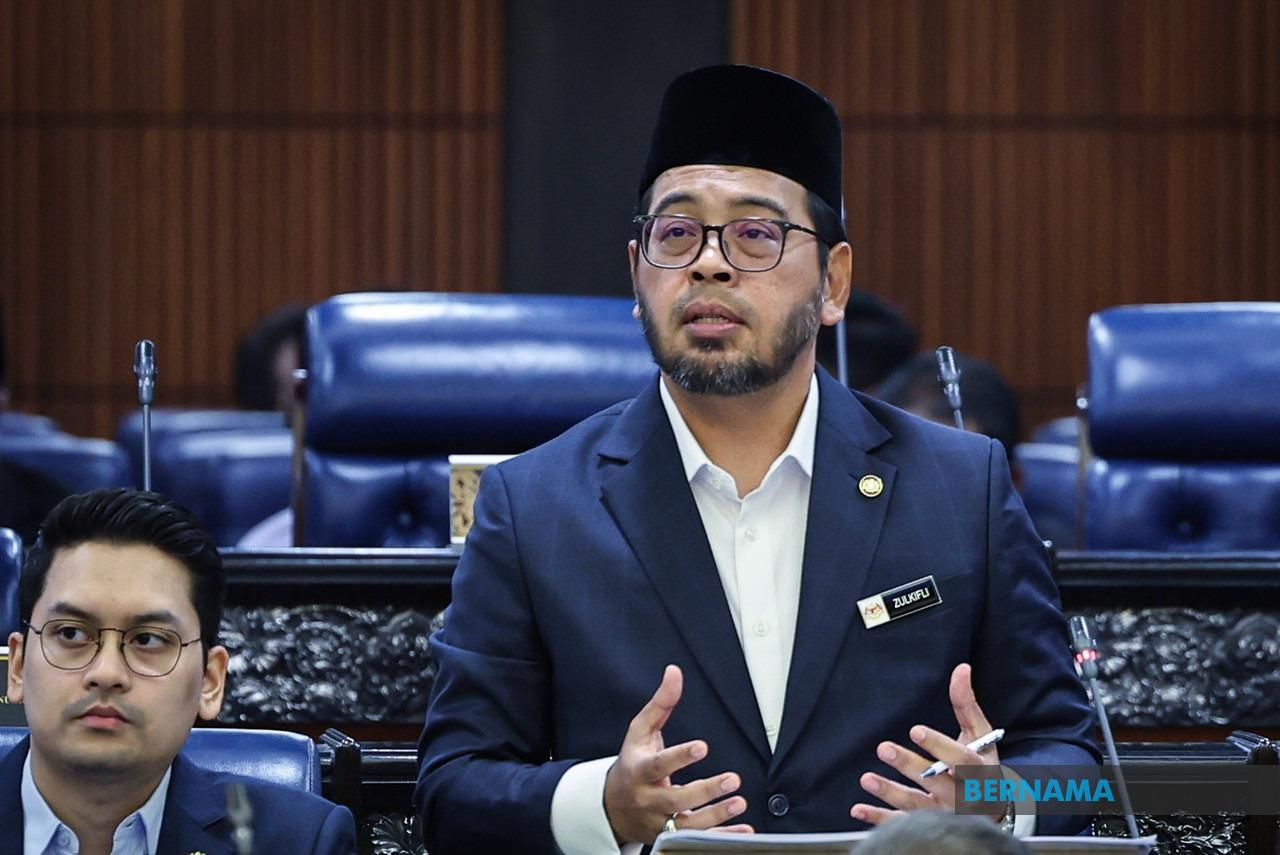
A damning assessment of Tabung Haji's financial practices has emerged from the highest levels of government, with Religious Affairs Minister Dr Zulkifli Hasan drawing a striking parallel to ordinary Malaysians to illustrate how the pilgrimage fund deceived depositors. During parliamentary debate on the Royal Commission of Inquiry findings, Dr Zulkifli employed the example of a hypothetical single mother—Mak Cik Senah—to lay bare what he characterises as systematic fraud at Malaysia's largest Islamic financial institution, one that ultimately necessitated a government rescue package exceeding RM10 billion.
The minister's comparison cuts to the heart of what the RCI uncovered: Tabung Haji reported substantial profits and paid generous returns to depositors while its balance sheet deteriorated catastrophically behind closed doors. Under Malaysian law, dividend distributions are only permissible when an institution's total assets exceed its liabilities and outstanding obligations. Yet Tabung Haji declared profits consistently prior to 2018 despite failing to meet this fundamental criterion, raising serious questions about governance oversight and fiduciary responsibility toward the millions of Muslim Malaysians who entrusted their savings to the organisation.
The mechanism of deception centred on a valuation method called Realisable Asset Value, or RAV, applied outside the institution's audited financial statements. By artificially inflating asset valuations through this unaudited parallel accounting system, Tabung Haji created the false impression of financial health and profitability. Dr Zulkifli emphasised that this represented nothing less than cooking the books—a deliberate distortion designed solely to justify dividend announcements that had no legitimate basis in actual financial performance. The arrangement bore hallmarks of what he described as a Ponzi scheme, where earlier returns appear to flow from genuine profits when they actually derive from subsequent investor contributions.
The scope of the valuation manipulation was breathtaking. Of RM4.6 billion in total assets claimed by Tabung Haji, only RM556 million—barely one-eighth—underwent formal professional valuation. The remainder existed largely on paper, a house of cards constructed through creative accounting techniques that breached Malaysia's Financial Reporting Standards. These practices violated the Tabung Haji Act itself, the statutory framework governing the fund's operations, yet proceeded unchecked for years. The RCI's investigation also identified breaches in impairment policies, where the institution failed to adequately reflect asset deterioration in its accounts, further obscuring its true financial trajectory.
Audit firm PricewaterhouseCoopers identified and documented these irregularities in a 2018 report, confirming the deliberate nature of the manipulation. Dr Zulkifli took care to clarify that Ernst & Young, another major auditor, was never Tabung Haji's primary auditor and bore no responsibility for asset valuations; that firm had merely reviewed pro forma statements prepared by the fund itself. This distinction matters considerably, as it demonstrates that external scrutiny, when properly conducted, could have exposed these practices earlier. The minister's emphasis on PwC's findings underscores that the manipulation was not a matter of legitimate accounting disagreement but rather a clear deviation from recognised standards and professional norms.
The consequences of this financial mismanagement extended far beyond accounting irregularities. As the deficit between assets and liabilities widened year after year, Tabung Haji's financial sustainability was progressively compromised. By paying dividends it could not afford, the institution extracted capital from its own reserves, accelerating its drift toward insolvency. For ordinary Malaysians who view the fund as a secure repository for savings intended eventually to finance their pilgrimage to Mecca, this represented a catastrophic betrayal of trust. The fund's eventual collapse would have devastated millions, destroying years of disciplined savings accumulation and creating ripple effects throughout Malaysia's Muslim communities.
The government's decision to inject over RM10 billion to prevent Tabung Haji's complete failure represented an extraordinary and extraordinarily costly intervention. Dr Zulkifli pointedly observed that this sum could have funded the construction of dozens or even hundreds of hospitals, schools, mosques, and community facilities across Malaysia. The opportunity cost of this bailout cannot be overstated, particularly for a developing nation with competing demands on its public resources. The rescue was necessary not merely to protect individual depositors but to preserve an institution of deep cultural and religious significance to Malaysia's Muslim population, making the stakes of the original misconduct immense.
The mechanics of Tabung Haji's accounting fraud reveal institutional weaknesses that extend beyond a single fund. The ability to maintain elaborate deceptions across multiple financial reporting periods without immediate detection suggests gaps in governance frameworks, board oversight, and internal audit functions. Questions arise about why red flags were not escalated more rapidly to regulators and why the Malaysian Financial Reporting Standards were not more rigorously enforced. For investors and depositors across Malaysia's broader financial sector, the Tabung Haji case serves as a sobering reminder that institutional size, cultural prominence, and government association do not guarantee financial soundness or honest management.
The RCI's findings also implicate senior management decision-making. Creating an entirely separate valuation system outside audited statements was not an accidental omission but a deliberate architectural choice designed to obscure true financial position. Someone or multiple individuals authorised these practices, approved the creative accounting methodologies, and sustained them across fiscal years. The investigation's identification of specific breaches in the Tabung Haji Act suggests potential personal liability beyond institutional remediation, though Dr Zulkifli did not address individual accountability in his parliamentary remarks.
For Malaysian policymakers and regulators, the Tabung Haji experience underscores the necessity of enhanced monitoring mechanisms for large funds holding substantial public deposits. The gap between audited financial statements and parallel valuation systems used for decision-making represents exactly the kind of opacity that fraudulent schemes require to persist. Strengthening requirements for consolidated financial reporting, limiting the ability to use unaudited valuations for substantive decisions, and establishing clearer accountability lines could prevent similar scenarios in other institutions.
The minister's deployment of the Mak Cik Senah analogy, while simplified, effectively communicates a complex accounting violation to the general public. It reframes the misconduct not as a technical breach but as a fundamental betrayal—a direct parallel to a family member misappropriating savings entrusted to their care. This rhetorical approach serves an important function in maintaining public understanding of financial accountability and the real human costs of institutional fraud. Yet it also raises uncomfortable questions about the systemic factors that enabled such deception to persist unchecked within one of Malaysia's most significant Islamic financial institutions for so many years.

