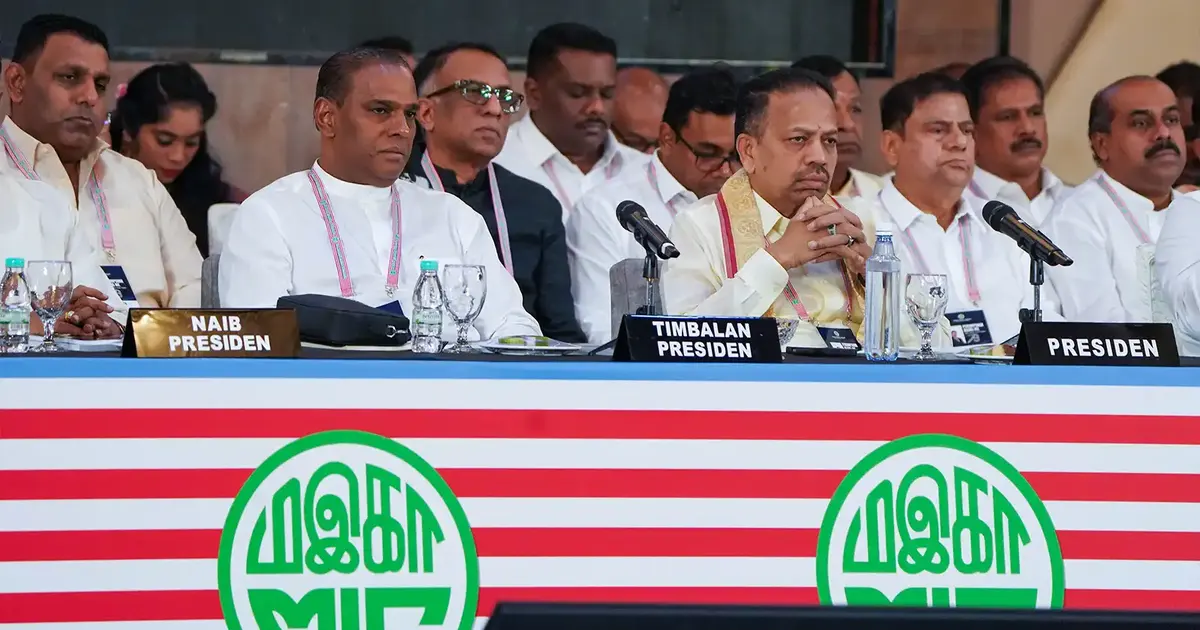
The Malaysian Indian Congress (MIC), the Indian-based component of the Barisan Nasional coalition, is recalibrating its electoral strategy for the upcoming Johor state elections by committing to defend two constituencies while relinquishing one seat to its coalition partner Umno. This tactical adjustment reflects the ongoing negotiations within the BN alliance as it prepares for what is expected to be a closely contested state poll.
MIC's decision to contest a total of four seats represents both the party's continued relevance within the coalition framework and the pragmatic compromises required to maintain unity ahead of state-level contests. By trading one seat to Umno—a move indicative of how larger components sometimes assert dominance within the alliance—MIC appears to be sacrificing immediate seat count for strategic preservation of its core constituencies. This negotiating position underscores the delicate balance that smaller parties must maintain within broader coalitions, particularly when facing electoral pressures that demand consolidated responses.
Among the constituencies where MIC will mount its defence is Bukit Batu, a seat that carries particular significance for the party's representation in Johor's legislature. The decision to prioritise this seat suggests that MIC has identified it as defensible terrain where the party retains sufficient grassroots support and community networks to withstand electoral challenges. Bukit Batu's composition and electoral history would have factored heavily into MIC's calculations when determining where to allocate its limited resources and candidate selection efforts.
The seat swap arrangement with Umno exemplifies how Malaysian coalition politics operates at the state level, where larger parties leverage their numerical strength to influence the distribution of electoral opportunities. Rather than contesting all four seats independently, MIC's willingness to cede one constituency demonstrates an acceptance of hierarchy within the BN framework. This dynamic has characterised Barisan Nasional's operations for decades, though it occasionally generates internal tensions when smaller component parties feel they are being marginalised or denied fair representation.
For Malaysian Indian voters in Johor, this arrangement carries implications for their political voice and representation. MIC's presence in state politics provides a dedicated channel through which community concerns—ranging from economic opportunities to cultural and religious recognition—can theoretically be articulated within the coalition. However, the party's reduced footprint compared to Umno inevitably means that Indian Malaysian interests must be negotiated and advocated within a broader Malay-dominant political structure.
The timing of this seat adjustment comes as all major coalitions in Malaysia intensify preparations for state-level contests. The Johor election, whenever it is called, will serve as a barometer of public sentiment and provide valuable insights into electoral dynamics heading toward any future general election. MIC's strategy in Johor will likely inform how other component parties approach their own state contests, establishing patterns of compromise and competition that could cascade across the federation.
Umno's willingness to accept only one seat from MIC in this arrangement suggests confidence in its own electoral prospects and potentially indicates that the coalition perceives the Johor electorate as terrain where Umno can perform strongly. The distribution of seats across coalition partners is never merely administrative; it reflects calculations about which party can most effectively contest particular constituencies and aggregate votes for the broader alliance.
MIC has long occupied a unique position within Barisan Nasional, representing a community that, while numerically smaller than Malays, has historically held significant economic and social influence in Malaysia. In Johor, the Indian Malaysian demographic profile varies across constituencies, with some areas possessing more substantial Indian populations than others. MIC's seat selections likely prioritise areas where community concentration is highest and where the party's organisational machinery remains functional.
The challenge facing MIC extends beyond the immediate arithmetic of the Johor contest. The party must demonstrate to its constituents that even with a reduced number of contested seats, it remains a potent force capable of advancing community interests. This requires not only winning the constituencies it contests but also effectively articulating how its reduced presence in the legislature will translate into tangible benefits for Indian Malaysian communities across the state.
Regionally, MIC's electoral positioning in Johor merits attention from other Southeast Asian observers tracking how minority communities navigate majority-dominated political systems. Malaysia's coalition model, despite its imperfections, has provided minority groups with institutional channels for political participation. The success or failure of component parties like MIC in upcoming contests will influence how these power-sharing arrangements evolve.
Looking ahead, MIC's performance in Johor will signal whether the party can maintain its relevance in state politics despite accepting a subordinate position within the coalition hierarchy. The two seats it defends and the one it contests alongside Umno will become focal points for assessing whether smaller component parties can sustain meaningful representation within Barisan Nasional's increasingly complex political architecture.
The broader context of this seat arrangement suggests that coalition politics in Malaysia continues to privilege efficiency and electoral mathematics over rigid egalitarianism. For MIC, navigating this reality while retaining credibility with Indian Malaysian voters represents an ongoing strategic challenge that will extend well beyond the Johor polls.