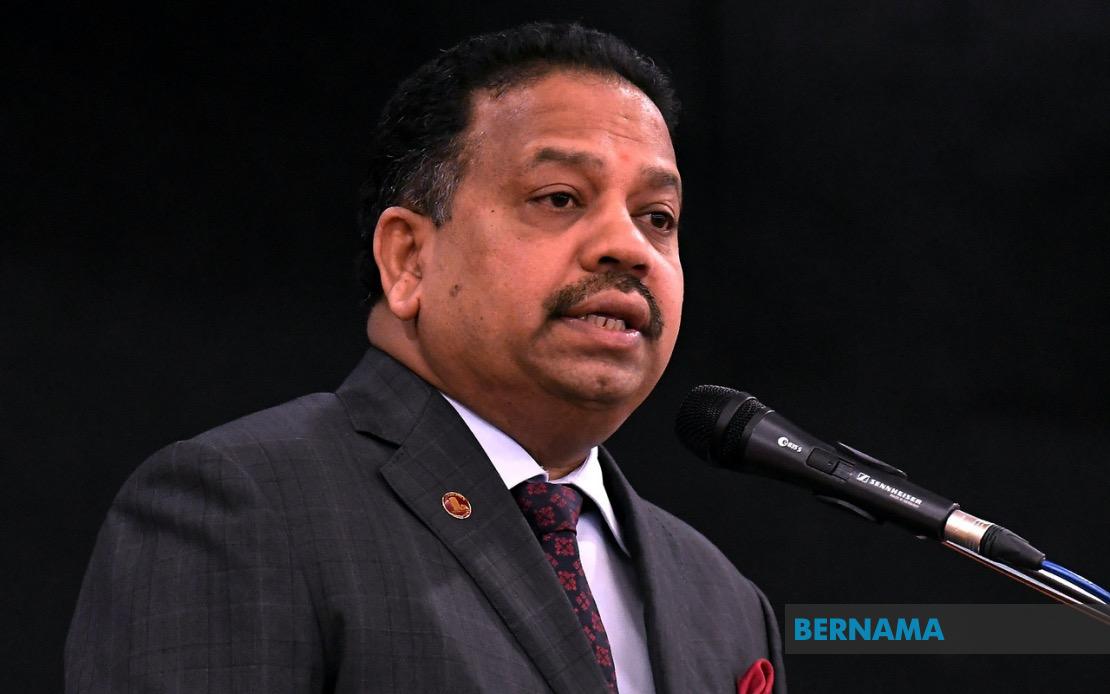
The Malaysian Indian Congress entered the 16th Johor state election with optimism about its electoral prospects among the Indian community, with party president Tan Sri S.A. Vigneswaran asserting that voters would continue backing Barisan Nasional candidates in constituencies where MIC put forward representatives. Speaking during a campaign event in Kulai on July 10, Vigneswaran grounded his confidence in what he described as a productive working relationship between MIC and both federal and state governments, enabling the party to address longstanding concerns affecting Indian citizens.
MIC fielded four candidates across the state assembly contests, positioning them strategically in seats where the party believed it could make meaningful gains. K. Raven Kumar contested the Kemelah seat, while V. Rugendran represented the party's interests in Kahang. P. Pannir Selvam carried the MIC banner in Perling, and R. Kumaran sought election in Bukit Batu. The party's approach reflected a broader strategy within Barisan Nasional to consolidate support among minority communities ahead of the state-level contest.
During his press conference, Vigneswaran articulated a vision of legislative representation centred on collaborative governance and pragmatic problem-solving. He emphasised that voters required state assembly members capable of working constructively with the Johor government to translate public concerns into concrete policy responses and infrastructure improvements. This framing positioned MIC candidates as bridges between their constituents and the machinery of state administration, rather than solely as opposition voices or symbolic representatives.
The party's campaign strategy deliberately eschewed the personal invective that sometimes characterises Malaysian electoral contests. Instead, Vigneswaran explained, MIC had maintained a mature and solution-focused discourse throughout the campaign period, concentrating its messaging on tangible proposals to address community grievances. This approach suggested that MIC believed substance would resonate more powerfully with Indian voters than confrontational rhetoric targeting political opponents.
Beyond electoral positioning, Vigneswaran found himself addressing allegations concerning government funding arrangements. A Tamil-language news portal had published a report claiming that MIC had received RM221 million in government funds, a figure that Vigneswaran characterised as inaccurate and fundamentally misleading. Rather than defending MIC's finances directly, he pivoted to explaining the nature of educational grants flowing to AIMST University, an institution owned by a foundation rather than by the party itself.
The clarification revealed that the university receives annual government grants designated specifically for operational purposes and facility maintenance. Since Datuk Seri Anwar Ibrahim assumed office as Prime Minister in 2023, AIMST University has received RM25 million each year from federal allocations. These funds undergo regular auditing and serve concrete institutional needs: upgrading residential facilities for students, installing renewable energy systems such as solar panels, and reducing the university's overall operational burden. By lowering institutional costs, these allocations indirectly benefit students through maintained or reduced fee structures.
Vigneswaran's explanation sought to reframe the narrative around government support for institutions associated with the Indian community. Rather than suggesting improper financial transfers to MIC itself, he positioned the grants as legitimate public investment in higher education infrastructure that ultimately serves the broader goal of keeping university education affordable for Indian Malaysian students. This distinction carried significant political weight, as accusations of misused public funds could undermine MIC's standing among voters concerned about transparent governance and equitable resource distribution.
The party's legal team responded to what Vigneswaran deemed defamatory reporting by instructing lawyers to issue a formal demand letter to the Tamil portal. This notice required the publication to correct the article and retract its allegations, signalling MIC's willingness to pursue legal remedies against what party leadership viewed as false and damaging claims. The approach reflected growing sensitivity within Malaysian political circles to media accountability and the consequences of unsubstantiated financial allegations.
For Malaysian Indian voters in Johor, the election presented familiar dynamics around minority political representation within the Barisan Nasional framework. MIC's historical role as the designated channel for Indian community concerns within the ruling coalition meant that party performance in the Johor contest carried broader implications for Indian political participation at state level. The party's emphasis on collaborative governance and problem-solving rather than oppositional rhetoric suggested a confidence that constructive engagement with state authorities would deliver tangible benefits to constituents.
The allegations surrounding government funding, though MIC disputed their characterisation, highlighted ongoing questions about transparency in how government resources flow to institutions and political parties associated with minority communities. These debates occur within a context where Indian Malaysians, despite constituting roughly six per cent of the national population, face persistent concerns about educational access, socioeconomic mobility, and representation in professional sectors. Government funding for universities catering to Indian students thus carries symbolic as well as practical significance.
Viewing the Johor contest within the broader Southeast Asian context reveals patterns of coalition politics common across the region. In Malaysia, as elsewhere, minority communities often negotiate their political influence through power-sharing arrangements with dominant coalitions rather than through independent electoral strength. MIC's positioning as the Indian representative within Barisan Nasional mirrors comparable mechanisms in other democracies where minority parties derive influence through coalition membership rather than autonomous parliamentary representation.
The party's campaign messaging ultimately reflected confidence that continuity with the state government mattered more to voters than alternatives, and that demonstrable results in addressing community concerns would outweigh ideological appeals from opposition parties. Whether that calculation proved accurate would depend heavily on whether Johor's Indian voters viewed their material circumstances as improved by the MIC-BN partnership, and whether they perceived government responsiveness to minority community priorities. The election results would provide empirical feedback on the persuasiveness of MIC's approach.

