The Malaysian Indian Congress (MIC) has signalled its intention to retain the Gadek seat in the upcoming Melaka state election whilst simultaneously exploring whether to broaden its electoral presence in the state, party deputy president Datuk Seri M. Saravanan announced this week. The Tapah Member of Parliament indicated that party leadership was currently engaged in a measured evaluation of several considerations that would ultimately determine whether the party should pursue additional seats beyond its traditional stronghold, emphasising that no final decision had yet been reached.
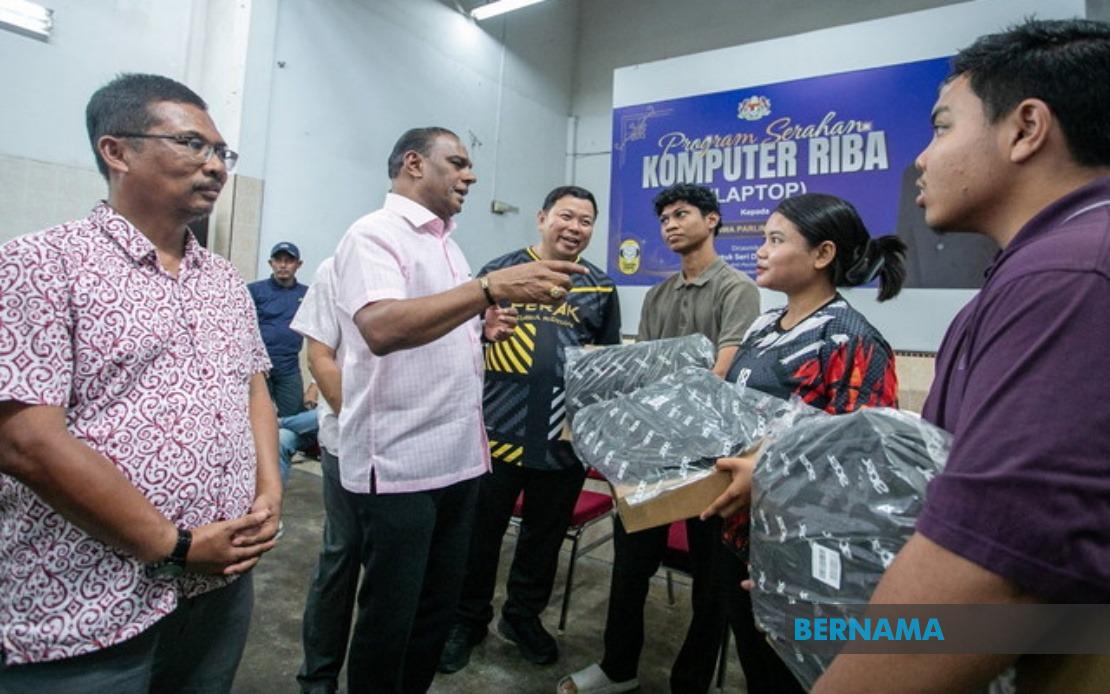
Saravanan outlined the criteria guiding the party's deliberations, noting that MIC would assess the viability of individual constituencies, the calibre and electability of prospective candidates, and realistic prospects for victory at the ballot box. This methodical approach reflects the party's recognition that expansion, while strategically appealing, must be grounded in practical electoral mathematics and ground-level organisational capacity. The deputy president's comments came during his attendance at the 2026 Tapah Parliamentary Students Laptop Handover Programme in Tapah, where he addressed media representatives on the matter.
Central to the party's deliberative process is the ongoing evaluation of potential candidates being conducted by MIC President Tan Sri S A Vigneswaran. Saravanan indicated that the leadership anticipated reaching a conclusion on the party's candidate slate and seat strategy in the near term, suggesting that announcements could arrive within weeks rather than months. This timeline would align with typical pre-election positioning, allowing successful candidates adequate opportunity to establish grassroots presence and mobilise supporters across their respective constituencies.
MIC's commitment to defending Gadek carries particular significance given the party's recent electoral history in Melaka. During the 2021 state election, the party's candidate VP Shanmugam secured the seat under the Barisan Nasional banner, emerging victorious in a competitive six-way contest with a narrow margin of 559 votes. That result underscored both the party's residual appeal among Indian voters in the constituency and the inherently volatile nature of the seat, where victory could pivot on relatively small movements in voter behaviour or turnout patterns.
Beyond candidate selection, MIC has already commenced substantive election preparatory activities aimed at consolidating its existing support base and identifying sympathetic voters across the state. Party operatives have begun systematic efforts to map voter populations and pinpoint core MIC supporters, recognising that victory in increasingly competitive Malaysian elections depends heavily on sophisticated voter identification and targeted engagement strategies. This foundational groundwork, though unglamorous, represents the essential scaffolding upon which contemporary electoral campaigns are built.
Simultaneously, party strategists are conducting issue mapping exercises to identify grievances and priorities animating the political discourse in Melaka communities, particularly among the Indian Malaysian population that has traditionally constituted MIC's base. Saravanan's reference to "issues that are currently being addressed or need to be addressed in the near future" suggests the party is attempting to translate community concerns into campaign messaging that resonates with voter priorities, whether these touch on economic hardship, educational access, employment opportunities, or communal representation within state governance structures.
MIC's cautious approach to expansion reflects broader dynamics within the Malaysian political landscape and the experiences of component parties within the Barisan Nasional coalition. Historically, smaller coalition partners have faced pressure to demonstrate electoral relevance and growth, yet overextension into constituencies lacking organic party presence or inadequate candidate quality has frequently resulted in embarrassing defeats that diminish rather than enhance party standing. By emphasising that any additional seats would meet rigorous standards across multiple dimensions, Saravanan appears to be signalling institutional prudence and realistic assessment of the party's current capacity.
The timing of this announcement also carries significance within the broader Malaysian political calendar. The Melaka state election remains at an undetermined date, with dissolution dependent on political developments and calculations by current state leadership. MIC's forward planning suggests the party is preparing for an election that could potentially be called within the coming months, necessitating that strategic decisions and candidate selections be formalised well in advance to allow adequate campaign mobilisation time.
For Malaysian Indian voters in Melaka and beyond, MIC's continued engagement in electoral politics through the Barisan Nasional framework represents a persistent though relatively modest avenue for community representation within Malaysia's competitive political system. The party's strategic calculations regarding seat expansion will likely become clearer as the actual election call draws nearer, at which point electoral realities and coalition negotiations with BN partners will crystallise these preliminary discussions into concrete candidate nominations and campaign strategies. Until then, MIC's preparatory efforts suggest a party attempting to balance institutional continuity, electoral credibility, and realistic assessment of its political position within Melaka's increasingly competitive and ethnically diverse electorate.

