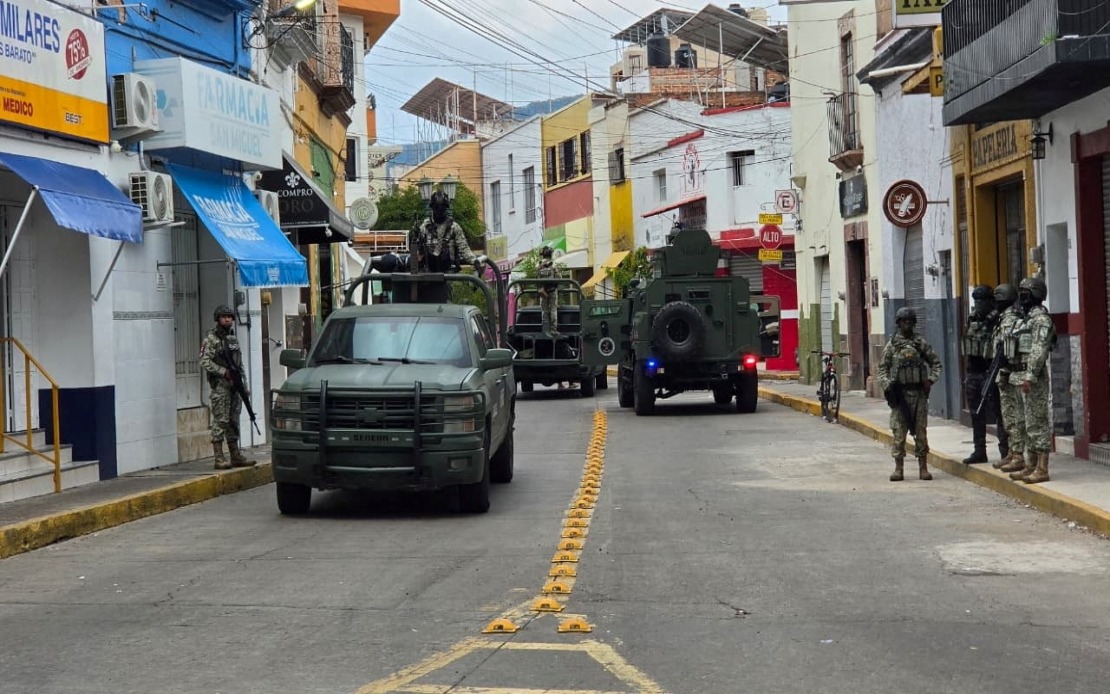
Mexico's Security Minister Omar Garcia announced the apprehension of a suspected cartel operative believed to have orchestrated the assassination of Uruapan Mayor Carlos Manzo, marking a significant development in a case that has become emblematic of Mexico's ongoing struggle with organised crime and political violence. The arrest of Ramon Angel, known by the alias "El R1," culminated a prolonged investigative effort involving coordinated operations between federal police, special forces units and military personnel, according to statements made by Garcia on social media platforms.
Manzo's death on November 1, 2025, during Mexico's Day of the Dead festivities, triggered a wave of public outcry that transcended regional boundaries and mobilised demonstrations across the country. The timing of the killing—during a significant cultural commemoration—amplified its symbolic resonance, transforming the murdered official into a focal point for broader national concerns about the deteriorating security environment facing elected leaders and municipal administrations. The intensity of public reaction underscored deep anxieties about the capacity of criminal organisations to target government representatives with apparent impunity, even in positions of considerable local prominence.
Garcia identified Angel as a principal architect within the organisational hierarchy of Los Rs, described as one of the most destructive criminal cells operating under the Jalisco New Generation Cartel (CJNG) umbrella. The criminal network operates across multiple municipalities within Michoacan state, including Apatzingan, Uruapan and Morelia, while extending operations into neighbouring Jalisco. This geographic distribution reflects the increasingly sophisticated territorial control mechanisms employed by major Mexican cartels, which coordinate activities across state boundaries and maintain operational presence in economically significant regions.
The investigation into Manzo's murder proved exceptionally complex, eventually resulting in 31 arrests encompassing both cartel operatives and members of the mayor's personal security apparatus. The discovery that individuals within the mayor's own protective detail possessed potential links to the criminal conspiracy added layers of concern regarding infiltration and corruption at municipal levels. Such revelations highlight vulnerabilities in local government security infrastructure and the capacity of organised crime to penetrate protective arrangements surrounding elected officials.
Manzo's political positioning made him a particular target within Michoacan's volatile environment. The mayor had campaigned on an explicitly confrontational platform against organised crime, pledging to eliminate cartel influence within his jurisdiction and restore municipal autonomy from criminal organisations. This hardline stance, while resonating with constituents frustrated by cartel dominance, positioned him as a direct threat to criminal interests operating in the region. Uruapan, located in Michoacan's agricultural heartland, has historically served as contested territory between competing criminal organisations and government security forces, with cycles of violence regularly disrupting economic activity and governance.
Michoacan state represents one of Mexico's most criminally volatile regions, characterised by persistent inter-cartel conflicts, territorial disputes and a fragmented security landscape. The persistence of violence in municipalities like Uruapan reflects the fundamental challenge confronting Mexican authorities: balancing offensive operations against entrenched criminal networks while simultaneously rebuilding institutional capacity and public trust at local administrative levels. The deaths of mayors and municipal officials have become increasingly common across Mexico, with approximately 30 mayors and candidates killed since 2020, illustrating the systematic vulnerability of local political figures to cartel violence.
Los Rs operates across multiple illicit revenue streams, generating income through extortion networks targeting businesses and individuals, trafficking in narcotics, and perpetrating homicides for hire or territorial consolidation. The group's violence extends beyond direct cartel competition to encompass broader criminal enterprises that destabilise entire communities. Extortion operations in particular have devastated commercial activity in regions where Los Rs maintains influence, forcing business closures and driving economic migration from affected municipalities.
The CJNG represents one of Mexico's most powerful and geographically dispersed criminal organisations, with operational cells and affiliates across numerous states. The cartel has demonstrated sophisticated capabilities in money laundering, supply chain management and operational security, challenging government interdiction efforts and sustaining profitability despite periodic arrests of mid-level operatives. Angel's status as a high-ranking enforcer within this broader structure suggests significant logistical and decision-making responsibilities within CJNG operations.
For Southeast Asian observers, Mexico's security crisis offers cautionary insights regarding cartel evolution, violence escalation and the institutional challenges governments face when confronting organised crime organisations operating across multiple jurisdictions. The penetration of security services by criminal elements, the targeting of government officials, and the sophistication of criminal operational networks parallel challenges facing regional governments in combating transnational organised crime. The Mexican case demonstrates how cartel violence can fundamentally undermine governance legitimacy and administrative capacity at local levels, creating vacuums that criminal organisations subsequently exploit.
The arrest of Angel and the ongoing investigation represent Mexican authorities' response capacity against high-level cartel figures, yet questions persist regarding sustainability of such successes and whether tactical victories translate into strategic containment of criminal organisations. The subsequent investigation phases will determine whether evidence supports prosecution and whether additional conspirators remain at large. The case exemplifies Mexico's complex security situation—one where momentary operational successes occur against a backdrop of persistent structural challenges in governance, institutional corruption and cartel adaptability.

