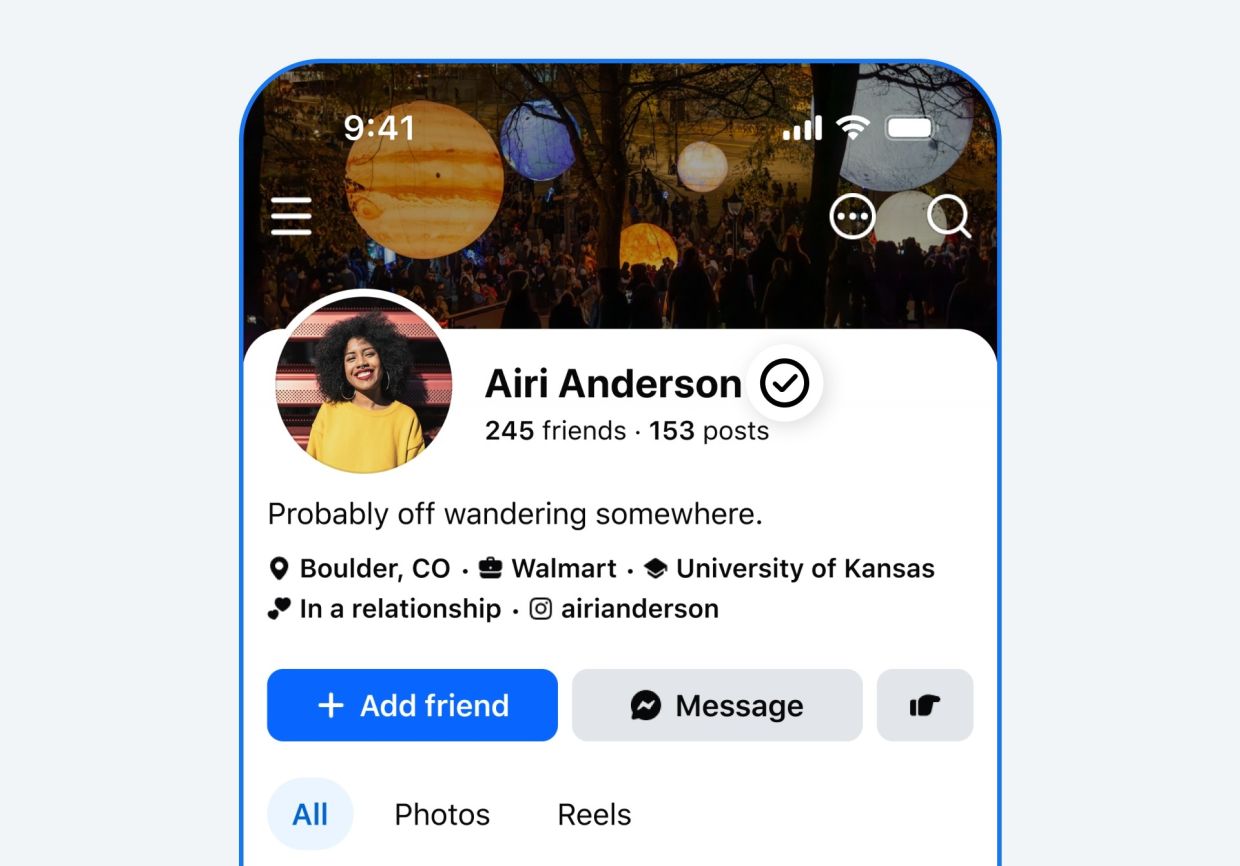
Meta is introducing a complimentary verification badge for Facebook users in selected markets beginning July 27, a significant shift in how the social network addresses authentication and fraud prevention. The scheme requires users to submit a brief video selfie, which the company will compare against existing profile photographs to confirm that a genuine person operates the account. This rollout represents Meta's practical implementation of founder Mark Zuckerberg's recent statement that the company is "betting on people" as artificial intelligence makes it increasingly simple to fabricate profiles, images, and communications.
The verification process is straightforward but has important implications for users across Southeast Asia and beyond. Eligible participants will encounter prompts on their Facebook profile or within Marketplace, Groups, and Dating services, with the full rollout occurring over the subsequent months. Once approved, users receive the badge across all these platforms, with Feed posts to follow in due course. The company promises to automatically erase the video selfie and associated facial data within 30 days after verification is complete, though users retain the badge indefinitely. This represents a meaningful distinction from Meta Verified, the company's existing paid subscription tier, which comes with a price tag.
The implications for Marketplace—Meta's commerce hub where millions transact daily with strangers—are particularly acute. Facebook Marketplace has become a major platform for buying and selling goods across the region, but it remains a common source of fraud complaints. The verification badge could help buyers identify sellers with confirmed identities, potentially reducing scams that have plagued digital commerce platforms. However, Meta is careful to clarify that the badge merely confirms the user passed a facial comparison check; it does not endorse the seller, validate their listings, guarantee trustworthiness, or confirm that they actually own items they are advertising.
To be eligible, users must be at least 18 years old, maintain an account in good standing, and demonstrate no history of scams, fraud, deceptive practices, or inauthentic behaviour. Professional Mode accounts and Pages are excluded from the programme. If Meta cannot verify someone, that person will not receive a badge but can attempt the process again later without facing restrictions on their general Facebook usage. Importantly, Meta's verification process does not involve checking government-issued identification. Instead, it establishes whether the person recording the selfie resembles the individual pictured on the account—a method that may discourage profiles created using stolen or artificially generated faces but cannot definitively confirm that a seller owns merchandise or intends to complete transactions honestly.
Industry analysts see this initiative as a direct response to what Andras Cser, vice president and principal analyst at research firm Forrester, describes as "a reputation and user trust problem." While verification badges do introduce friction into user interactions, they simultaneously enable transactions conducted with greater confidence. However, Cser notes that Facebook Verified does not satisfy the rigorous, jurisdiction-specific know-your-customer standards required by regulated financial and commercial sectors. This distinction matters particularly for users in markets with strict regulatory frameworks.
Other platforms have successfully leveraged verification as an engagement mechanism. LinkedIn reports that over 100 million members have adopted some form of verification, with verified members receiving up to 60 percent more profile views and 50 percent greater engagement on posts. Tinder, which operates its own video-selfie verification system, claims it has reduced interactions with bad actors by more than half in markets where the technology is deployed. These precedents suggest that Facebook's verification badge could create tangible commercial advantages even without Meta formally prioritising verified accounts in algorithms or rankings.
The badge could prove especially valuable given Marketplace's scale. Meta reports that the platform processes 430 million item listings and 44 million vehicle listings globally each month, with one in three young American adults visiting the platform daily. Buyers may organically favour sellers displaying the verification badge regardless of algorithmic preference, creating de facto advantages for verified merchants. However, Meta explicitly states that verification will not influence user visibility, recommendations, distribution, or ranking on Marketplace, and users can tap the badge itself to understand its actual and limited scope.
Meta is simultaneously launching Seller, a standalone iPhone application designed for frequent Marketplace merchants in the United States. The app provides AI-generated listing creation, inventory management tools, performance analytics, and a centralised inbox. Meta positions Seller as a resource for individuals operating side hustles or small businesses, and the company is exploring whether established businesses can list directly on Marketplace. This dual approach—verifying individual users while empowering merchant tools—suggests Meta views Marketplace authenticity as integral to its broader commerce ambitions.
The verification initiative arrives amid mounting concerns about fraud on Facebook specifically and social media platforms generally. The Federal Trade Commission reports that consumers lost more money to scams originating on Facebook in 2025 than on any other social-media platform. Across all social media, reported losses reached 2.1 billion US dollars, with shopping scams constituting the most frequently reported category. These figures underscore why Meta is prioritising authentication mechanisms, though they also highlight how inadequate singular technological solutions remain for addressing systemic fraud.
Meta's renewed reliance on facial recognition technology carries historical baggage that complicates the initiative's reception. The company shut down its broad facial-recognition system in 2021 and committed to deleting more than one billion facial templates, citing regulatory uncertainty and public concern about surveillance. The company preserved narrower applications, including identity verification and fraud prevention. This selective approach means Facebook Verified operates within Meta's defined boundaries for acceptable facial-recognition use, though it still reintroduces the technology after a period of strategic retreat.
Privacy advocates express cautious optimism tempered by information gaps. James E. Lee, president of the Identity Theft Resource Center, which assists fraud victims, suggests the programme "could be a good use of biometrics" but contends that Meta has not provided sufficient detail to assess its actual effectiveness or security. Lee also notes the inevitable reality: "Without a doubt, though, somewhere in the world there is already a professional cybercriminal working on a way to bypass this system or spoof a verified profile." This observation reflects the perpetual arms race between security mechanisms and bad actors willing to invest effort in circumventing them.
For Malaysian and Southeast Asian users, the verification badge represents a practical tool for building confidence in digital commerce while introducing new considerations about facial data collection. As Marketplace usage grows across the region, authentication mechanisms could meaningfully reduce fraud losses. However, the system's limitations—particularly the absence of government-issued identification checks and inability to verify actual ownership of goods—mean that users must maintain healthy scepticism even when transacting with verified sellers. The badge is ultimately a reputation signal, not a guarantee of honesty or competence.

