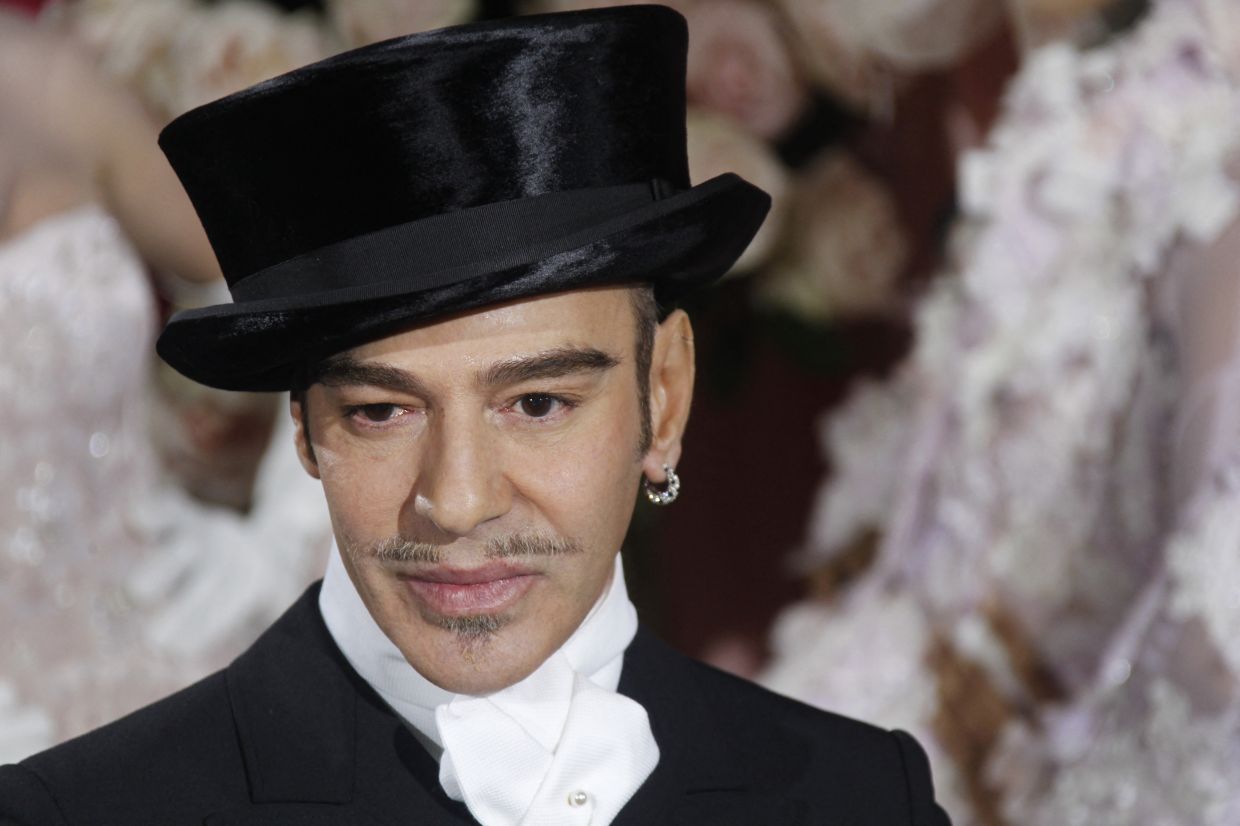
The Metropolitan Museum of Art's prestigious Costume Institute will devote its 2025 spring exhibition to John Galliano, the British designer whose career trajectory encapsulates both the pinnacle of fashion achievement and the catastrophic consequences of public moral failure. Galliano will become only the third living designer to receive a solo retrospective at this elite institution, a recognition of his undeniable influence on contemporary fashion despite—or perhaps because of—the profound controversy that reshaped his life and legacy.
Galliano's ascent to fashion's highest echelons seemed assured when he assumed the role of creative director at Christian Dior, one of the world's most prestigious fashion houses, a position he held for nearly fifteen years. During this tenure, he became celebrated for his theatrical, audacious designs that pushed the boundaries of luxury fashion and established him as one of the industry's most innovative voices. Yet this seemingly untouchable status crumbled dramatically in 2010 and 2011 when a series of deeply offensive antisemitic and racist statements, which he made in public settings including a viral video in which he declared his admiration for Hitler, emerged into the global spotlight. The fallout was immediate and severe: Dior terminated his employment, and Galliano faced conviction in a Paris court for public insults based on race, religion, ethnicity, and national origin.
The designer disappeared from public view for several years, undertaking both private rehabilitation efforts and documented public attempts to repair his reputation and address the harm his words had inflicted. His struggle with substance abuse during this period became part of the narrative of his downfall, a context that humanised his transgression without excusing it. Galliano's journey through this wilderness culminated in a professional resurrection when Maison Margiela hired him in 2014 as its creative director, a role he occupied for a decade. This comeback, while professionally significant, remained shadowed by the memory of his misconduct, suggesting that redemption in the fashion world, even partial redemption, required sustained effort and genuine transformation.
The decision by the Metropolitan Museum to commission a major exhibition exploring Galliano's work represents a significant statement about how institutions grapple with the legacy of figures who have committed serious ethical breaches. The museum has been careful to signal that this exhibition will not function as a whitewashing of history or an uncritical celebration of design excellence divorced from moral accountability. In an official statement, the Costume Institute emphasised that the show would directly confront "the derogatory conduct that fundamentally altered his career and public reception," and would consider "how artistic achievement should be understood alongside ethical accountability." This framing suggests a curatorial approach that refuses the false binary between artistic merit and personal ethics.
The planning process itself reflected this commitment to complexity and sensitivity. The museum conducted extensive consultations with Jewish community leaders in New York before proceeding, recognising that any exhibition exploring Galliano's antisemitic conduct required meaningful engagement with those most directly harmed by such rhetoric. These discussions included participation from Andrew Bolton, the museum's chief curator of fashion, from Galliano himself, and from Anna Wintour, the influential editor of Vogue who has historically championed Galliano's work. These conversations shaped the intellectual framework and structure of the exhibition, ensuring that Jewish voices and perspectives were integrated into its conception rather than added as an afterthought.
The exhibition has been organised into three interconnected sections that together narrate both Galliano's creative achievement and the rupture that nearly ended his career. The first section, titled "Bearings," directly addresses the crisis of 2010-2011, describing the antisemitic, racist, and anti-Asian statements that triggered his dismissal from Dior and his conviction by Paris courts. This opening section also explores his treatment for substance addiction and his subsequent public acknowledgment of his actions, contextualising his misconduct within a broader narrative of personal struggle and attempted recovery. By positioning this confrontation at the exhibition's entrance, the curators ensure that visitors cannot experience Galliano's creative work without first encountering the ethical dimensions of his history.
The second section, "Horizons," pivots toward examining the sources of Galliano's creative inspiration, including history, geography, fine art, storytelling, and theatrical performance. This section traces the intellectual and aesthetic foundations of his design philosophy, revealing the sophistication and cultural breadth that underpinned his work at Dior and Margiela. By exploring these foundations, the exhibition demonstrates that Galliano's technical brilliance and imaginative vision were genuine and substantial, neither negated by his misconduct nor somehow tainted by it. Instead, the juxtaposition invites viewers to hold these truths simultaneously: that Galliano possessed extraordinary creative gifts and that he weaponised antisemitic rhetoric in ways that demanded reckoning.
The third section, "Atlas Of Transformation," celebrates Galliano's mastery of craft, his willingness to experiment with unconventional materials and techniques, and his consistent technical innovation across decades of design work. This concluding section returns to a more celebratory register, documenting the evolution of his skills and the sophistication of his design methodology. Yet even here, the exhibition's overall architecture ensures that this celebration remains contextualised within the broader narrative of achievement and failure, redemption and ongoing accountability.
For fashion-conscious audiences across Southeast Asia, where luxury brands exercise significant cultural influence and where questions of corporate accountability intersect with aesthetic consumption, the Galliano exhibition raises fundamental questions about how we relate to the work of figures whose personal conduct we find morally objectionable. The May 2025 Met Gala, which will serve as the ceremonial launching of this exhibition, will likely generate intense scrutiny regarding which designers, celebrities, and industry figures choose to participate and how they navigate the event's fraught atmosphere. The exhibition itself promises to be among the most intellectually demanding and morally serious fashion retrospectives mounted in recent memory, one that refuses easy answers or comfortable narratives of redemption, instead insisting that audiences grapple with the genuine complexity of artistic legacy in an age of heightened ethical consciousness.

