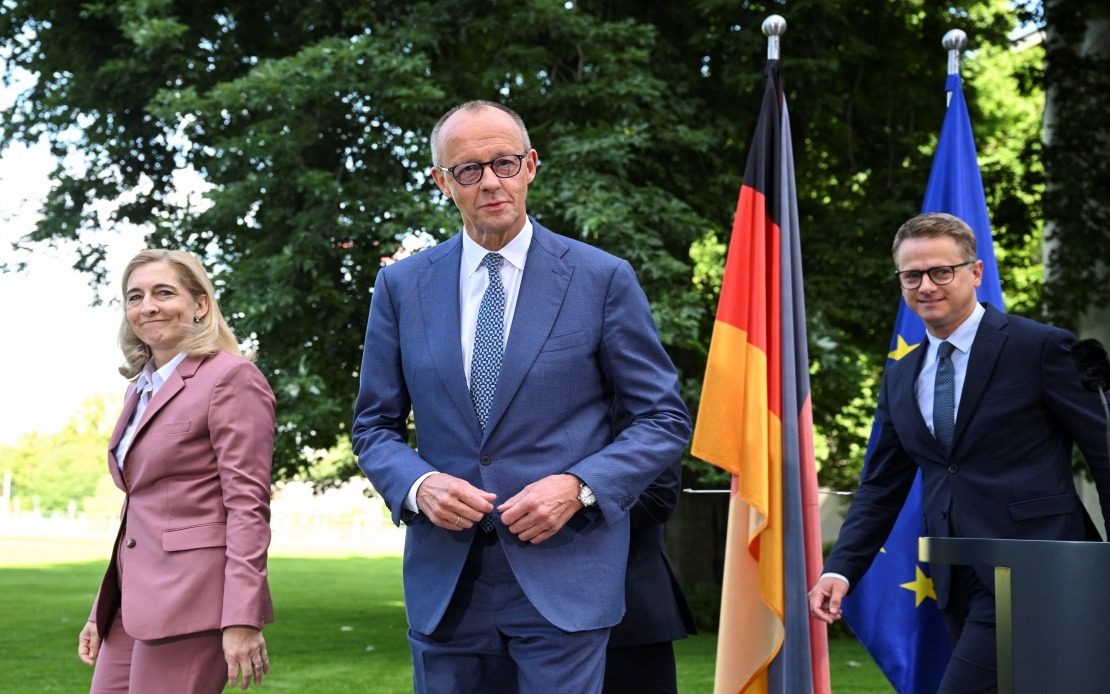
German Chancellor Friedrich Merz has initiated a comprehensive overhaul of both his federal government and the Christian Democratic Union (CDU) party hierarchy, an unexpected move that extends well beyond typical administrative adjustments. The reshuffle, triggered by the resignation of conservative parliamentary group leader Jens Spahn amid a surrogacy controversy, signals a moment of recalibration for Merz's leadership and the broader CDU-led coalition. The scale of these changes underscores the political gravity of Spahn's departure and suggests underlying tensions within Germany's ruling conservative bloc that may resonate throughout Europe's largest economy.
Jens Spahn's exit from his parliamentary leadership position followed the disclosure that he and his partner had pursued surrogacy in the United States to have a child—a practice that remains legally prohibited within Germany. This personal decision, made public under circumstances that created political vulnerability, forced Spahn's hand despite his prominence within the CDU establishment. The situation illuminates the stark contrast between Germany's strict reproductive regulations and practices available elsewhere, raising questions about how leading political figures navigate legal boundaries when their private aspirations conflict with national law. For Merz, managing this scandal while maintaining party cohesion required swift personnel decisions that would satisfy both conservative base concerns and pragmatic coalition politics.
Thorsten Frei, previously serving as head of the chancellery, has been promoted to succeed Spahn as the CDU/CSU parliamentary group leader, a position Merz announced on Wednesday. This appointment moves Frei from a senior administrative role into one of the most influential positions within Germany's legislative apparatus, where he will coordinate the parliamentary strategy of the governing coalition. The chancellery position—a critical juncture between Merz's office and government operations—required immediate replacement, necessitating broader cascade effects throughout the Cabinet structure. Frei's elevation reflects Merz's confidence in his administrative capabilities and suggests a reshuffling of inner-circle dynamics that extends beyond simple substitution.
Nina Warken, a former health minister with established credentials in this portfolio, has been selected to assume Frei's vacated chancellery role, announced by Merz during a public address in Berlin on Friday. Warken's background in healthcare policy provides her with substantial understanding of federal governance complexities, though her transition into the chancellery represents a lateral movement that prioritises experience over sector specialisation. The chancellery position carries considerable influence over daily operations and serves as a critical interface between the chancellor's political agenda and government bureaucracy. Warken's appointment signals Merz's preference for continuity in institutional management while reshaping the leadership constellation around him.
Carsten Linnemann, the CDU Secretary General responsible for party organisation and strategy, transitions into the federal health ministry portfolio, replacing Warken in this consequential cabinet position. This appointment places a senior party official directly into a major government ministry, a structural choice that typically reflects Merz's desire to align party and governmental priorities more closely. The health ministry carries significant influence over social policy, pandemic response capabilities, and public health initiatives—domains where coherent government-party coordination proves essential. Linnemann's movement from party machinery into the Cabinet represents an elevation in governmental responsibility, reflecting the interconnected nature of CDU leadership structures.
Transport Minister Patrick Schnieder is expected to resign from his Cabinet position, according to multiple German media sources citing dpa reporting. While details regarding his successor or the rationale for this departure remain unclear from official announcements, Schnieder's exit adds another dimension to the broader reshuffle. Transport ministry matters encompass infrastructure investment, railway privatisation debates, and automotive industry policy—domains where Germany maintains strategic interests. The anticipated departure suggests either internal disagreements over policy direction or broader coalition rebalancing, though the precise circumstances warrant closer observation as the transition unfolds.
For Malaysian observers of German politics, this reshuffle demonstrates how personal ethical controversies can cascade into institutional restructuring even within established democracies. The Spahn situation, rooted in reproductive autonomy questions, reflects deeper European debates about family law, medical access, and the bounds of legitimate state regulation. Germany's prohibition on surrogacy contrasts sharply with more permissive approaches elsewhere, creating situations where prominent figures must reconcile personal choices with legal frameworks—a tension increasingly visible across multiple nations as reproductive technologies advance. The political fallout from Spahn's circumstances serves as a reminder that leadership requires consistency between public positions and private conduct, particularly regarding sensitive social issues.
Merz's consolidation of leadership through this reshuffle may strengthen his control over both government apparatus and party machinery at a potentially fragile moment. By moving trusted figures into critical positions and removing those whose visibility might complicate coalition dynamics, Merz attempts to establish clearer command structures. However, such extensive personnel changes can also generate uncertainty about policy directions and create opportunities for rival factions to position themselves advantageously. The broader European context—where German politics influences regional dynamics through European Union mechanisms and bilateral relationships—means that internal CDU reorganisation carries implications beyond Berlin's political establishment.
The timing of this reshuffle, occurring during summer months when legislative activity typically diminishes, provides some insulation from immediate parliamentary complications. However, the government must navigate these transitions while managing pressing policy challenges including economic concerns, energy security, and European integration questions. For Southeast Asian governments observing German institutional practices, the episode illustrates how senior democracies manage high-profile personnel transitions without constitutional disruption, a model relevant to regional contexts where leadership changes often generate instability. The structured, transparent nature of German Cabinet reshuffles contrasts with more opaque processes elsewhere, reflecting institutional maturity developed over decades of democratic consolidation.
Looking forward, the effectiveness of Merz's reshuffle will depend on whether the new leadership constellation functions cohesively or whether underlying tensions resurface. The appointment of party figures into governmental roles could strengthen coordination but might also blur necessary distinctions between political partisanship and administrative neutrality. As Germany confronts economic headwinds, defence spending pressures, and evolving European security architecture, the government's capacity to implement consistent policy becomes increasingly consequential. The Spahn resignation and subsequent realignment represent a moment when institutional stability and political legitimacy intersect—outcomes that will influence not merely German politics but the broader European strategic landscape in which Southeast Asian interests increasingly converge.

