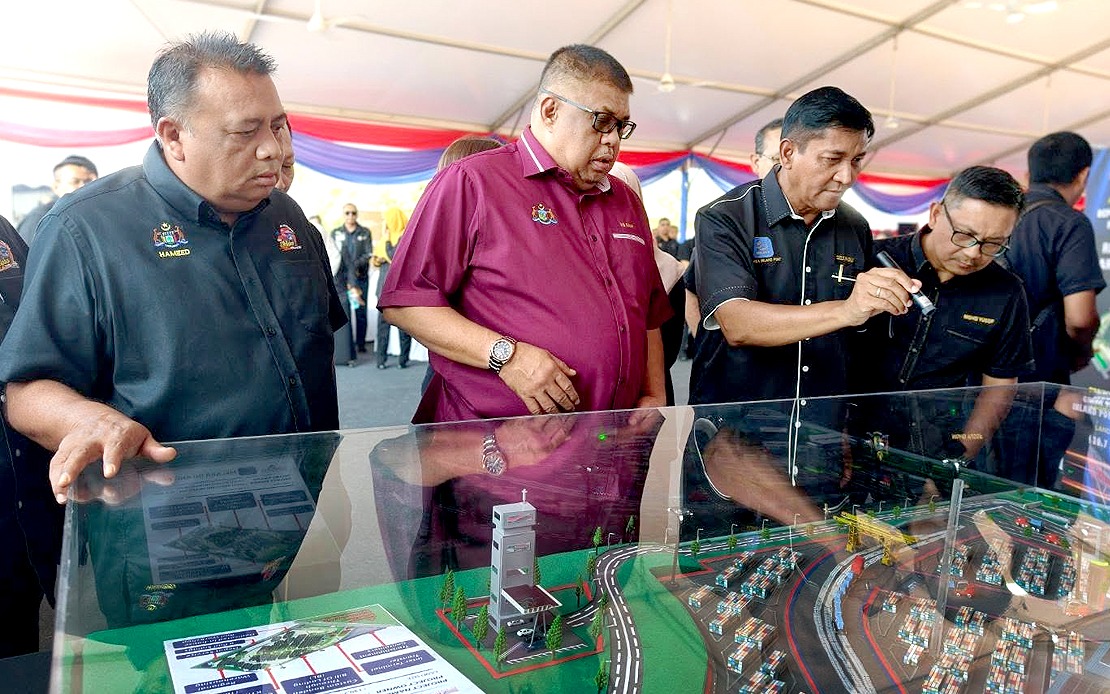
Melaka's state government has unveiled an ambitious infrastructure initiative designed to overhaul its logistics ecosystem, announcing plans for a RM129 million road project that will fundamentally reshape cargo movement across the southern Peninsular port region. The 12-kilometre route will link Kuala Linggi International Port directly to Ayer Molek in Kuala Sungai Baru, threading through the emerging Melaka Inland Port area to create a seamless network connecting multiple maritime facilities. State Public Works, Infrastructure, Public Facilities and Transport Committee chairman Datuk Hameed Mytheen Kunju Basheer outlined the vision during ceremonies at the Melaka Inland Port, emphasising how the investment addresses long-standing inefficiencies in cargo distribution.
The road project represents a strategic response to Malaysia's growing regional competition in port operations. Currently, vehicles transporting goods between these facilities must traverse a circuitous 28-kilometre route, creating bottlenecks that inflate logistics costs and delivery timelines. By condensing this journey to just 12 kilometres, the new corridor will substantially improve vehicle efficiency and reduce operational expenses for freight companies serving the Melaka port cluster. This development carries particular significance for Southeast Asian logistics operators who rely on Malaysian ports to access regional markets, as improved connectivity directly translates to faster goods movement and lower supply chain expenses.
According to Datuk Hameed, the project currently resides in the design phase under the Works Ministry's oversight. The timeline envisages the quotation process, competitive tender proceedings, and contractor selection completing throughout 2025, positioning the work for commencement in the following years. This measured approach allows adequate time for detailed engineering assessments and ensures that the road design accommodates the substantial heavy vehicle traffic anticipated from port operations. The phased implementation strategy reflects lessons learned from previous infrastructure projects across Malaysia, where rushed planning frequently leads to cost overruns and structural complications.
Beyond the primary KLIP-to-Ayer Molek corridor, Melaka officials are pursuing a complementary network of port-access roads that collectively represent a holistic modernisation of transport infrastructure serving the maritime sector. The state government intends to widen the existing Tangga Batu to Sungai Udang route, which ultimately connects to Tanjung Bruas Port, thereby reducing congestion on roads that currently struggle with container truck volumes. These secondary improvements acknowledge that isolated road projects cannot solve systemic logistics challenges; rather, integrated network upgrades create multiplicative efficiency gains across the entire supply chain.
A separate RM49 million investment will construct a six-kilometre road extending from Telok Gong through Kampung Pulau to Paya Lebar, establishing an alternative corridor that bypasses traditional residential areas. This routing decision reflects growing awareness among Malaysian planners that heavy-vehicle corridors should avoid populated zones to mitigate noise pollution, traffic accidents, and community disruption. Currently, the Paya Lebar to Kampung Pulau segment has entered quotation proceedings, while the Kampung Pulau to Telok Gong alignment remains in preliminary design stages. The staggered progress across different road sections suggests coordination challenges or differing levels of funding readiness, though officials project overall completion by 2028 or 2029.
The Melaka Inland Port itself serves as the anchor for this infrastructure expansion, functioning as a transshipment and consolidation facility that bridges port operations with regional hinterland distribution networks. By improving road access to the inland port, Melaka aims to position itself as an attractive alternative to Kuala Lumpur or Johor Bahru for companies seeking to relocate warehousing and logistics facilities. The cost differential between Melaka's real estate and labour rates compared to more developed commercial zones makes such relocations increasingly viable, particularly for firms managing Southeast Asian distribution networks.
For Malaysian businesses engaged in regional trade, these connectivity improvements carry immediate practical consequences. Reduced travel times between port and warehouse facilities translate directly to lower demurrage charges, faster inventory turnover, and enhanced competitiveness against rival regional hubs. Export-oriented manufacturers and third-party logistics providers will benefit from operational flexibility, as improved port access allows them to consolidate shipments more efficiently and respond faster to customer demands. The expansion also positions Melaka to capture logistics operations currently routed through Singapore or Port Klang, representing a strategic economic development objective for the state.
The broader context reveals how Malaysian ports increasingly compete for cargo share within a crowded regional marketplace. Vietnam, Thailand, and Indonesia have simultaneously invested in port and hinterland infrastructure, creating pressure on Malaysian facilities to enhance their competitive positioning. Melaka's investment addresses this imperative by acknowledging that port competitiveness depends not merely on terminal facilities but on the entire transport ecosystem connecting ports to consumer markets and manufacturing zones. Without adequate road and rail access, even world-class port infrastructure becomes a bottleneck rather than an advantage.
Chief Minister Datuk Seri Ab Rauf Yusoh's presence at the Melaka Inland Port groundbreaking ceremony underscored state leadership's commitment to logistics as a development priority. This political backing should facilitate bureaucratic coordination and resource allocation across multiple government agencies involved in the road projects. However, implementation challenges remain substantial, including land acquisition, environmental assessments, and the need to maintain traffic flows during construction phases in an already congested port zone.
The RM178 million combined investment in these port-area roads reflects a calculated bet that improved logistics infrastructure will attract regional cargo volumes and associated economic activity to Melaka. Success depends on timely completion, professional project management, and complementary investments in port terminal capacity and equipment. Should the state execute effectively, the road network could establish Melaka as a preferred transit point for Southeast Asian trade, generating employment and tax revenues that extend benefits far beyond the logistics sector itself.

