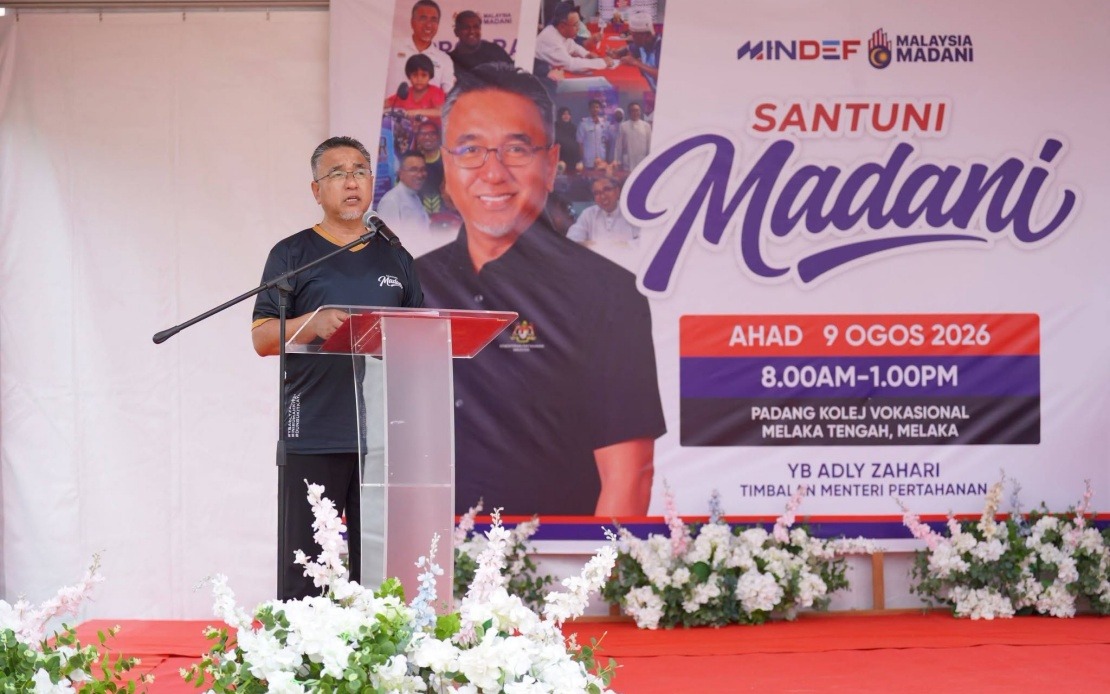
Melaka's Pakatan Harapan leadership has indicated a flexible approach to the upcoming state election, remaining receptive to discussions with potential coalition partners while pursuing an internal strategy focused on expanding its parliamentary footprint. Speaking after an official engagement in the state capital, coalition chairman Adly Zahari emphasised that while no final decisions have been reached on the scope or terms of any external partnerships, the door remains open for meaningful negotiations with parties sharing compatible political objectives.
The coalition has completed two preliminary assessment sessions to evaluate its competitive standing across key constituencies, though formal negotiations on seat allocations and cooperative frameworks have not yet crystallised. Adly's measured language reflects the delicate balancing act facing PH in Melaka, where the coalition must simultaneously project strength within its traditional power bases while signalling pragmatism about potential alliances. The distinction he drew between internal preparation and external engagement suggests a deliberate sequencing: PH intends first to consolidate its existing base before determining whether partnership arrangements might enhance its overall electoral prospects.
Of particular significance is Adly's clarification that meaningful talks with Melaka's Barisan Nasional chapter have not commenced, despite broader cooperation between PH and BN at the federal level through the Unity Government framework. This distinction underscores how state-level politics in Malaysia often operate according to distinct logics and power dynamics, even when national coalitions formally cooperate. The coalition's stated condition—that any partners must demonstrate alignment with the Malaysia MADANI agenda and its underlying principles—effectively establishes a philosophical threshold for cooperation, suggesting that purely transactional seat-sharing arrangements may not suffice.
On the electoral arithmetic, PH's ambitions are notably expansive. The coalition currently holds five seats within Melaka's 28-member State Legislative Assembly, representing a modest baseline from which to build. Adly identified three parliamentary constituencies—Alor Gajah, Kota Melaka, and Hang Tuah Jaya—where PH demonstrated competitive strength in recent federal contests, suggesting these state seats represent the coalition's most promising territories for consolidation. Beyond these core areas, the coalition has identified three additional constituencies—Tangga Batu, Masjid Tanah, and Jasin—where assessments indicate potential for breakthrough victories, though presumably from a weaker starting position.
The geographic distribution of these target constituencies reveals a coalition strategy focused on building contiguous pockets of strength rather than pursuing isolated seat victories scattered across the state. Such an approach offers organisational and messaging economies, allowing PH to concentrate limited campaign resources on regions where ground-level infrastructure, voter familiarity, and established party networks provide genuine leverage. For Malaysian observers accustomed to analyses of seat projections, this methodology suggests the coalition is thinking strategically about post-election governance viability—controlling geographic clusters of seats provides greater legislative flexibility than holding dispersed individual seats.
Within PKR, which represents the largest PH component in Melaka, the party's state leadership has echoed openness to dialogue while emphasizing the unique political character of the state. Adam Adli Abd Halim, acting chairman of PKR's Melaka State Leadership Council, acknowledged that informal communications with BN counterparts continue at individual and party representative levels, even as formal negotiations remain absent. This distinction between unofficial back-channel discussions and official negotiation frameworks is common in Malaysian politics, allowing parties to explore possibilities without formal commitments that might constrain future manoeuvring.
Adam Adli's framing that Melaka's political situation possesses "distinct dynamics" compared with other Unity Government states reflects genuine structural differences. Unlike Selangor or Penang, where PH commands dominant legislative positions, Melaka represents a more contested political terrain where no single coalition exercises commanding authority. This fragmentation creates both vulnerability and opportunity: PH cannot govern unilaterally but might gain influence through strategic partnerships that exceed what its current seat count would otherwise permit. The emphasis on Melaka's uniqueness also potentially justifies deviations from national-level coalition arrangements, providing political cover for state-level deals that might appear inconsistent with federal Unity Government principles.
The stated commitment among PH state assemblymen to focus on constituent service while avoiding "excessive political polemics" reflects awareness that overdrawing political drama risks alienating voters fatigued by coalition complexities. In Malaysian state politics, particularly in less firmly aligned states like Melaka, ordinary voters often prioritise bread-and-butter governance delivery over coalition intrigue. By emphasising responsibility to constituents and social consensus, PH leadership attempts to reframe upcoming electoral competition as fundamentally about competent administration rather than factional manoeuvring.
For observers across Southeast Asia tracking Malaysian political developments, Melaka's situation illustrates broader regional patterns where national coalition arrangements coexist uneasily with state-level autonomy. The flexibility PH is signalling—openness to cooperation while withholding final commitments—mirrors similar calculations occurring simultaneously in other Malaysian states and reflects the enduring tension between centralised coalition discipline and decentralised political incentives. How these negotiations ultimately resolve will provide important signals about the stability and architecture of Malaysia's post-2022 political settlement.
The upcoming Melaka election thus carries significance extending beyond state boundaries. A PH performance that substantially increases its seat count would validate the coalition's recovery narrative and justify continued faith from partners and supporters nationwide. Conversely, stagnation or retreat might raise uncomfortable questions about whether PH's national momentum translates effectively into sustained state-level competitiveness. For now, Adly Zahari and his colleagues are carefully calibrating messages of internal confidence with external openness, waiting to see which parties might emerge as compatible partners in reshaping Melaka's political landscape.

