Melaka's administration has unveiled a substantive package of measures designed to strengthen the financial security and operational efficiency of the state's fishing community, combining traditional welfare protections with technological modernisation. The initiative encompasses compulsory Social Security Organisation (PERKESO) coverage for all registered fishermen alongside provision of fish-finding equipment, announced during the Chief Minister Datuk Seri Ab Rauf Yusoh's latest grassroots engagement tour through the Merlimau state constituency.
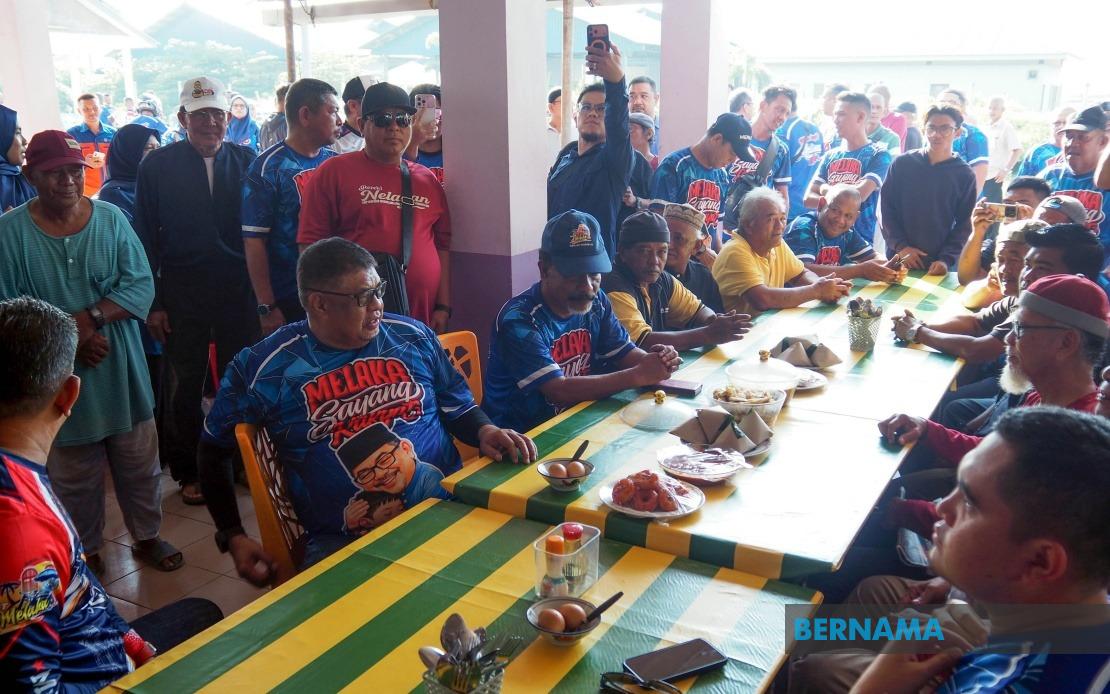
The announcement emerged from what the state government frames as a direct engagement strategy that prioritises on-the-ground assessment of community needs over administrative distance. During the fifth iteration of the 'Jelajah Ketua Menteri Sayang Rakyat' programme at Kuala Sempang Jetty, Ab Rauf emphasised that state officials and Executive Council members deliberately immerse themselves in local communities to understand practical challenges facing ordinary Malaysians. This ground-level approach, the Chief Minister suggested, enables more responsive policymaking and targeted resource allocation rather than decisions made in isolation from constituent realities.
The tangible expressions of this commitment manifested immediately at the Kuala Sempang gathering. One hundred and seven registered fishermen received RM200 each under the 'Bantuan Jaring Nelayan' scheme, amounting to a combined distribution of RM21,400 in direct financial assistance. The state government simultaneously distributed 360 kilogrammes of fresh fish valued at RM3,600 to the public attending the event, with allocations of approximately 1.5 kilograms per recipient. These concurrent distributions underscored the dual focus on supporting fishing industry participants while enhancing food security and supply within the broader community.
The provision of fish finders represents the initiative's most technologically progressive component, addressing a persistent constraint in Malaysia's traditional fishing sector. Amirul Shah Fuad Shah, a 35-year-old commercial fisherman based in Kuala Merlimau with two decades of operational experience, articulated the practical transformation that such equipment enables. Fish finders fundamentally reshape fishing methodology by enabling precise identification of fish concentrations, allowing fishermen to deploy nets with scientific precision rather than relying exclusively on experience-derived guesswork. Previously, fishermen depended on intuitive understanding of seasonal patterns, water conditions, and marine behaviour—knowledge accumulated through years at sea but inherently subject to considerable margin for error.
The economic dimension of fish finder provision particularly resonates within the fishing community, given prevailing acquisition costs. Private purchase of such equipment typically requires investment between RM1,000 and RM2,000 per unit, representing a substantial capital outlay for individuals whose income fluctuates seasonally and remains vulnerable to unpredictable catch volumes and volatile commodity prices. By subsidising or directly distributing this technology, Melaka addresses a significant barrier to modernisation that individual fishermen frequently cannot surmount independently. This technological democratisation potentially produces multiplier effects, as improved efficiency translates into enhanced catch reliability, more stable income flows, and reduced pressure on marine ecosystems through more targeted fishing practices.
The PERKESO coverage component addresses occupational vulnerability that has historically characterised Malaysia's fishing workforce. Commercial fishing exposes workers to substantial physical hazards—maritime accidents, equipment-related injuries, and health complications from prolonged sun and saltwater exposure. Yet many fishermen, particularly those operating independently or through informal arrangements, historically lacked formal employment protections or social insurance mechanisms. PERKESO coverage, administered by Malaysia's national social security institution, provides disability benefits, employment injury protection, and income security provisions that extend beyond traditional workplace frameworks. For fishermen navigating inherent occupational risks while generating livelihoods for their families, such coverage represents institutional recognition of labour value and meaningful safeguard against catastrophic income loss resulting from accident or incapacity.
Md Khalil Md Jadi, chairman of the Kampung Sempang Fishermen's Association, contextualised this initiative within demographic realities characterising coastal fishing communities. Many association members have reached advanced ages and depend entirely on maritime work for subsistence, with limited alternative income sources available as physical capacity diminishes. For this cohort, PERKESO protection functions as both acknowledgment of their economic contribution and practical insurance against destitution. Simultaneously, the fish finder provision signals governmental commitment to sector modernisation rather than perpetuation of labour-intensive traditional practices ill-suited to contemporary economic demands. By facilitating technological adoption, the state government implicitly recognises that fishing communities require integration into modern economic systems rather than preservation in anachronistic patterns.
The initiative reflects broader Southeast Asian policy trends recognising informal sector workers' vulnerability and economic importance. Malaysia's fishing industry remains regionally significant, contributing substantially to protein supply, export revenues, and coastal employment. Yet the sector historically received fragmented policy attention, with support programmes often addressing immediate humanitarian concerns rather than structural productivity enhancement. Melaka's approach combines immediate welfare relief with productivity-enhancing investment, suggesting recognition that sustainable improvement requires both short-term income stabilisation and longer-term capacity development. This integrated methodology contrasts with occasionally siloed approaches that separate social protection from economic development initiatives.
From a regional perspective, Malaysia's experience with fisheries modernisation holds instructive implications for neighbouring countries confronting similar challenges. Coastal communities throughout Southeast Asia share common characteristics—declining fish stocks creating pressure for technological efficiency, ageing populations sustaining traditional maritime livelihoods, and vulnerability to economic volatility. Melaka's dual emphasis on social protection and technological provision offers a replicable model, though implementation success depends on adequate funding, effective distribution mechanisms, and training provision ensuring fishermen can effectively operate introduced equipment. The initiative's sustainability will ultimately hinge on whether PERKESO coverage reaches its intended beneficiaries consistently and whether fish finder provision includes operational training and ongoing technical support.
The programme also demonstrates iterative policy responsiveness within Malaysia's federal structure. Melaka's state government, functioning within Malaysia's constitutionally defined devolved governance system, retains autonomy over certain development matters and can calibrate interventions reflecting local conditions and priorities. This initiative exemplifies how state-level policymakers can mobilise resources and administrative capacity addressing sector-specific challenges identified through direct community engagement. Such decentralised approaches potentially enable faster implementation and greater contextual appropriateness than exclusively centralised national programmes, provided states possess adequate fiscal resources and administrative capability—conditions not uniformly met across all Malaysian jurisdictions.
Implementation challenges will inevitably emerge. Ensuring universal PERKESO coverage across the registered fishermen population requires robust administrative coordination, accurate beneficiary identification, and continuous monitoring of compliance. Distribution of fish finders across dispersed coastal communities necessitates logistics planning and potentially training provision to ensure equipment utilisation. Long-term success also depends on maintenance systems, spare parts availability, and user support mechanisms. Additionally, the initiative's benefits accrue primarily to registered fishermen, potentially excluding informal sector participants—a consideration relevant in Malaysian fishing communities where informal arrangements remain common. Addressing this gap would require expanded registration mechanisms and targeted outreach to marginalised participants.
The immediate reception from community representatives suggested substantive support, with fishermen and association officials expressing appreciation for recognition of sectoral needs and practical assistance. Amirul Shah's endorsement of fish finder utility derived from direct operational experience, lending credibility to the technology's anticipated impact. Association chairman Md Khalil's acknowledgment of PERKESO protection's significance for elderly fishermen reflected appreciation for addressing previously neglected welfare aspects. This community validation, though preliminary and potentially influenced by the formal setting of public announcement, nonetheless indicates alignment between government initiatives and perceived community priorities—a foundational requirement for programme effectiveness and sustained participation.
Looking forward, Melaka's fishing sector development trajectory will depend on complementary policy decisions and resource commitments extending beyond the announced measures. Technology provision requires supporting infrastructure, training programmes, and market linkages maximising productivity gains. Social protection through PERKESO coverage requires clear communication ensuring beneficiaries understand entitlements and access procedures. Broader sectoral sustainability ultimately hinges on environmental management preventing resource depletion, market development ensuring viable demand for increased catch volumes, and human resource development preparing succeeding generations for maritime livelihoods. The current initiative represents meaningful progress within this expansive agenda, demonstrating governmental commitment to fishing community welfare while acknowledging that modernisation and protection must advance simultaneously rather than in competing priority frameworks.

