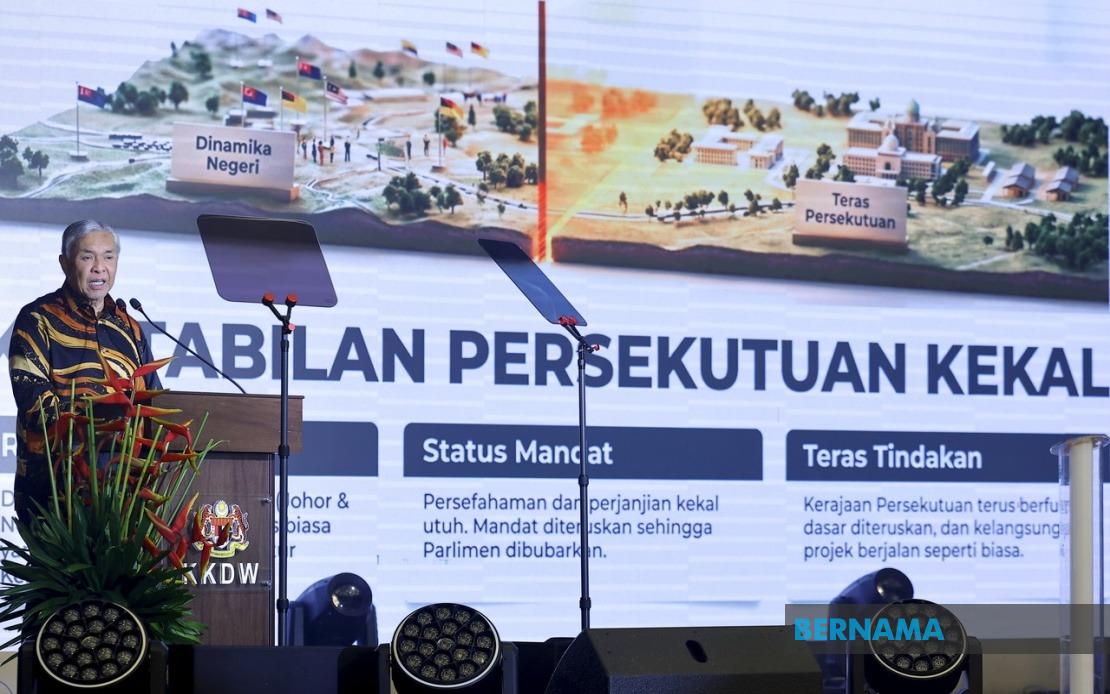
Barisan Nasional in Melaka is preparing for an aggressive electoral campaign, aiming to defend every single one of the 21 state assembly seats it currently holds in the upcoming 16th state election. The coalition's ambitions were outlined by BN chairman Datuk Seri Dr Ahmad Zahid Hamidi during a media engagement at the Rural and Regional Development Ministry's monthly assembly in Putrajaya, where he relayed the determination expressed by Melaka Chief Minister Datuk Seri Ab Rauf Yusoh to maintain the coalition's complete grip on the legislature.
The Chief Minister, who simultaneously serves as chairman of the Melaka branch of BN, has personally conveyed his commitment to preserving the coalition's dominance across all state constituencies. This represents a continuation of BN's performance in the previous election cycle and signals confidence within the ruling coalition's machinery in the state. Such a target, if achieved, would represent a comprehensive electoral victory that maintains the status quo in peninsular Malaysia's smallest state by population.
Yet Ahmad Zahid's pronouncements also acknowledged the fluid nature of coalition politics in Malaysia. While BN pursues this defensive strategy, the coalition remains receptive to exploring understandings with other political entities, provided such arrangements receive blessing from the party's central leadership structure. This flexibility reflects the pragmatic approach that has characterized Malaysian electoral coalitions, where temporary or issue-based partnerships occasionally supplement formal party affiliations.
The process for finalizing any electoral arrangements remains structured through established channels. According to Ahmad Zahid, deliberations among the various political entities contesting the Melaka polls will inevitably take place, with the state chief minister demonstrating openness to these discussions. However, the ultimate authority rests with BN's central leadership, which must ratify any agreements before they take effect. This multi-tiered decision-making process ensures that state-level considerations align with broader coalition strategies determined at the national level.
Melaka occupies a strategically significant position within Malaysia's political landscape. The state has historically served as a bellwether for coalition performance, with its electoral outcomes frequently analyzed as indicators of broader sentiment toward BN's governance. The state's relatively homogeneous voter base and established BN dominance have made it a consistent performer for the coalition, though recent years have witnessed increasing electoral competitiveness across Malaysia generally. A successful defence of all 21 seats would provide crucial momentum for BN as it navigates the broader political environment.
The timing of these electoral objectives comes as Malaysian politics continues adjusting to shifting factional dynamics within BN itself. The coalition's management of internal differences while presenting a unified front during election campaigns remains a perennial challenge. Melaka's controlled environment and existing BN strength offer a relatively stable testing ground for the coalition's current organizational cohesion and campaign effectiveness.
Regional observers note that Melaka's political performance carries implications beyond state borders. As a Malay-majority state with established governance infrastructure and competitive albeit BN-dominated electoral dynamics, the state's election will provide insights into voter sentiment across similar constituencies throughout the peninsula. The results may inform strategies for subsequent electoral contests in other states, making the Melaka polls an important data point for assessing the coalition's contemporary appeal.
The defence strategy outlined by Ahmad Zahid reflects confidence in the state administration's record and BN's organizational capabilities within Melaka's constituencies. The Chief Minister has built a governing record that the coalition evidently believes can withstand electoral scrutiny. However, the explicit commitment to defending all 21 seats indicates that BN perceives no inherent vulnerabilities that would justify tactical retreats or strategic compromises in seat allocation.
Future political developments in Melaka will depend on how opposition coalitions respond to BN's announced intentions. The degree to which competing political formations can mount credible challenges across multiple constituencies will determine whether BN's ambitious target proves achievable. The electoral landscape remains fluid despite current BN dominance, with opposition parties continuously refining strategies to expand their parliamentary representation throughout Malaysia.
As the election timeline becomes clearer and campaign periods approach, the practical implementation of BN's defensive strategy will unfold through the familiar mechanisms of Malaysian electoral politics: candidate selection, ground organization, resource allocation, and messaging discipline. Whether Ahmad Zahid's relayed commitment to retaining all 21 Melaka seats ultimately materializes will provide valuable evidence about the coalition's electoral resilience in this contemporary political period and its capacity to maintain dominance in traditional strongholds amid the changing dynamics of Malaysian democracy.

