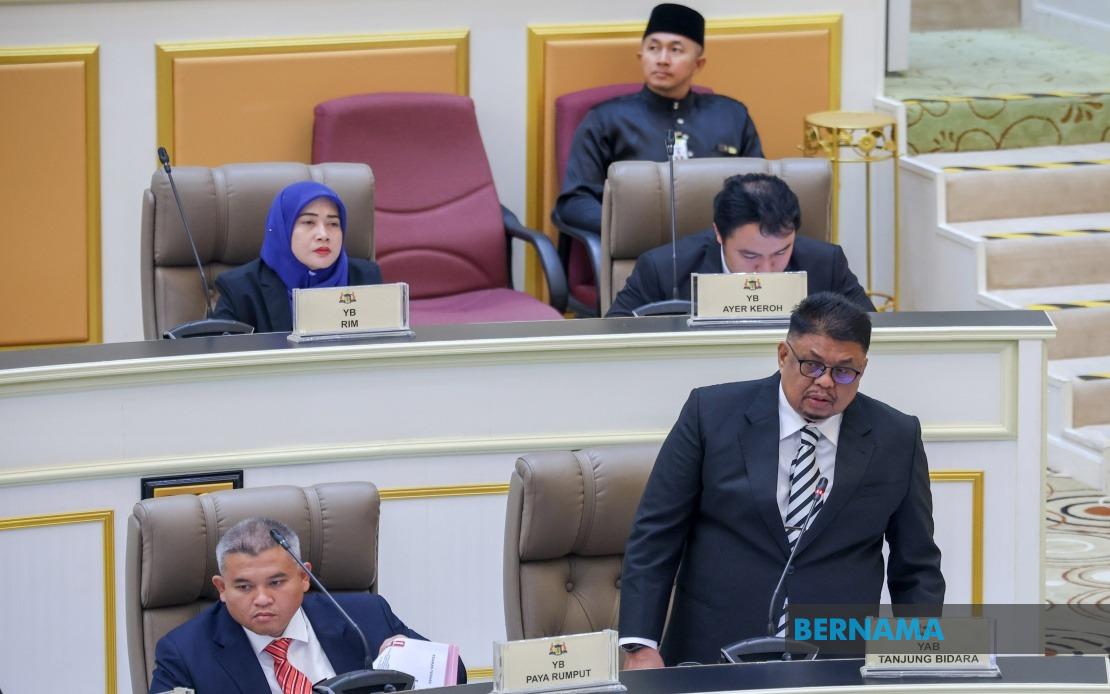
The Melaka State Legislative Assembly has taken a significant step towards reshaping its legislative composition by approving a constitutional amendment that will permit the appointment of up to seven nominated state assemblymen. The Melaka State Constitution (Amendment) Bill 2026 secured approval on July 14 with backing from 23 assemblymen, though five members registered their opposition to the measure. The initiative, spearheaded by Chief Minister Datuk Seri Ab Rauf Yusoh and seconded by Senior State Executive Councillor for Housing, Local Government, Drainage, Climate Change and Disaster Management Datuk Rais Yasin, represents a notable departure from the traditional electoral model that has governed state assembly composition since independence.
The constitutional amendment addresses a long-standing challenge in state legislatures across Malaysia: ensuring that specialised expertise and diverse perspectives are adequately represented in policymaking forums. By creating a pathway for appointed members, the Melaka government seeks to introduce individuals with proven competence in critical domains including law, economics, education, investment, technology and state development. This approach acknowledges that electoral systems, while fundamental to democratic governance, may not always identify and elevate candidates whose technical knowledge and professional experience could substantially elevate the quality of legislative deliberation. The Chief Minister's rationale centres on complementing rather than replacing elected representatives, with appointed members serving as a supplementary mechanism to enhance institutional capacity.
A particularly significant dimension of this amendment concerns its potential to broaden representation among groups historically underrepresented in electoral politics. Ab Rauf explicitly identified women, young people, the Orang Asli, ethnic minorities, professionals and industry representatives as constituencies who would benefit from appointment pathways. This framing suggests recognition that traditional electoral processes may create structural barriers preventing capable individuals from these cohorts from accessing legislative forums, regardless of their qualifications or potential contributions. By enabling direct appointment based on merit and sectional representation, the mechanism aims to rectify demographic imbalances that might otherwise persist indefinitely. The emphasis on creating inclusion channels outside the electoral process reflects broader governance debates about balancing democratic legitimacy with institutional diversity.
Beyond representational considerations, the amendment's architects contend that appointed members will materially strengthen legislative scrutiny and debate quality. The presence of individuals selected explicitly for technical expertise and objectivity could modulate discussions on complex policy domains where emotional or partisan considerations might otherwise dominate deliberations. Appointed assemblymen are envisioned as contributors willing and equipped to provide rigorous analysis of proposed legislation, administrative practices and technical policy questions. This perspective assumes that appointed members, liberated from electoral pressures and accountable through appointment rather than ballot, might articulate perspectives unburdened by constituency concerns or party discipline, thereby enriching overall deliberative quality. The amendment thus represents a calculated gamble that expertise-driven input will strengthen democratic decision-making rather than dilute it.
The amendment's passage reflects considerable consensus across Melaka's political spectrum, a notable achievement given Malaysia's increasingly polarised partisan climate. Melaka Opposition Leader Dr Mohd Yadzil Yaakub, representing the opposition bloc, explicitly endorsed the Bill as capable of strengthening the state legislative institution provided it operates through transparent mechanisms genuinely prioritising public welfare. His support offers crucial legitimacy to the measure, suggesting that even sceptical observers recognise potential value in the appointment mechanism when properly implemented. Yadzil drew parallels with federal-level practice, referencing the appointment of Dewan Negara members as an established precedent demonstrating that appointees could meaningfully contribute to legislative processes. This cross-partisan backing indicates that the initiative transcends narrow factional interests and addresses perceived institutional limitations acknowledged across ideological boundaries.
The amendment's origins trace to the Barisan Nasional's 2021 Melaka state election manifesto commitments, specifically pledges within Thrust 1: Political Stability (Promoting Mature Politics). This genealogy reveals the measure as part of a considered governance agenda rather than an ad-hoc response to immediate circumstances. That the amendment has taken five years from manifesto pledge to legislative passage suggests careful deliberation and consultation, though it also reflects the measured pace of constitutional reform in Malaysian context. The extended timeline permitted stakeholder engagement and potential refinement of implementation frameworks, though details concerning appointment procedures, selection criteria, tenure length and accountability mechanisms remain subjects requiring administrative elaboration beyond the constitutional amendment itself.
The appointment mechanism represents a pragmatic response to challenges increasingly evident in state legislatures throughout Malaysia. Many state assemblies contain members with limited policy experience or technical knowledge, particularly in rapidly evolving domains including technology governance, renewable energy transition and digitalisation. Appointing specialists could introduce capabilities currently scarce among elected representatives, particularly in smaller states with limited professional talent pools. However, the mechanism also poses governance risks requiring careful management. Appointment systems, without rigorous transparency, could become vehicles for patronage, enabling executives to stack legislatures with loyalists rather than merit-selected specialists. The amendment's success will substantially depend on implementation architecture, particularly whether selection processes prove genuinely transparent and whether appointed members retain genuine independence from executive influence.
For Malaysian federalism more broadly, Melaka's innovation signals potential experimentation across state governance structures as states seek institutional adaptations addressing contemporary challenges. Other states experiencing comparable representation and expertise gaps might observe Melaka's experience closely, potentially adopting similar mechanisms. The amendment thus carries implications transcending Melaka alone, potentially influencing state-level constitutional reform trajectories throughout the country. Federal authorities and other state governments will monitor whether the appointed member system demonstrably enhances legislative effectiveness or instead becomes contaminated by patronage and partisan manipulation. Should Melaka's implementation prove successful, pressure could mount on other states to follow suit, gradually reshaping the legislative composition across Malaysia's state tier.
The appointment provision also reflects subtle tensions within Malaysian democracy regarding representative legitimacy. Elected systems derive authority from popular sanction, yet appointed systems introduce expertise and potentially broader demographic representation. The amendment essentially asserts that democratic legitimacy encompasses multiple dimensions beyond simple electoral majority, including competence, diversity and institutional capacity. This philosophical position, while increasingly common in contemporary democracies worldwide, remains somewhat contested in Malaysian political culture where electoral mandates traditionally command supreme authority. The amendment's long-term acceptance will depend partly on whether appointed members genuinely prove their worth through legislative contributions, justifying the departure from purely elective principles.
Implementation frameworks will prove crucial in determining whether the appointed assemblymen mechanism enhances or undermines democratic governance. Critical details requiring clarification include: whether appointments follow nominations from independent commissions or executive discretion; whether appointed members face confirmation votes from the assembly; how long appointees serve before potential reappointment; whether they may hold party affiliations; and what happens if appointments become controversial. Additionally, questions remain regarding whether appointed members enjoy identical legislative privileges and obligations as elected representatives, including participation in budget votes and confidence measures. These procedural specifications will substantially shape whether the mechanism functions as genuinely independent expert input or becomes merely an extension of executive power. The coming months will reveal whether Melaka articulates implementation details addressing these concerns and establishing genuinely merit-based, transparent selection processes.
Looking forward, Melaka's constitutional amendment represents a significant recalibration of legislative composition principles. By creating space for appointed specialists and underrepresented constituencies, the state signals recognition that purely electoral systems may leave legitimate expertise and demographic representation gaps. The opposition's qualified support, conditional on transparent implementation, demonstrates potential for cross-partisan governance innovations provided they prioritise public interest over partisan advantage. As Melaka moves toward implementation, other Malaysian jurisdictions will scrutinise whether appointed assemblymen genuinely strengthen legislative quality and representation or instead become vehicles for executive patronage. The amendment's ultimate significance will emerge not from its constitutional status but from the administrative mechanisms developed to operationalise it and the actual contributions appointed members make to legislative deliberations in coming years.

