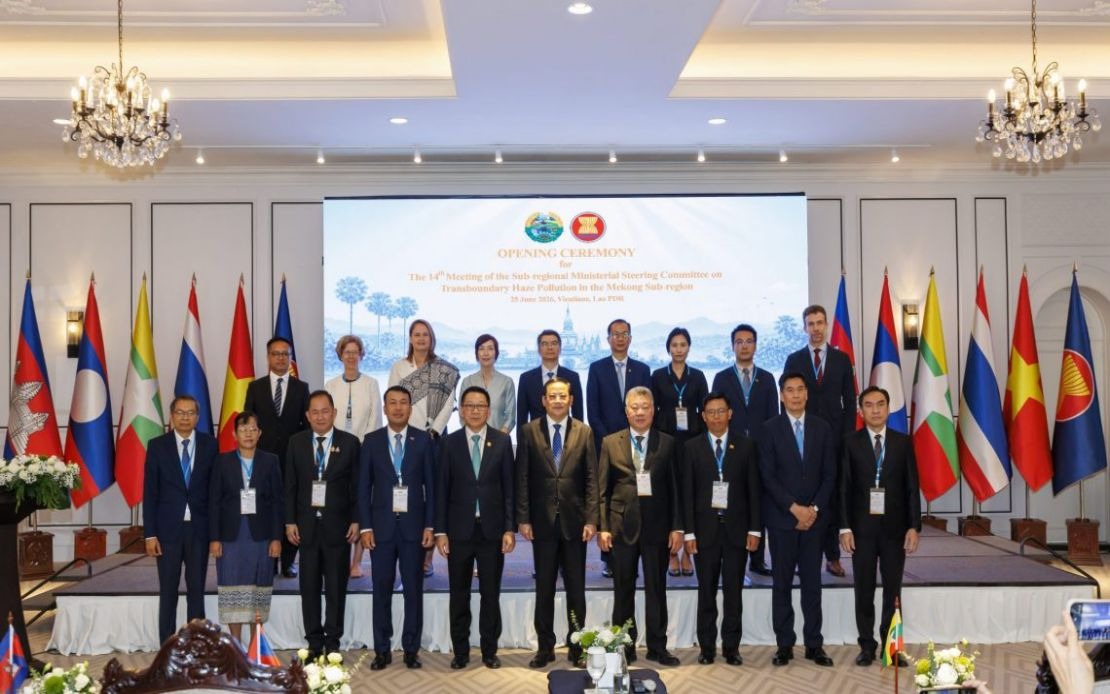
Governments across the Mekong subregion are escalating their collective response to the mounting threat of transboundary haze as soaring temperatures and the approach of El Niño conditions create ideal circumstances for widespread forest and peatland fires. The urgency of the situation has driven Southeast Asian policymakers to strengthen cross-border coordination mechanisms, recognising that air pollution respects no national boundaries and that a fire in one country inevitably affects the health and economies of neighbours. This regional crisis has become particularly acute in recent months, with major metropolitan centres from Bangkok to Ho Chi Minh City already experiencing severe heatwaves and degraded air quality despite seasonal rainfall patterns that should moderate temperatures.
The scale of concern was evident at the 14th Meeting of the Sub-Regional Ministerial Steering Committee on Transboundary Haze Pollution in the Mekong Sub-Region, convened on June 25 in Vientiane. Speaking at the gathering, Lao Prime Minister Sonexay Siphandone articulated the existential nature of the challenge, noting that forest fires and transboundary air pollution have inflicted substantial losses across the Greater Mekong Subregion through biodiversity destruction, public health deterioration, and significant economic harm. His remarks underscored the reality that this is not merely an environmental issue but a multifaceted regional crisis affecting food security, healthcare systems, and economic productivity across Southeast Asia.
Data presented at the ministerial meeting revealed troubling trends in fire activity. The hotspot count from December 2025 to May 2026 increased by approximately eight per cent compared to the equivalent period in the previous year, according to statements released through the ASEAN Secretariat. This upward trajectory in fire hotspots suggests that existing prevention and control measures may be insufficient to address the underlying drivers of vegetation fires, pointing to either inadequate resource allocation, gaps in enforcement, or the overwhelming force of climatic factors overriding current mitigation strategies.
Much of the current instability stems from the collision of multiple climatic stressors. El Niño patterns are reshaping weather systems across the region, while climate change is driving baseline temperatures inexorably upward. The result is an environment where monsoon rains—traditionally relied upon to suppress fire risk—are becoming erratic and insufficient. Ho Chi Minh City exemplifies this paradox, experiencing intense heat during what should be the cooling rainy season, while Bangkok continues to endure acute heat stress. These conditions reflect broader atmospheric circulation changes that scientists attribute to both natural climate variability and anthropogenic warming.
The Lao Ministry of Agriculture and Environment has issued specific warnings about potential impacts during this rainy season. Officials predict that temperatures in vulnerable areas could spike to between 35 and 38 degrees Celsius, accompanied by irregular rainfall patterns, extended dry periods, and declining water levels. Such conditions create a cascade of interconnected hazards: heightened drought risk, water scarcity affecting both urban populations and agricultural irrigation, accelerated forest fire spread, and agricultural sector collapse through crop failure and livestock mortality. For nations where agriculture remains economically vital, this constellation of threats poses an existential challenge to rural livelihoods and national food security.
The possibility of a Super El Niño event developing during 2025 has further alarmed weather scientists and policymakers alike. Such an intensified phenomenon would amplify the destabilising effects already being observed, potentially pushing the region's climate and ecological systems beyond critical tipping points. The prospect has galvanised regional governments to move beyond rhetorical commitments and translate pledges into concrete action on the ground.
At the Vientiane meeting, ASEAN member states formally committed to reducing fire hotspots and controlling transboundary haze pollution, particularly during the approaching dry seasons when fire risk peaks. However, the gap between commitment and implementation remains substantial. Effective action requires sustained funding, technological investment in early warning systems, cross-border operational coordination between fire management agencies, harmonised land-use regulations, and—critically—addressing the underlying causes of fire-setting, whether deliberate agricultural clearing, industrial activities, or inadequate forest management.
For Malaysia and other Southeast Asian nations, the implications of the Mekong crisis extend beyond regional solidarity. The precedent of transboundary haze from Indonesian and Malaysian fires affecting air quality across the region demonstrates that haze originating in the Mekong subregion can eventually influence broader Southeast Asian air quality. Moreover, the economic disruptions caused by haze—reduced tourism, agricultural losses, healthcare burdens—establish a pattern that any nation would wish to avoid. Malaysian policymakers have historical experience with these dynamics, having lived through severe haze episodes in 1997-1998 and subsequent years.
The coordination mechanism established through the Ministerial Steering Committee represents a pragmatic acknowledgment that unilateral action by individual nations is insufficient. Fire management, hotspot monitoring, atmospheric circulation patterns, and agricultural practices must be aligned across borders to achieve meaningful results. The involvement of ASEAN as an institutional framework provides a platform for sustained dialogue and resource-sharing, though critics argue that ASEAN's consensus-based decision-making can sometimes limit the speed and decisiveness required to address acute crises.
Implementation challenges are considerable. Resources for fire prevention and rapid response are unevenly distributed across Mekong nations, with wealthier states possessing superior detection technology, firefighting equipment, and personnel training. Poorer economies struggle to enforce environmental regulations or invest in preventative land management. These disparities can undermine regional efforts if not addressed through capacity-building and resource transfer mechanisms. International funding for climate adaptation and disaster mitigation thus becomes not merely a development issue but a prerequisite for regional stability.
The human dimension of this crisis cannot be overlooked. Communities living near forests and agricultural areas bear the immediate brunt of fire impacts through respiratory illness, economic disruption, and loss of livelihoods. Urban populations in major cities experience degraded air quality, reduced visibility affecting transportation, and health burdens from particulate matter exposure. The vulnerable—children, elderly persons, those with pre-existing respiratory conditions—face heightened mortality and morbidity risks. Public health systems across the region must prepare for potential surges in respiratory and heat-related illnesses.
Looking forward, the intersection of climate change, El Niño dynamics, and developmental pressures on land use suggests that transboundary haze will remain a persistent challenge for the Mekong region and broader Southeast Asia unless fundamental shifts occur in climate mitigation, forest conservation, and agricultural practices. The current moment represents a critical juncture where the willingness of governments to invest in prevention and coordination will determine whether the region experiences escalating crises or achieves greater resilience. For Malaysia, maintaining constructive engagement with Mekong nations on this issue serves both humanitarian imperatives and enlightened self-interest.

