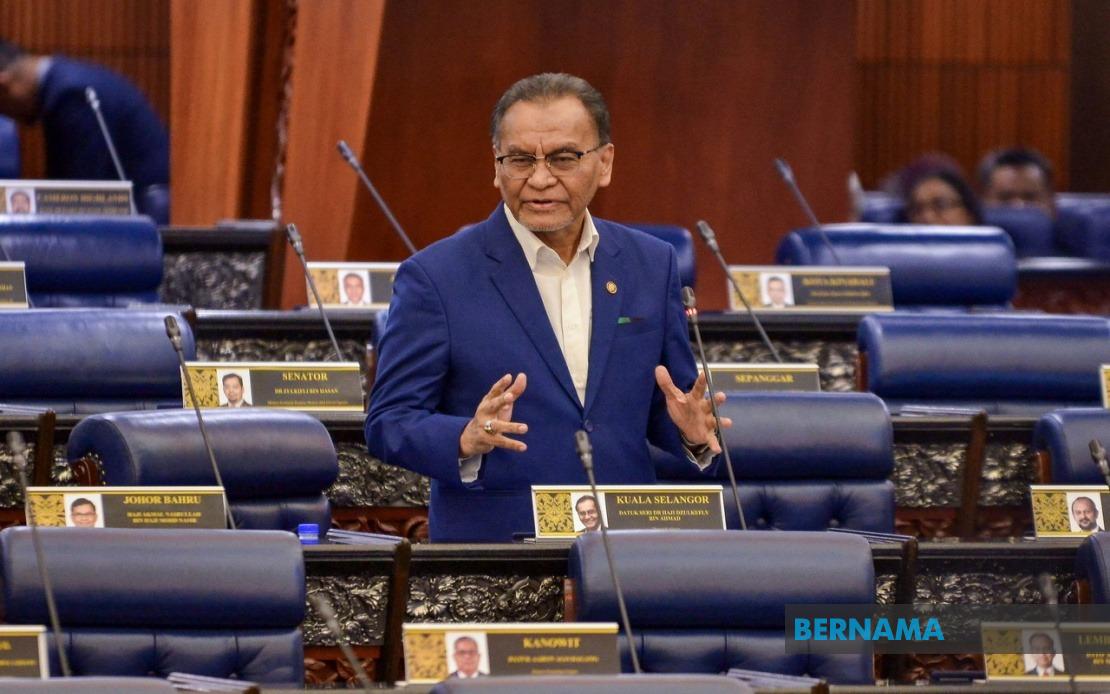
The Malaysian government is pursuing a multi-pronged approach to healthcare accessibility, with Health Minister Datuk Seri Dr Dzulkefly Ahmad introducing MediAsas as a cornerstone initiative aimed at addressing the financial barriers facing the country's middle-income earners. Speaking in Parliament, the minister outlined how this new medical insurance and takaful plan sits within a broader strategy to manage healthcare inflation whilst maintaining universal coverage for all citizens, a distinction that underscores the complementary nature of the scheme rather than any attempt to privatise essential health services.
MediAsas represents a significant policy shift in how the government tackles healthcare affordability for the M40 segment, a group earning between roughly RM4,850 and RM10,970 monthly whose incomes often disqualify them from subsidised public healthcare benefits whilst stretching their ability to afford comprehensive private coverage. The plan introduces premium rates calibrated to this income bracket's financial realities, incorporating a takaful component that aligns with Islamic insurance principles and broadens the appeal across Malaysia's diverse population. By specifically targeting this demographic squeeze, the government acknowledges a growing concern that private healthcare costs have outpaced inflation and wage growth, creating a protection gap between public and private systems.
The scheme's integration of Diagnosis Related Group (DRG)-based payment mechanisms at private hospitals represents a structural innovation designed to moderate costs through standardised billing frameworks. Rather than open-ended fee structures, hospitals will operate within defined payment bands for specific conditions and treatments, reducing the unpredictability that often deters middle-income families from seeking private care. This mechanism has proven effective in other healthcare systems globally, where it constrains cost escalation whilst maintaining service quality by establishing rational pricing tiers across different interventions.
The pilot phase launching at the end of July will operate across the Klang Valley through six insurance and takaful operators, a deliberate geographic choice given the region's concentration of healthcare infrastructure and private hospitals. The Klang Valley serves as an ideal testing ground, where sufficient patient volume, established hospital networks, and diverse demographic composition will generate robust data on scheme uptake, claims patterns, and cost trajectories. Successful pilot outcomes will inform the nationwide rollout planned for January 2027, allowing operational refinements based on real-world performance rather than theoretical projections.
Minister Dzulkefly emphasised that MediAsas explicitly complements rather than replaces Malaysia's public healthcare system, a critical clarification given regional trends where private insurance schemes sometimes undermine public system sustainability. The public system continues providing Universal Health Coverage funded through general taxation, remaining accessible to all residents regardless of employment status or income level. This distinction matters for policy credibility, reassuring stakeholders that government is not retreating from its universal healthcare commitment whilst expanding options for those seeking additional coverage.
The B40 group, comprising those earning below RM4,850 monthly, receives protection through parallel initiatives including PeKa B40, the MADANI Healthcare Scheme, and MySalam, supplementing access to 154 government hospitals and over 3,000 public healthcare facilities nationwide. This tiered approach recognises that vulnerability requires targeted support, with lower-income populations benefiting from more comprehensive subsidisation and simpler access mechanisms. The layered design prevents any single programme from bearing excessive caseload, distributing responsibility across multiple schemes tailored to specific income thresholds and circumstances.
MediAsas's explicit attention to pre-existing conditions, non-communicable diseases, and mental health represents an evolution in how Malaysian healthcare insurance addresses chronic and psychological health challenges. Historically, such conditions triggered exclusions or premium penalties in private schemes, effectively denying coverage to those most vulnerable to expensive, ongoing treatment needs. By incorporating protections for these patient segments, MediAsas acknowledges that effective health protection cannot cherry-pick healthy individuals but must encompass the genuine disease burden facing the M40 population, including metabolic conditions, cardiovascular disease, and mental health disorders increasingly prevalent in middle-income urban and semi-urban settings.
The RESET framework encompassing MediAsas also targets healthcare system efficiency through electronic medical records interoperability, a digital infrastructure priority that reduces unnecessary diagnostic duplication across public and private settings. When patients move between systems, fragmented records necessitate repeated laboratory tests, imaging, and consultations, inflating costs and delaying diagnoses. Integrated electronic systems eliminate this inefficiency, enabling seamless information transfer that supports clinical decision-making whilst containing expenditure, a benefit particularly valuable for chronic disease management requiring coordinated care across multiple providers.
From a Southeast Asian perspective, Malaysia's approach positions the nation as relatively progressive in formalising middle-income healthcare protection through public-private coordination rather than allowing market fragmentation to deepen inequality. Countries across the region face similar M40 vulnerabilities as rapid development creates large populations with incomes exceeding public assistance thresholds yet insufficient to comfortably afford comprehensive private coverage. Malaysia's institutional solution—structured insurance with standardised pricing, integrated electronic systems, and explicit mental health inclusion—offers a replicable model addressing these regional pressures without requiring wholesale healthcare system overhauls.
The scheme's success hinges on several implementation factors requiring sustained attention beyond launch. Affordability must genuinely reflect M40 capacity to pay; pricing calculations must prevent premiums from consuming unsustainable income percentages. Provider participation incentives must attract sufficient hospitals and specialist networks to ensure meaningful choice and accessibility; without adequate provider participation, the scheme becomes theoretical. Marketing and public awareness will determine uptake, requiring culturally appropriate outreach explaining how MediAsas differs from existing insurance products and genuinely improves healthcare access for target populations.
The timeline through 2027 reflects realistic implementation expectations, avoiding the false economy of rushed rollouts that generate administrative dysfunction and public dissatisfaction. The Klang Valley pilot provides valuable operating experience before nationwide expansion, allowing the ministry to resolve technical integration issues, refine pricing models based on actual claims experience, and adjust benefit design based on user feedback. This phased approach distributes implementation risk and demonstrates policy discipline in healthcare system development.
Looking forward, MediAsas success could influence how Malaysia structures ongoing healthcare expansion, potentially informing coverage design for other vulnerable populations or demonstrating the viability of public-private healthcare cooperation beyond insurance mechanisms. The scheme's explicit recognition that universal healthcare coexists with legitimate demands for expanded private options reflects mature health policy thinking that acknowledges diverse population preferences rather than insisting on monolithic system design. For the M40 group specifically, MediAsas promises to transform private healthcare from an aspirational luxury into a manageable financial commitment, bridging a persistent gap in Malaysia's otherwise comprehensive health protection landscape.

