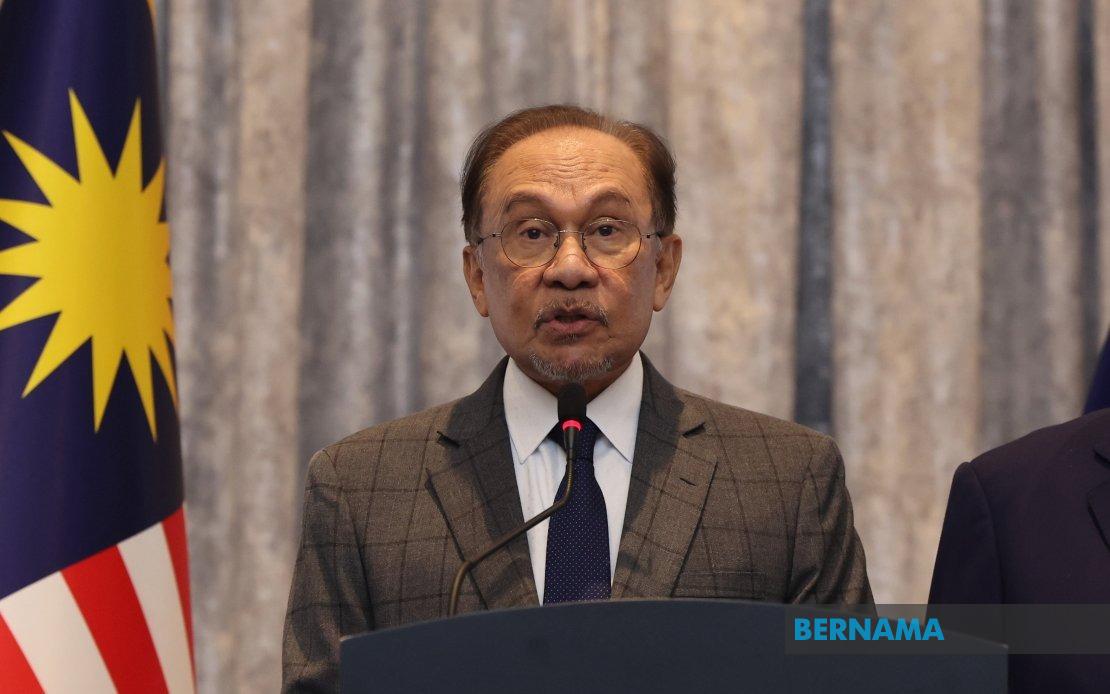
Prime Minister Datuk Seri Anwar Ibrahim has sounded an urgent call for Malaysia's media fraternity to preserve core ethical principles and national identity while navigating the accelerating pace of technological transformation. Speaking at the Malaysian Press Night 2025 and Malaysian Press Institute-PETRONAS Journalism Awards 2026 in Kuala Lumpur, Anwar acknowledged that artificial intelligence, digital platforms and information technology represent crucial tools for modern journalism, yet cautioned that their adoption cannot come at the expense of fundamental values that anchor professional integrity and democratic accountability.
The prime minister framed this challenge within a broader geopolitical context, drawing historical parallels to demonstrate how technological dominance translates into narrative control. He highlighted that Western nations historically leveraged their media infrastructure to propagate interpretations of global events aligned with their strategic interests, effectively shaping international perceptions and policy discussions through concentrated information power. This precedent, Anwar suggested, offers crucial lessons for developing nations seeking to modernise their media ecosystems without surrendering editorial independence or cultural autonomy to external agendas that may fundamentally contradict local values and societal norms.
Beyond historical precedent, Anwar identified an emerging threat landscape distinct from conventional colonial or political influence. Contemporary technological powers now possess mechanisms to embed ideological frameworks and cultural values into digital systems themselves, effectively conditioning how populations access, interpret and respond to information at a foundational level. The prime minister characterised this phenomenon as a modern manifestation of the "captive mind" concept, where technological architecture rather than overt political coercion creates dependency on external worldviews and interpretive frameworks potentially misaligned with Malaysian interests and values.
Communications Minister Datuk Seri Fahmi Fadzil and the Malaysian Communications and Multimedia Commission share responsibility with government to support the media sector's navigation of these challenges, Anwar stated. This supportive stance reflects recognition that media independence and technological advancement are not inherently contradictory objectives, but rather complementary pursuits requiring deliberate coordination between regulators, industry leaders and practitioners. The government's commitment to listening to media perspectives and accepting constructive criticism demonstrates willingness to approach these questions collaboratively rather than through prescriptive mandates that might themselves threaten editorial autonomy.
The prime minister's remarks carry particular significance for Malaysia's media industry, which has experienced considerable transformation over recent decades. The country's press has expanded into digital platforms, adopted AI-powered tools for content curation and distribution, and integrated data analytics into editorial decision-making. These innovations have genuinely enhanced Malaysian journalism's reach, efficiency and responsiveness to readers' interests. Yet each technological advancement creates potential vulnerabilities where external commercial interests or ideological actors might exploit algorithmic systems or data collection mechanisms to subtly redirect editorial narratives or amplify divisive content that fragments national cohesion.
Anwar's emphasis on sustained vigilance reflects understanding that technological drift toward foreign-controlled or ideologically-motivated narratives often occurs incrementally rather than through dramatic disruption. Malaysian media outlets adopting international content management systems, depending on global advertising platforms for revenue, or integrating foreign-developed AI tools may gradually find themselves constrained by architectural decisions made elsewhere according to different priorities. The prime minister's call for heightened attention from columnists and opinion leaders suggests that this conversation requires not just technical expertise but sustained intellectual engagement from media thought leaders capable of articulating why particular editorial choices matter for national resilience.
The Malaysian Media Council and Malaysian Press Institute, with PETRONAS support, have emerged as institutional champions of this balancing act, developing frameworks and initiatives designed to drive media innovation while preserving the editorial independence and ethical commitments that distinguish professional journalism from propaganda or commercial manipulation. These organisations recognise that technological advancement and democratic accountability need not conflict; instead, thoughtfully implemented innovation can strengthen journalism's capacity to serve the public interest while maintaining critical distance from political and commercial pressures that might otherwise compromise reporting quality.
For journalists and media practitioners across Malaysia and Southeast Asia, Anwar's intervention underscores that professional obligations extend beyond accurate reporting and timely delivery to encompass active stewardship of journalism's institutional independence and ethical foundations. As globalisation and technological integration deepen, individual editorial choices—which platforms to utilise, which analytical tools to trust, which external partnerships to establish—collectively determine whether Malaysian media retains capacity for genuinely independent scrutiny of power or becomes inadvertently incorporated into external systems of narrative control. This is not an argument against technological adoption but rather a clarion call for intentional, values-conscious implementation of innovations aligned with Malaysia's democratic commitments and cultural identity.
The prime minister's recognition of journalists' contributions to democratic discourse and commitment to press freedom provides crucial public affirmation of media's societal value at a moment when trust in institutions and traditional information sources faces considerable pressure from competing digital platforms. By praising media practitioners for maintaining professional standards while accepting government criticism, Anwar modelled the reciprocal respect between government and press that underpins healthy democratic function. His explicit thanks to journalists for providing constructive criticism alongside news coverage acknowledges that journalism's democratic contribution extends beyond information provision to include challenging official narratives and holding power accountable.
Moving forward, Malaysia's media sector faces the substantive challenge of determining which technological tools genuinely enhance journalistic capability without compromising values, and which might incrementally erode professional autonomy or editorial integrity. This determination requires sustained conversation between practitioners, technology providers, regulators and public intellectuals who understand both journalism's technical dimensions and its democratic significance. The frameworks and dialogue spaces that institutions like MPI and Malaysian Media Council establish will prove increasingly consequential in enabling media organisations to embrace beneficial innovations while consciously resisting technological dependencies that might undermine the independence and integrity that make journalism valuable to democratic society.

