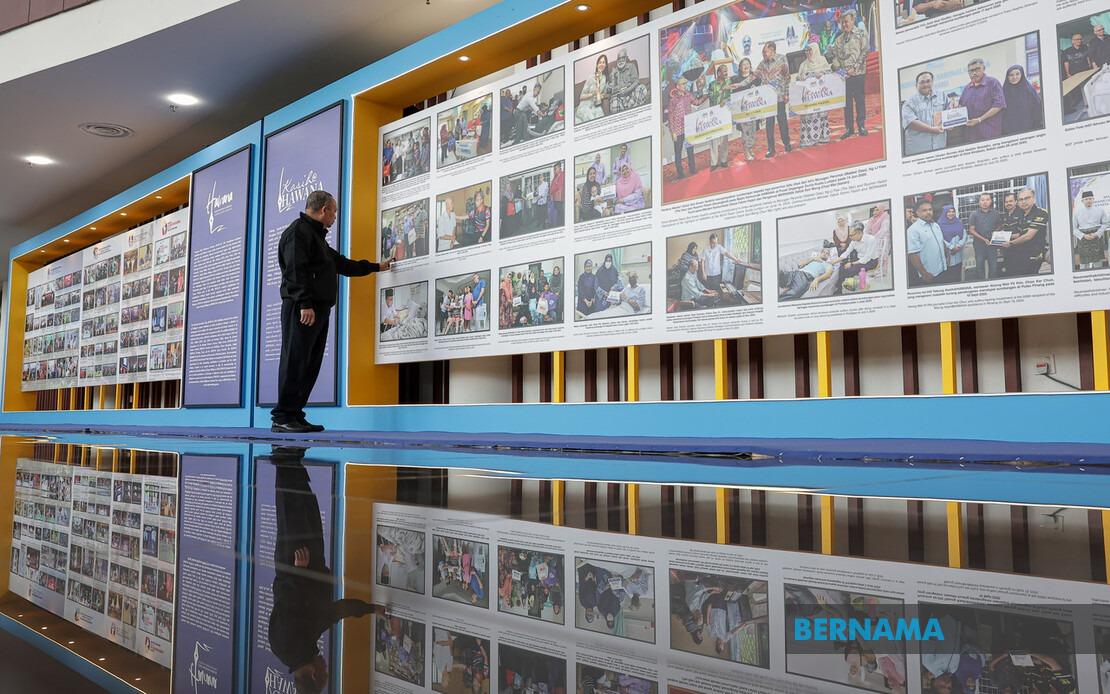
Penang is hosting a significant gathering of Malaysia's media community this week as the National Journalists' Day 2026 (HAWANA) celebration unfolds across multiple platforms and programmes designed to strengthen the profession and examine its evolution. The week-long commemoration, taking place in Butterworth ahead of the main ceremony tomorrow, has attracted hundreds of media practitioners who are participating in a carefully curated series of seminars, retreats and networking sessions that underline the industry's commitment to maintaining standards during a period of rapid technological and social change.
The Malaysian Federation of Media Clubs (GKMM) launched proceedings with its Malaysia Media Retreat 2.0, assembling representatives from 15 media clubs nationwide to strengthen institutional bonds and assess the federation's progress since its formal registration on October 24, 2022. The retreat served dual purposes: reinforcing collegial relationships among the clubs and providing a checkpoint for the federation ahead of its third annual general meeting, which notably will proceed without any competitive election process. This approach reflects an emphasis within the media leadership on consensus-building and unified direction rather than contested governance.
GKMM president Mohamad Fauzi Ishak highlighted the retreat's significance as a reflective moment for the organisation, noting that it offered an opportunity to evaluate the federation's trajectory and consolidate the gains made since its establishment. The event was inaugurated by Communications Minister Datuk Fahmi Fadzil, underscoring government engagement with the media sector on matters of professional development. Bernama's leadership, represented by Chief Executive Officer Datin Paduka Nur-ul Afida Kamaludin and Editor-in-Chief Arul Rajoo Durar Raj, attended to demonstrate the state news agency's commitment to industry-wide initiatives.
Complementing the retreat, the Malaysian Press Institute (MPI) organised a thought-provoking town hall forum at Han Chiang University College of Communication titled "2035: Will Journalists Still Exist?" The choice of subject matter reflects widespread concern within the global media ecosystem about the profession's sustainability as artificial intelligence, automated content generation, and digital platform disruption reshape news production and consumption. This forward-looking discussion featured prominent industry voices including MPI president Datuk Yong Soo Heong and senior editors from Malaysia's largest news organisations.
The town hall panel brought together perspectives from New Straits Times Press (NSTP) and Media Prima, the two dominant news conglomerates in the country. Farrah Naz Abd Karim, serving as deputy group managing editor for News and Current Affairs at NSTP and group editor of NST, participated alongside Azhari Muhidin, who holds editorial responsibility for Media Prima's News and Current Affairs division across multiple platforms. Their presence signaled recognition that navigating technological disruption requires candid dialogue across competing organisations about shared professional challenges.
The forum's focus on journalism's future amid artificial intelligence and digitalisation carries particular resonance for Southeast Asian media, where resource constraints and rapid smartphone penetration have already accelerated the transition from print to digital. Malaysian newsrooms have been among the early adopters of AI-assisted reporting tools, making the "2035" question less abstract speculation than a practical planning matter. The discussion explored whether human journalists will remain indispensable for credibility, investigation and contextual understanding, or whether algorithmic systems might eventually satisfy most news consumption needs.
Tonight and throughout the weekend, the RIUH @ HAWANA Carnival will operate at the PICCA Convention Centre, offering three days of industry-focused activities and exhibitions. This carnival component serves to broaden participation beyond professional elites, allowing younger journalists, students and industry-adjacent professionals to engage with established figures and explore career pathways. The carnival format also creates space for media technology vendors and industry service providers to showcase innovations.
Prime Minister Datuk Seri Anwar Ibrahim will officiate the formal HAWANA 2026 main celebration tomorrow at PICCA @ Butterworth Arena, an event expected to convene approximately 1,000 media practitioners from Malaysia and abroad. The ceremony's prominence—featuring the nation's chief executive—reflects the government's official recognition of journalism's role in democratic governance and public discourse. This level of high-level attendance also positions the Malaysian media industry as a matter of state importance rather than leaving professional recognition to industry bodies alone.
The 2026 celebration carries the thematic framework "Media Integrity, Foundation of Credibility," an explicitly philosophical statement about what the industry prioritises during a period when public trust in media institutions faces scrutiny globally and locally. The theme acknowledges that technical skill and news-gathering capability alone insufficient to sustain journalism's social licence; public confidence depends on demonstrated ethical practice and transparent standards. This framing proves particularly timely in Malaysia, where concerns about misinformation, political pressure on media, and competing truth narratives have intensified public skepticism.
HAWANA 2026 is organised by the Communications Ministry with Bernama serving as the implementing agency, positioning the celebration as an official national observance rather than a private sector initiative. This institutional arrangement ensures coordination with government policy on media and communications, though it also raises questions about the degree of editorial independence that journalists can assert when their profession's highest annual recognition ceremony operates under state auspices. The Malaysian Media Council (MMC), a separate regulatory body, is scheduled to conduct an introductory session and engagement programme with media practitioners during the weekend, adding another layer to the institutional framework surrounding professional development.
The breadth of programming—from federation retreats examining club governance to futuristic town halls questioning the profession's survival to government-level commemoration ceremonies—reveals a media industry simultaneously engaged in internal institution-building, philosophical reflection about structural change, and formal articulation of professional standards. For Malaysian journalists, the week offers rare concentrated opportunity to move beyond daily news cycles and contemplate the industry's medium-term trajectory. For regional observers, HAWANA 2026 demonstrates how a middle-income Southeast Asian nation's media establishment is grappling with technological disruption, artificial intelligence integration, and the fundamental question of journalism's future relevance in an era of information abundance and digital transformation.

