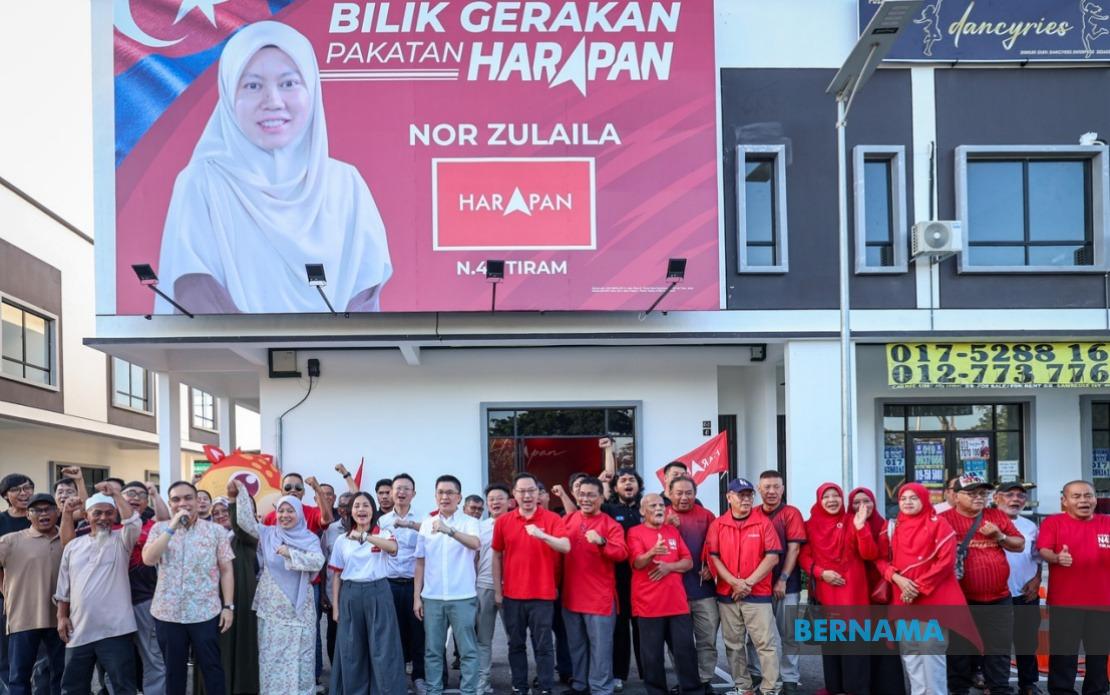
The Malaysian Communications and Multimedia Commission has been tasked with maintaining robust internet connectivity throughout the Johor state election campaign period, according to Deputy Communications Minister Teo Nie Ching. Speaking in Pasir Gudang after launching the Pakatan Harapan operations centre for the N40 Tiram constituency, Teo stressed that reliable digital infrastructure underpins modern political engagement and logistical coordination during electoral contests.
Teo's directive comes as political parties across Malaysia increasingly depend on digital platforms to organise campaign events, disseminate policy information, and engage with voters in real time. The focus on internet stability reflects broader trends in Southeast Asian electoral politics, where connectivity gaps can disadvantage certain communities and create unequal access to campaign messaging. By positioning MCMC to conduct continuous monitoring—particularly in areas anticipated to draw significant crowds—the government signals recognition that infrastructure equity matters in competitive elections.
The Deputy Communications Minister indicated that MCMC will concentrate surveillance efforts on hotspot zones where campaign activities are scheduled. This targeted approach acknowledges that while Malaysia has made substantial progress in broadband penetration, coverage remains uneven, especially in semi-urban and peripheral areas where Johor's population is dispersed. Consistent connectivity ensures that campaign organisers can livestream events, coordinate volunteers, and respond dynamically to voter concerns without experiencing technical disruptions that might undermine message delivery or event management.
Pakatan Harapan's operations launch in Tiram brought together a cross-section of party leadership, including Deputy Education Minister Wong Kah Woh, Bangi MP Syahredzan Johan, Tebrau MP Jimmy Puah Wee Tse, and Tiram candidate Nor Zulaila Abdul Ghani. This institutional presence underscores the importance the coalition assigns to the Johor contest, which will determine the composition of the state assembly and shape governance priorities in Malaysia's second-largest state by population. Johor's strategic position as both an economic driver and a swing region makes electoral outcomes here relevant to national political dynamics.
Teo, who simultaneously holds the position of Johor DAP chief, reported encouraging grassroots sentiment during preliminary canvassing efforts. She noted that voters appear unusually motivated to participate, including those registered outside their home constituencies who have signalled intention to travel back for polling day. This enthusiasm, if sustained, suggests high turnout expectations, which typically favours well-organised parties capable of mobilising supporters efficiently. Internet infrastructure that enables coordinated get-out-the-vote operations becomes strategically valuable under such conditions.
Regarding DAP's electoral approach, Teo rejected the notion of designating any contested seats as politically secure. This strategic doctrine reflects lessons learned across multiple election cycles—that voter sentiment can shift unexpectedly, and that assuming safety in any constituency risks demoralising volunteers and reducing campaign intensity in places where every vote counts. By mandating uniform resource allocation across all 17 seats the party contests, DAP aims to maximise competitiveness while acknowledging each locality's distinct demographics, incumbency dynamics, and issue priorities.
The party's insistence on contextualised campaigning per constituency reveals sophistication in contemporary electoral strategy. Johor's constituencies contain vastly different population profiles—from industrial urban zones around Pasir Gudang and Johor Bahru to semi-rural areas with agricultural heritage and mixed settlement patterns. Campaign messaging that resonates in one setting may fall flat in another, necessitating localised communication strategies that good internet connectivity can facilitate through rapid information sharing, feedback collection, and message refinement.
The electoral timeline remains compressed. Nominations occur the day after Teo's statement, early voting follows on July 7, and polling day is scheduled for July 11. This condensed schedule intensifies the value of reliable digital infrastructure, as campaigns must reach voters quickly without delays caused by connectivity failures. Campaign managers planning logistics, advertising platforms distributing political content, and voters seeking information all depend on uninterrupted service. Any significant outages could disproportionately harm parties lacking alternative communication channels or the resources to pivot to traditional media on short notice.
Johor's electoral significance extends beyond state-level consequences. The state sends substantial representation to Parliament, and shifts in state assembly composition often correlate with changes in federal political alignment. Since Malaysia's 2022 general election, the political landscape has remained fluid, with various coalitions competing for influence. Johor's outcome will provide fresh signals about voter sentiment regarding incumbent administrations, economic management, and coalition viability—intelligence that national parties will scrutinise when calculating strategies for future elections.
MCMC's role in ensuring election-period connectivity connects to broader governance questions about digital infrastructure equity and political participation. In democracies where internet access increasingly determines who can effectively engage in electoral processes, technical reliability becomes a public goods question. Parties with superior digital capabilities gain inherent advantages, but infrastructure failures affect all competitors unpredictably. By positioning the regulator as a neutral arbiter of connectivity standards during campaigns, the government attempts to level the technological playing field, though questions remain about monitoring effectiveness and remediation capacity when problems occur.
For Malaysian voters, the emphasis on digital infrastructure during campaigns reflects globalised expectations about electoral organisation. Citizens in developed democracies take reliable campaign communication technology as baseline; highlighting its importance in Johor suggests recognition that voters increasingly demand seamless access to candidate information, party platforms, and civic resources regardless of location. This expectation will likely intensify in future elections, placing infrastructure quality alongside traditional campaign elements like ground operations and media visibility.
The Johor state election thus becomes a test case for Malaysia's readiness to manage electoral competition within a predominantly digital environment. Success in maintaining connectivity while preserving electoral integrity will offer lessons applicable to future contests. Conversely, technical shortcomings or perceptions of unequal digital access could undermine confidence in electoral fairness—a consideration that elevates MCMC's assignment from logistical convenience to democratic necessity.

