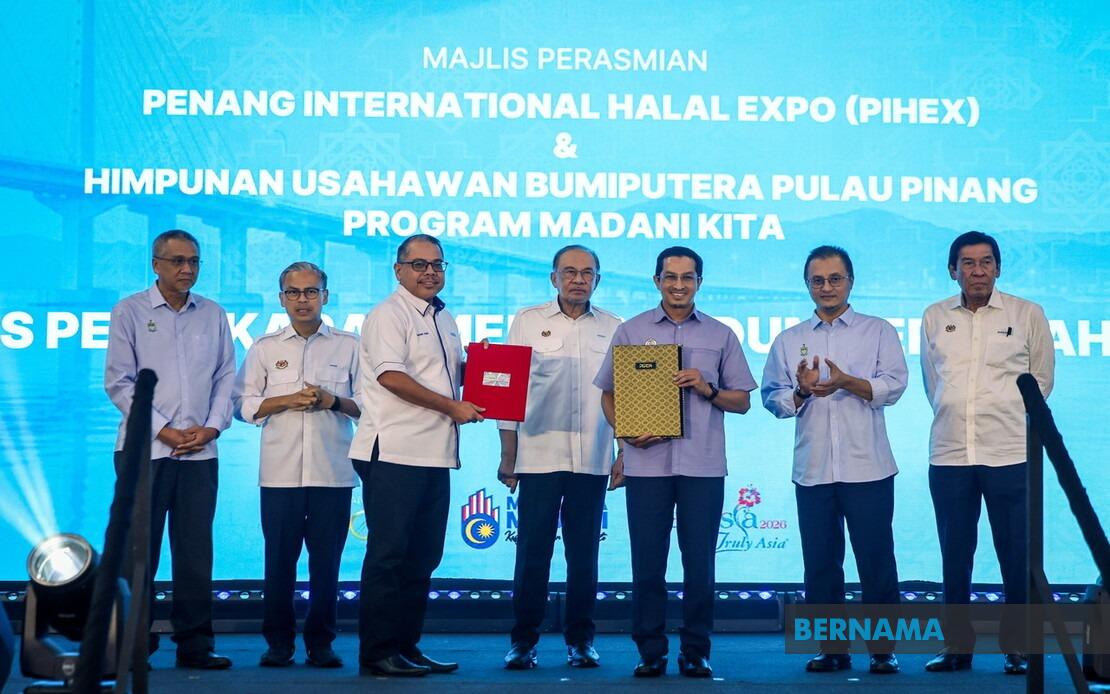
The Malaysian Communications and Multimedia Commission has embarked on a groundbreaking partnership with Penang Halal International, bringing together the MADANI Kita Programme and the Penang International Halal Expo 2026 in a convergence designed to enhance public access to government services. The initiative, coordinated through the National Information Dissemination Centre (NADI), marks the first time MCMC has jointly hosted the programme with the halal industry body, reflecting an evolving strategy to position government agencies as embedded service providers within major public-facing events.
The MADANI Kita Programme represents a broader shift in how Malaysia's federal government delivers services to citizens. Rather than requiring the public to navigate multiple agencies across different locations, the initiative consolidates offerings under one umbrella, coordinated by the Performance Acceleration Coordination Unit operating from the Prime Minister's Department. This whole-of-government approach mirrors international best practices in citizen service delivery, where integration and accessibility serve as primary objectives rather than administrative convenience.
Prime Minister Datuk Seri Anwar Ibrahim officially launched the programme at Seberang Perai Polytechnic on July 25, positioning it as a flagship component of the Malaysia MADANI development agenda. The launch brought together Communications Minister Datuk Seri Fahmi Fadzil and MCMC chairman Tan Sri Mohamad Salim Fateh Din, underscoring the event's significance as both a policy demonstration and a symbolic commitment to service transformation. The timing and venue selection suggest an intentional strategy to reach the Penang public directly rather than waiting for citizens to seek government services through traditional channels.
The programme's service offerings reveal an ambitious scope extending beyond typical government transactions. Health screenings provide immediate public health benefits, while Rahmah Sales and Agro MADANI Sales initiatives address cost-of-living concerns that remain prominent in Malaysian households. Government agency booths create opportunities for direct interaction between citizens and officials, potentially resolving long-standing concerns about bureaucratic complexity. The addition of community services ensures that vulnerable populations receive targeted support alongside the broader offerings.
Digital inclusion emerges as a critical dimension of this initiative, particularly through NADI On Wheels, which provides free Wi-Fi access to underserved populations. For a region like Seberang Perai, where digital divide challenges persist alongside uneven broadband distribution, this mobility represents practical progress toward ensuring that connectivity barriers do not prevent citizens from engaging with e-government services. The NADI E-Sports MADANI Legend competition signals an attempt to make government engagement appealing to younger demographics, addressing generational divides in service uptake.
The collaboration with Penang Halal International extends beyond administrative convenience, reflecting Malaysia's positioning as a global halal hub and the commercial significance of the halal ecosystem. By integrating the MADANI Kita Programme into the Penang International Halal Expo, organisers create opportunities for entrepreneurs and small business operators to access government support services while simultaneously exploring market opportunities. This juxtaposition generates complementary value, where an individual seeking business licensing assistance can simultaneously engage with halal certification bodies and industry partners under the same venue.
MCMC's involvement signals recognition that communications and multimedia infrastructure underpin effective service delivery in an increasingly digital public sphere. As citizens migrate from paper-based interactions to digital transactions, the commission's coordination role in establishing reliable digital pathways becomes essential. The partnership demonstrates MCMC's evolution beyond traditional regulatory functions toward active participation in shaping how government interacts with the public in the digital age.
For Malaysian policymakers tracking government modernisation initiatives, this partnership offers insights into emerging coordination mechanisms. Rather than creating new standalone agencies, the approach leverages existing institutional structures, particularly NADI and PACU, to multiply impact through strategic event partnerships. This model carries implications for how other federal and state-level initiatives might achieve broader reach without proportional increases in budget allocation or staffing requirements.
The decision to hold the programme through July 26 acknowledges that meaningful service delivery requires sustained engagement rather than symbolic appearances. Multi-day programming allows officials to process transactions thoroughly, provide comprehensive advice, and accommodate varying visitor schedules. This temporal commitment reflects lessons learned from earlier government roadshows where time constraints undermined service quality.
Looking forward, the collaboration between MCMC and Penang Halal International establishes a template for future partnerships that might extend to other sectors and regions. As Malaysia MADANI implementation accelerates, the framework of embedding government services within industry-specific or community events could expand to technology sectors, agricultural networks, manufacturing zones, and professional associations. Each sector hosts natural gathering points where service integration addresses genuine citizen needs rather than imposing artificial touchpoints.
The initiative also carries implications for how Malaysia's regional standing evolves. By demonstrating integrated, citizen-centric governance at the Penang International Halal Expo, the country projects modernised administration to international visitors and business partners. Policymakers from other Southeast Asian nations examining governance transformation models will observe whether this integrated approach yields measurable improvements in service satisfaction, transaction completion rates, or citizen trust—metrics that ultimately determine whether such initiatives represent genuine progress or sophisticated public relations.
Broad adoption of similar initiatives across Malaysia's states and federal territories could fundamentally reshape citizen expectations regarding government accessibility. If successful, the MADANI Kita Programme model might establish a new baseline where the public expects government services to adapt to their locations and schedules rather than the reverse. This subtle but profound shift in service philosophy reflects Malaysia's aspiration toward genuinely citizen-centric governance.

