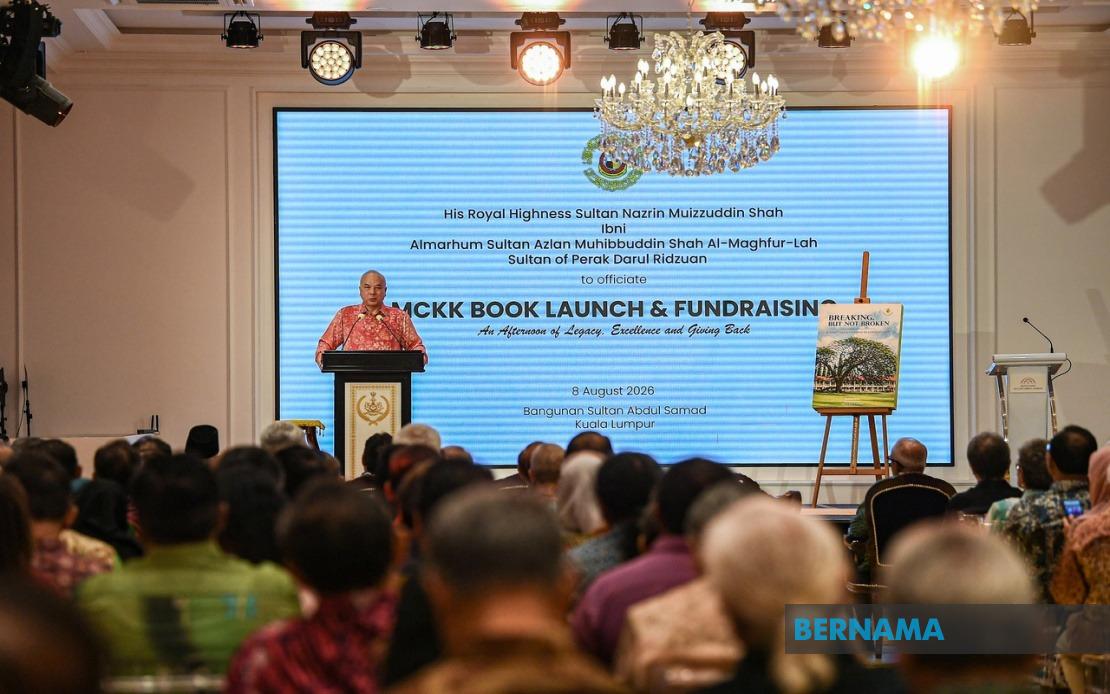
Malaysia's premier boarding schools face an existential challenge in the modern era, according to Sultan Nazrin Shah, who believes institutions like Malay College Kuala Kangsar can reclaim their former prominence by fundamentally reimagining their educational approach. Speaking as Royal Patron of the MCKK Board of Governors, the Perak Ruler emphasised that heritage establishments cannot simply preserve the status quo; instead, they must evolve strategically to remain relevant in a landscape transformed by artificial intelligence and digital innovation.
The Sultan's intervention marks a significant acknowledgement of concerns that have long circulated among Malaysian educators and parents regarding the declining influence of the country's most celebrated residential schools. These institutions, historically regarded as incubators for national leaders and high-achieving professionals, have witnessed a gradual erosion of their distinctive competitive advantage over the past two decades. The royal assessment suggests that this decline is not inevitable but rather reflects a failure to adapt pedagogically and operationally to contemporary realities.
Central to Sultan Nazrin's vision is a recalibration of educational priorities that addresses two distinct but complementary dimensions of human development. The first involves equipping students with practical, economically relevant competencies suited to rapid technological change—expertise in data analysis, computational thinking, and digital literacy that will prove essential in AI-augmented workplaces. Equally important, however, is the cultivation of what the Ruler termed intangible qualities: ethical reasoning, creative problem-solving, linguistic proficiency, and a genuine commitment to societal contribution. This dual emphasis represents a rejection of narrowly vocational approaches in favour of holistic education that produces graduates capable of both technical excellence and principled leadership.
The Ruler's remarks, delivered during the launch of a critical examination of MCKK's trajectory, underscore growing anxiety about the contemporary quality of graduates from Malaysia's elite boarding schools. Observers have noted that recent cohorts lack the command of languages, analytical rigour, and sense of public duty that previously distinguished alumni of these institutions. This represents a marked reversal from earlier decades, when MCKK and comparable schools consistently produced individuals of exceptional calibre who rose to prominence across government, business, academia, and the professions. The authors of the book being launched—Ghazally Ismail, Ahmad Ibrahim, and Hisham Badrul Hashim—apparently deliver a forthright assessment of these challenges, refusing to sanitise their critique of institutional complacency.
Sultan Nazrin's reference to such schools as "power schools" now dimmed with reduced influence carries particular weight given Malaysia's experience with institutional decline. The metaphor captures a painful reality: institutions that once shaped national discourse and produced generation after generation of accomplished leaders have gradually ceded their position to alternative educational pathways, whether international schools, specialist academies, or overseas universities. This shift reflects both demographic change and a broader questioning of whether traditional boarding school models remain suited to contemporary needs and aspirations.
The emphasis on preparing students for the artificial intelligence age speaks directly to regional anxieties about economic competitiveness in Southeast Asia. As nations across the region grapple with digital transformation and workforce disruption, educational institutions face mounting pressure to deliver graduates equipped for disruption rather than those trained in static bodies of knowledge. Malaysia's heritage schools, with their established networks, substantial physical infrastructure, and accumulated institutional wisdom, possess comparative advantages that newer competitors cannot easily replicate. However, realising these advantages requires genuine curricular innovation and pedagogical transformation rather than superficial modernisation.
Financial sustainability emerges as a secondary but significant consideration in this transformation agenda. The MCKK Foundation, established in 2008, has mobilised over RM36 million in donations and corporate contributions, demonstrating continued confidence among benefactors including major corporations and international donors such as His Majesty Sultan Hassanal Bolkiah of Brunei Darussalam. This financial capacity, with endowment funds now exceeding RM16 million and annual investment income surpassing RM7 million, provides the resource foundation necessary for institutional renewal. Approximately RM19 million has been invested in new physical infrastructure, including the International Baccalaureate Complex and Auditorium Tun Abdul Razak, while parallel investments in facilities maintenance and heritage preservation reflect balanced attention to both modernity and institutional continuity.
These financial resources have been deployed to support scholarships ensuring socioeconomic diversity in the student body, professional development for teaching staff, and participation in competitive academic and sporting events. Such investments acknowledge that institutional excellence in the contemporary context requires sustained investment across multiple domains: infrastructure, human capital development, and student opportunity. The diversification of funding sources beyond traditional government channels has enhanced institutional autonomy, though it also underscores the reality that Malaysia's premier schools can no longer rely primarily on state resources for advancement.
The broader implications for Southeast Asian education policy extend beyond a single institution. Malaysia's experience with heritage school decline offers cautionary lessons for other regional nations managing comparable institutions. The challenge identified by Sultan Nazrin—adapting to transformative technological change while preserving distinctive institutional character and ethical commitment—represents a universal educational problem. Schools across the region confront similar pressures to remain relevant while honouring their foundational missions and identities.
Malaysia's heritage schools also occupy a particular cultural position, historically serving as custodians of certain values and traditions deemed important to national identity formation. Their potential renewal thus carries implications beyond educational effectiveness to encompass nation-building and the reproduction of elite networks. The question of whether MCKK and comparable institutions can successfully navigate dual transformation—technological adaptation alongside cultural preservation—will likely influence broader patterns of elite reproduction and leadership formation within Malaysia over the coming decade.
Sultan Nazrin's intervention signals that Malaysia's traditional education establishment recognises the stakes involved in institutional renewal. Rather than defensive resistance to change or reactive adoption of superficial innovations, the Ruler advocates a proactive, intellectually rigorous approach to reimagining heritage institutions for contemporary circumstances. This stance offers a pathway beyond both nostalgic preservation and wholesale abandonment of traditional models, potentially yielding institutions that honour their history while equipping students for genuinely uncertain futures shaped by technological and social transformation.

