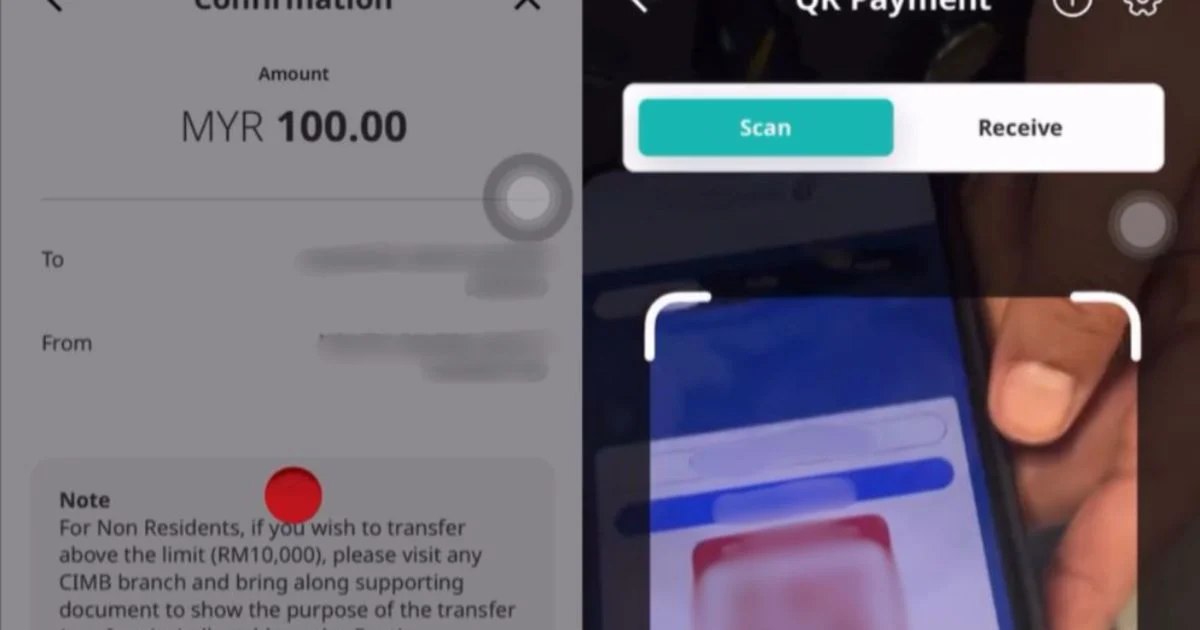
The Malaysian Border Control and Protection Agency has initiated an internal inquiry after receiving allegations that one of its personnel at Kuala Lumpur International Airport's Terminal 2 facility obtained a RM100 payment from a traveller via personal quick response code technology. The case has drawn attention to oversight mechanisms at the country's busiest international gateway and raises questions about the adequacy of corruption prevention measures in place at border control points.
The incident centres on the conduct of a single uniformed officer whose actions have prompted the agency to examine whether established protocols for financial transactions and passenger interactions were properly followed. The use of personal QR codes rather than official payment channels represents a notable departure from standard procedures at immigration and customs checkpoints, where all monetary exchanges should be conducted through transparent, traceable, and officially sanctioned methods.
QR code payment systems have become ubiquitous across Malaysia's retail and service sectors over recent years, offering convenience and reducing cash handling. However, the potential misuse of such technology at border control points presents a fresh vulnerability. Unlike traditional cash transactions that leave physical evidence, digital payments through personal accounts can be more easily concealed, making them particularly concerning in contexts where accountability is paramount. The case underscores how rapidly evolving payment technologies can outpace institutional safeguards.
KLIA Terminal 2 processes millions of passengers annually and serves as a critical entry point for both leisure and business travellers arriving in Malaysia. The airport's reputation for professional border operations is central to the country's image as a reliable travel destination. Any breach in the conduct of border officers, however isolated, can damage public confidence in these services and may concern the international business community that relies on efficient, corruption-free airport procedures.
This investigation arrives amid broader global attention to corruption risks within immigration and customs administrations. International travel infrastructure has historically been identified by transparency watchdogs as vulnerable to illicit financial flows and abuse of power. The involvement of border officials in soliciting unauthorised payments contravenes not only agency regulations but potentially violates multiple anti-corruption laws that govern public servants in Malaysia.
The nature of the allegation—a relatively modest sum of RM100—might appear minor in isolation, but the investigation's significance lies in what it reveals about systemic vulnerabilities rather than the amount involved. Institutional failures that permit even small transgressions to occur suggest gaps in training, supervision, or enforcement that could enable far more serious misconduct. The pattern of behaviour, if established, could indicate broader issues within the agency's operational culture or management practices.
Passengers crossing KLIA are diverse in background and may include individuals unfamiliar with Malaysian procedures or uncertain about their rights when interacting with officials. This dynamic creates power imbalances where travellers might feel compelled to comply with informal payment requests without fully understanding whether such demands are legitimate. The investigation will likely examine not only the officer's actions but also the circumstances surrounding the payment and any potential coercion involved.
The MCBA's decision to investigate publicly signals an institutional commitment to accountability, though the conduct of the inquiry itself will be closely watched. Transparency in the investigative process, timely resolution, and clear communication of findings and disciplinary actions would reinforce public trust. Conversely, if the process appears opaque or outcomes are delayed indefinitely, it may reinforce scepticism about the agency's capacity for self-regulation.
For travellers and the aviation industry, this incident serves as a reminder to document interactions with officials, especially any requests for payments, and to report concerns through official channels immediately. Airlines and ground handlers who process passengers should ensure their staff understand their role in reporting suspected officer misconduct. The incident also highlights the need for stronger passenger awareness campaigns about legitimate fees and procedures.
Moving forward, the episode suggests that the MCBA and airport authorities should conduct a comprehensive audit of payment systems, digital security protocols, and officer supervision at KLIA. Enhanced training on ethical conduct, coupled with mystery shopper programmes and passenger feedback mechanisms, could help detect vulnerabilities before they manifest in allegations. Clearer signage about proper payment methods and passenger rights would also serve a preventive function.
The investigation's outcome will have implications beyond KLIA. As Malaysia seeks to position itself as a premier Southeast Asian travel hub competing with neighbouring airports in Singapore and Thailand, maintaining rigorous standards of officer conduct is essential. Passengers and international carriers expect borders to function with integrity. The speed and transparency with which the MCBA resolves this matter will demonstrate whether the agency can maintain that expectation.

