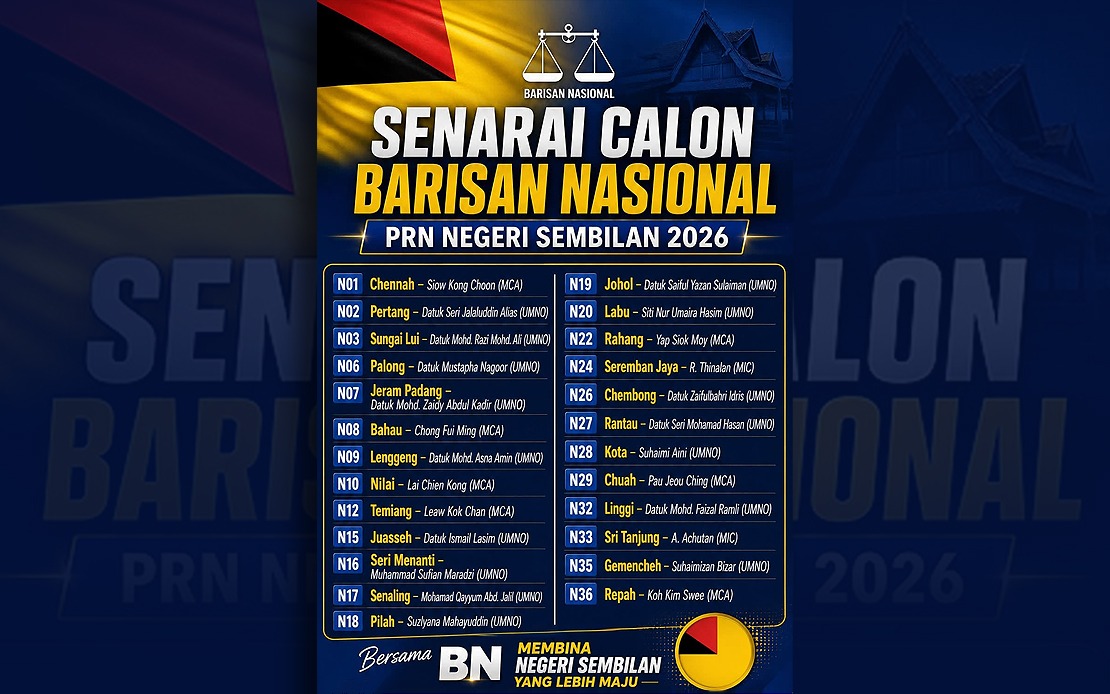
Barisan Nasional's leadership has confirmed the seat allocation strategy for the 16th Negeri Sembilan state election, with coalition chairman and Deputy Prime Minister Datuk Seri Dr Ahmad Zahid Hamidi revealing that the MCA will contest seven State Legislative Assembly seats whilst the MIC will field candidates in four constituencies. The distribution reflects BN's continued commitment to power-sharing amongst its component parties, a hallmark of the coalition's electoral strategy across Malaysian states.
The seat division was determined through a deliberate assessment process that prioritised electoral viability. Ahmad Zahid explained that the formula considered the projected potential for victory among prospective candidates within their respective constituencies, suggesting that BN conducted detailed analysis of local dynamics before finalising the allocation. This approach aims to maximise the coalition's overall performance by concentrating resources and candidate quality in winnable seats.
The announcement came following a meeting Ahmad Zahid convened with all prospective BN candidates at Wisma UMNO Negeri Sembilan in Seremban on July 15. During the gathering, candidates formalised their commitment by signing undertakings and swearing allegiance to Ahmad Zahid as BN chairman—a procedural requirement that underscores party discipline and unity ahead of the campaign. Such vetting processes are standard practice across Malaysian state elections, by-elections, and general elections, though their formality signals the seriousness with which BN approaches candidate selection.
The comprehensive candidate list was scheduled for public announcement at Stadium Tuanku Abdul Rahman Paroi later that evening, setting the stage for formal campaign activities. The Election Commission has established a tight electoral timeline, with nomination day slated for July 18, early voting scheduled for July 28, and polling day fixed for August 1. This compressed schedule requires rapid mobilisation from all participating coalitions and independent groups.
Negeri Sembilan's electoral landscape has shifted considerably since the 15th state election. In that contest, BN secured 14 seats, marking a significant decline from its historical dominance. Pakatan Harapan emerged as the major beneficiary, capturing 17 seats and effectively claiming the state government, whilst Perikatan Nasional unexpectedly won five seats. The results reflected broader voter sentiment shifts across Malaysia following political realignments and public reactions to governance issues.
For BN, the upcoming election represents an opportunity for recovery and recalibration in one of Malaysia's smaller states. The coalition's performance in Negeri Sembilan carries symbolic weight beyond the state itself, as electoral momentum from state contests often influences national political perceptions. A stronger showing could bolster BN's negotiating position within coalition talks and enhance the party's image as a viable governing force.
The allocation to MCA and MIC within the BN framework reflects the coalition's structured approach to managing its ethnically diverse component parties. The MCA, representing the Malaysian Chinese community, and the MIC, representing the Indian Malaysian community, have maintained their positions as secondary partners to UMNO within the BN structure. Securing competitive seats—particularly seven for the MCA—demonstrates continued confidence in these parties' mobilisation capacity among their respective communities.
This election occurs amid broader questions about BN's electoral relevance following the 2018 general election defeat and subsequent political upheavals. The coalition has worked systematically to rebuild credibility through state-level contests. Negeri Sembilan, whilst small, offers a testing ground for messaging, candidate quality, and grassroots organisation that BN can apply to larger states and potentially future national contests.
The competitive environment in Negeri Sembilan will likely intensify as Pakatan Harapan seeks to retain its state government majority and Perikatan Nasional attempts to expand its footprint in non-heartland territories. Regional political dynamics across Selangor, Perak, and Pahang influence perceptions in Negeri Sembilan, creating a complex electoral backdrop where local issues intersect with national coalition strategies and rivalries.
For Malaysian voters in the state, the election presents choices between competing visions for governance and development priorities. The MCA and MIC candidates selected through BN's vetting process will represent not only the coalition's broader agenda but also their parties' specific policy emphases regarding community concerns, economic opportunities, and infrastructure development. The subsequent campaign period will clarify these distinctions for the electorate.

