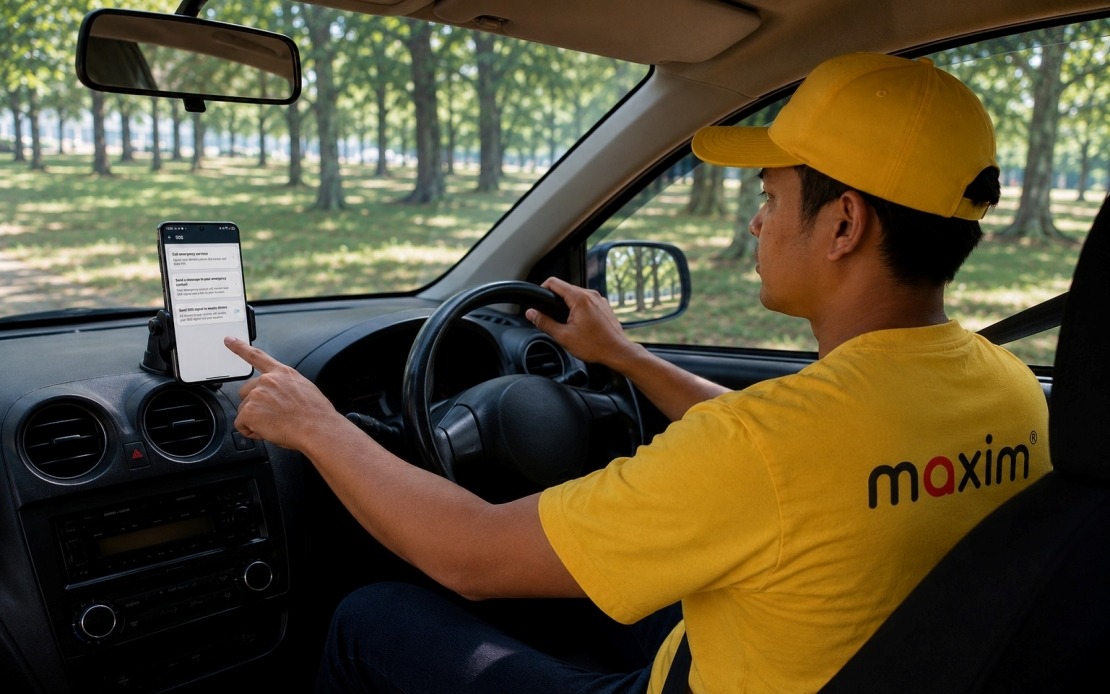
Maxim Malaysia, the Southeast Asian ride-hailing platform, has announced a significant overhaul of its in-app safety infrastructure designed to accelerate emergency response times for both passengers and drivers. The upgraded system represents the company's latest attempt to address safety concerns that have become increasingly central to the ride-sharing industry across Malaysia and the broader region.
The cornerstone of the enhancement is a redesigned SOS button that operates identically for passengers and drivers, offering users immediate choices during critical moments. Rather than defaulting to a single preset response, the system permits users to simultaneously contact up to three pre-registered emergency contacts via SMS notifications or directly dial Malaysia's 999 emergency hotline. This flexibility recognises that different emergencies demand different responses—a medical crisis might warrant immediate ambulance dispatch, whereas a vehicle breakdown or threatening situation might require trusted friends or family to intervene first.
The technical infrastructure supporting these alerts has been engineered to function reliably even in areas with weak internet connectivity, a particularly important consideration across Malaysia's more rural and suburban regions. When activated, the SOS function transmits the user's precise GPS coordinates and a live trip-tracking link through SMS, ensuring that emergency responders or contacted individuals can immediately pinpoint the user's location regardless of connectivity status. This redundancy approach addresses a genuine practical concern in Malaysia's varied telecommunications landscape.
A distinctive feature aimed specifically at driver-partners is the Driver Alert System, which broadcasts emergency notifications to all Maxim drivers operating within a three-kilometre radius of an incident. This peer-assistance mechanism relies on the density and distribution of active drivers at any given time to provide rapid initial support before formal emergency services arrive. In densely populated areas like the Klang Valley or Penang, this could substantially reduce response times, though effectiveness in less busy regions remains dependent on driver proximity and availability.
Mohd Hazwan Musli, the director of Maxim Malaysia, framed these enhancements as fundamentally about granting users agency during emergencies. His statement emphasised that the ability to rapidly decide whether to contact emergency services, personal contacts, or fellow drivers—each accessible within seconds—could prove decisive in life-threatening situations. This messaging reflects broader industry recognition that passengers and drivers increasingly expect transportation platforms to function as safety-conscious partners rather than mere transactional intermediaries.
Beyond the SOS overhaul, Maxim has embedded additional protective measures throughout the user experience. A secured in-app chat system incorporates fraud-prevention safeguards, while trip monitoring continuously logs journey data including GPS coordinates and route information. The Trip Sharing feature enables passengers to transmit real-time journey links to trusted contacts immediately upon entering a vehicle, creating a verification mechanism that someone outside the ride knows their location and progress.
Data security underpins the entire system, with all communications through the SOS function, Driver Alert System, and Trip Sharing feature encrypted according to contemporary standards. The company specifies that only authorised security personnel and relevant government authorities can access this data when required through established legal procedures, addressing privacy concerns that have gained prominence in Malaysian digital discourse.
These upgrades arrive within a competitive landscape where ride-hailing platforms across Southeast Asia have increasingly prioritised safety as a market differentiator. Grab, Maxim's primary competitor in Malaysia, has similarly invested in emergency response capabilities, creating an implicit arms race in safety features. For Malaysian consumers, this competition generates tangible benefits through accelerated feature development and cross-platform pressure to maintain high safety standards.
The practical implications for Malaysian users are substantial. Passengers navigating late-night rides through unfamiliar areas gain concrete technological reassurance, while female passengers—a demographic that consistently reports heightened safety concerns on ride-sharing platforms—may appreciate the expanded alert options and immediate peer-assistance possibilities. Driver-partners, often operating during irregular hours and in variable conditions, gain both personal protection through emergency access and the possibility of earning goodwill by assisting colleagues in distress.
Implementation effectiveness, however, will depend on user adoption and driver participation rates. The system's value increases exponentially with user uptake; an SOS alert generates meaningfully more assistance when many drivers are active and monitoring driver alert notifications. Early adoption campaigns and user education will therefore become critical to translating technical capability into practical safety improvement.
Regionally, Maxim's emphasis on localised safety responses reflects understanding that Southeast Asian ride-hailing users face distinct challenges compared to their counterparts in developed markets. Traffic congestion, variable emergency service response times, and lower smartphone penetration in certain areas all influence how platforms design protective features. Maxim's three-kilometre driver alert radius and SMS-based location sharing represent design choices specifically calibrated to Malaysian conditions rather than generic global templates.
The enhancement also carries implications for regulatory relationships. Malaysian authorities have periodically pressured ride-hailing platforms on safety standards and driver background verification. Proactive investment in emergency response capabilities positions Maxim favourably within these discussions, demonstrating commitment to passenger and driver welfare beyond statutory minimums. As regulatory environments tighten across Southeast Asia, such demonstrations of safety commitment increasingly become competitive necessities.

