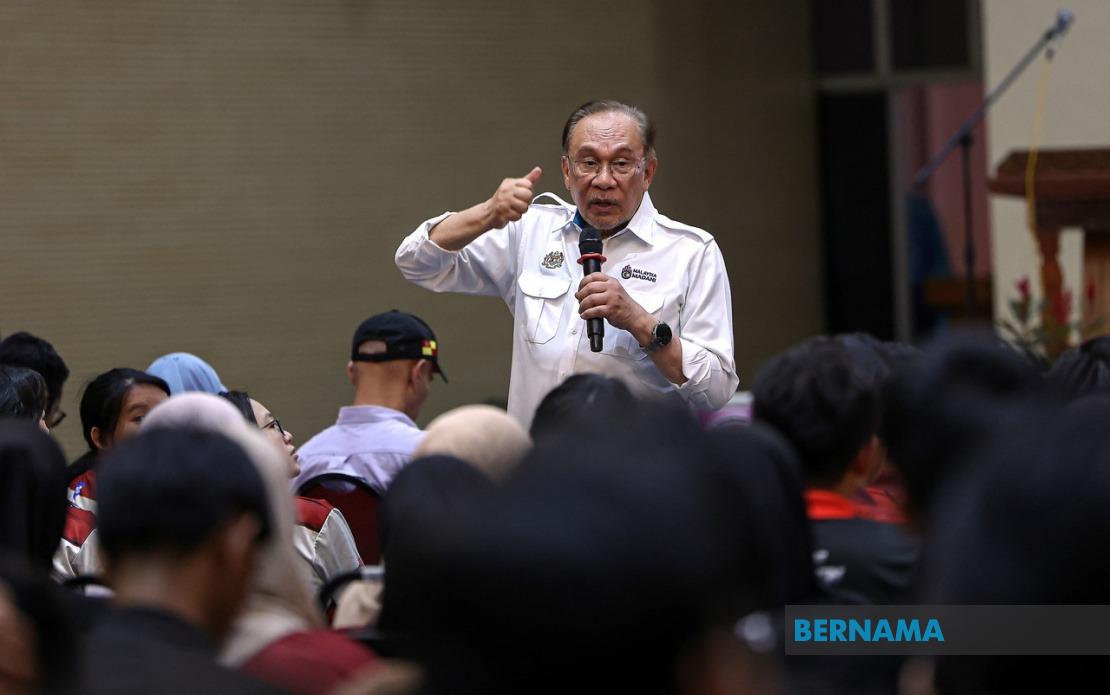
Prime Minister Datuk Seri Anwar Ibrahim has outlined a two-pronged strategy for matriculation admissions that seeks to reconcile meritocratic principles with provisions for disadvantaged cohorts, addressing long-standing tensions between academic selection and affirmative action in Malaysian higher education. Speaking at the Jelajah Rakan Muda programme held at the Youth and Sports Complex (KOMBES) in Paroi, Seremban on July 22, Anwar emphasised that the government intends to identify and fast-track the nation's highest-achieving secondary school graduates whilst simultaneously preserving safeguards for communities historically excluded from tertiary pathways.
Under the revised framework, students who achieve 10As in the Sijil Pelajaran Malaysia (SPM) examination will receive automatic matriculation entry without regard to ethnic classification. This provision represents a significant concession to advocates of merit-based advancement, signalling that exceptional academic performance serves as an overriding criterion transcending other selection considerations. The automatic admission route applies equally to Malay, Chinese, and Indian candidates, reflecting Anwar's stated commitment to a selection process blind to racial identity at the highest tier of achievement.
Simultaneously, the Prime Minister reaffirmed that Bumiputera quota protections remain integral to the matriculation intake architecture. These quotas function not merely as ethnic preferences but as mechanisms addressing geographic disparities and socioeconomic disadvantage, particularly benefiting students from rural regions, interior areas, and the East Malaysian states of Sabah and Sarawak. This framing repositions quota provisions as instruments of geographic and class equity rather than purely ethnic reservation, though Bumiputera status and geographic disadvantage remain correlates in Malaysia's demographic structure.
The dual-track approach reflects evolving pressures within Malaysia's education system. On one hand, policymakers face mounting criticism from middle-class urban constituencies—particularly non-Bumiputera communities—who contend that excessive quotas obstruct talented students' advancement and undermine meritocratic principles essential for international competitiveness. On the other hand, rural and indigenous communities, alongside lower-income households regardless of ethnicity, continue experiencing significant barriers to secondary completion and tertiary access, generating counter-pressure to maintain protective mechanisms.
Matriculation programmes occupy a critical juncture in Malaysia's educational pipeline. These two-year pre-university courses feed directly into public university degrees and represent the primary domestic pathway to professional qualification. Competition for matriculation places remains intense, with capacity constraints ensuring that selection methodologies carry profound implications for individual life trajectories and broader social mobility patterns. Anwar's announcement thus addresses not merely administrative procedure but questions fundamental to Malaysia's meritocratic narrative and social contract.
The emphasis on rural and interior students aligns with government rhetoric around reducing regional inequality, a persistent feature of Malaysian development discourse. Sabah and Sarawak, constituting nearly 30 per cent of Malaysia's population but historically lagging in infrastructure and educational outcomes, feature prominently in this framework. The explicit mention of East Malaysian states suggests deliberate efforts to ensure peninsular-centric education policies do not inadvertently compound regional disparities, though implementing such provisions requires substantial investment in secondary education quality across these territories.
Anwar's comments occurred during remarks at a youth-focused engagement programme, indicating the government's recognition that education access remains salient for younger demographics. Youth and Sports Minister Dr Mohammed Taufiq Johari's attendance underscored the portfolio's perceived importance within cabinet priorities, though substantive questions remain regarding resource allocation and implementation architecture. The timing also reflects ongoing public discourse around post-secondary pathways intensifying as school-leavers approach enrolment decisions.
The matriculation system reform intersects with broader conversations about Malaysia's human capital development. As regional competitors strengthen technical and professional education infrastructure, Malaysia's capacity to retain and develop top talent depends partly on perception that advancement opportunities exist regardless of background. Yet simultaneously, stability concerns emerge if substantial cohorts experience systematic exclusion from pathways to middle-class professional status based on geographic birth or family economic circumstances.
Implementation challenges will prove substantial. Identifying and validating 10A achievers requires robust examination administration and public trust in meritocratic evaluation. Simultaneously, ensuring that Bumiputera quota beneficiaries receive adequate secondary preparation to succeed in matriculation coursework demands sustained investment in schools serving disadvantaged communities. Anecdotal evidence suggests quality disparities between well-resourced urban secondary institutions and under-equipped rural counterparts, potentially rendering nominal access meaningless if students arrive academically underprepared.
The announcement notably omits detailed discussion of quotas' precise percentage allocations or mechanisms for determining which candidates qualify as disadvantaged within Bumiputera categories. Such specificity typically emerges through ministry administrative guidelines rather than political pronouncements, yet clarity around implementation details would substantially enhance transparency and public confidence. Questions also persist regarding whether quota provisions extend to postgraduate matriculation intake or apply solely to pre-university cohorts.
Regionally, Malaysia's approach carries significance given Southeast Asian peers' varied strategies for balancing meritocracy and equity in higher education access. Thailand and Indonesia wrestle with comparable tensions between aspirations for world-class universities and pressures to expand access for historically marginalised populations. Malaysia's explicit articulation of a dual-track model, rather than attempting to obscure tensions through opaque procedures, potentially offers a template for transparent navigation of these competing imperatives.
Looking forward, the Government's continued viability of this framework depends on sustained political consensus across diverse constituencies. Should top-tier performance thresholds shift substantially or quota protections face erosion through incremental policy adjustments, either constituency may feel betrayed. Transparent communication around implementation, regular public reporting on intake patterns and outcomes, and genuine responsiveness to evidence regarding whether the framework achieves stated objectives will determine whether this balancing act endures as stable policy or becomes another disputed education issue fracturing Malaysia's social fabric.

