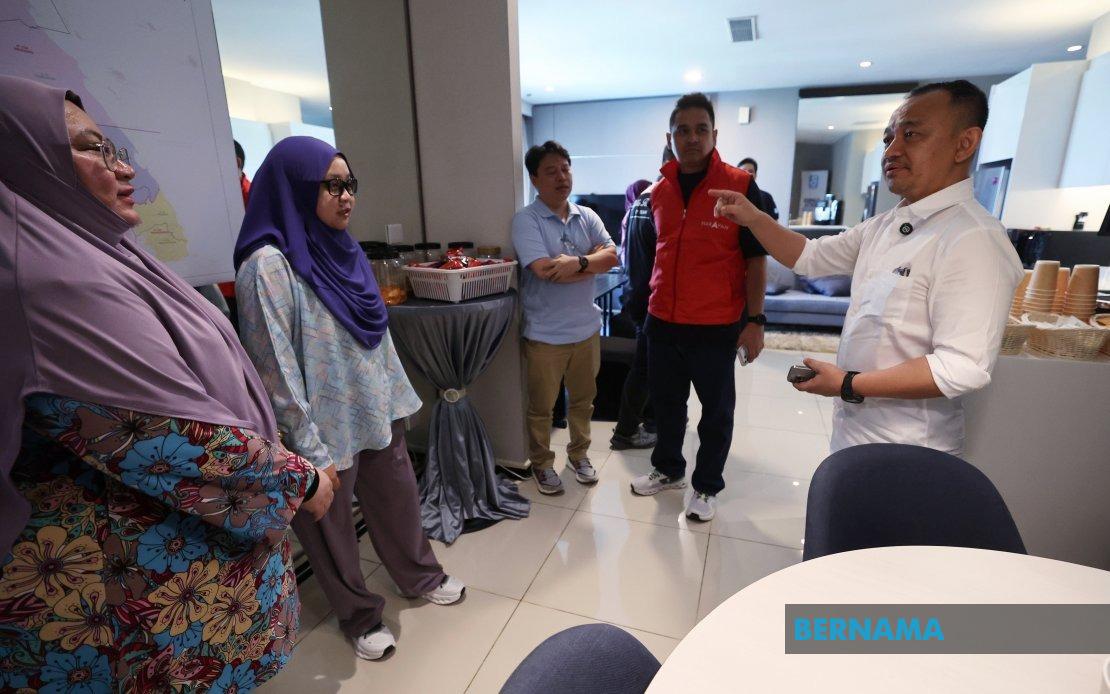
Dr Maszlee Malik, the Pakatan Harapan candidate contesting the Puteri Wangsa seat in the 16th Johor state election, has outlined an ambitious digital strategy to revolutionise how local elected representatives connect with constituents. At the core of his campaign platform is a purpose-built mobile application designed to enable residents to lodge complaints and report municipal issues without the friction of traditional bureaucratic channels. The former education minister believes this technology-driven model represents a necessary evolution for contemporary constituent relations, particularly in constituencies marked by sprawling geography and demographic diversity.
Puteri Wangsa exemplifies the challenges facing modern Malaysian state representatives. The constituency encompasses affluent residential enclaves such as Austin Heights alongside rural Felda settlements like Ulu Tebrau, creating a mosaic of socio-economic conditions and infrastructure needs. Maszlee has recognised that a one-size-fits-all approach to constituent engagement fails to serve such disparate populations effectively. Rather than relying solely on traditional walkabouts and community meetings, which inherently exclude those unable to attend physical gatherings, the proposed app would create an always-available channel through which residents can submit grievances and requests regardless of time or location constraints.
Beyond simple complaint management, Maszlee envisions the application serving a deeper social function: identifying and connecting vulnerable populations with government support schemes. Single mothers, persons with disabilities, and other marginalised groups often remain unaware of assistance programmes they qualify for, either because information dissemination is inadequate or because complex bureaucratic procedures create barriers to access. A digital platform could systematically surface these individuals and streamline their pathways to assistance, transforming constituent services from a reactive complaint-handling mechanism into a proactive instrument for social welfare delivery.
The candidate has drawn inspiration from international models of digital civic engagement, specifically citing New York City Mayor Zohran Mamdani's community interaction framework. Mamdani has demonstrated how elected officials can leverage dedicated applications alongside social media platforms to establish direct feedback loops with constituents, bypassing traditional intermediaries and media filters. For Malaysian politics, where digital infrastructure has matured significantly in recent years, adopting similar approaches could establish new standards for governmental responsiveness and accountability. Maszlee's interest in international best practices suggests an ambition to import proven models of democratic engagement rather than relying on domestic precedent alone.
Complementing the mobile application, Maszlee has committed to maintaining robust engagement across multiple stakeholder groups, including non-governmental organisations, residents' associations, and government agencies. This multi-channel strategy acknowledges that while technology provides valuable tools for constituent contact, it cannot entirely replace the relationship-building and trust-establishment functions of in-person engagement. Town hall meetings, though labour-intensive, remain essential for addressing complex local issues that benefit from face-to-face dialogue and community consensus-building. The candidate's vision thus integrates digital innovation with traditional constituent relations methods rather than viewing them as mutually exclusive approaches.
Recognising that Malaysian voters span multiple generational and geographical cohorts with varying media consumption patterns, Maszlee's campaign has adopted a sophisticated segmentation strategy for digital outreach. Young voters, particularly those in Generation Z demographic brackets, exhibit fundamentally different social media usage patterns compared to older constituents. Simultaneously, the significant population of Malaysians working across the Johor-Singapore border face practical constraints on campaign accessibility—evening walkabouts in Johor Bahru may prove logistically impossible for those commuting from Singapore employment. These working professionals, especially within communities that historically favour opposition parties, represent a high-value target group that digital channels can reach more cost-effectively than conventional campaign infrastructure.
The campaign's content strategy further reflects this demographic-conscious approach. Rather than broadcasting identical messages across platforms, Maszlee's team tailors messaging for distinct communities, taking into account socio-economic positioning, ethnic composition, and demographic characteristics. A campaign message addressing concerns in urban Austin Heights would differ substantially from outreach to rural Felda residents or working professionals in Singapore. This nuanced approach responds to a fundamental insight: different voter constituencies genuinely do prioritise different issues, and sophisticated political communication acknowledges these variations rather than imposing uniformity.
However, Maszlee's campaign strategists remain aware of digital campaigning's inherent limitations and distortions. Algorithm-driven social media platforms can inadvertently create echo chambers, narrowing message reach to those already predisposed toward particular political viewpoints. Rather than accepting these algorithmic constraints passively, the campaign has designed interventions to penetrate algorithmic filters and reach beyond natural constituency boundaries. This proactive approach to overcoming digital barriers reflects understanding that technology, while powerful, remains susceptible to manipulation and requires sophisticated deployment to achieve genuinely inclusive political communication.
The Puteri Wangsa contest itself features a crowded ballot comprising five candidates, preventing any single contender from assuming victory. Beyond Maszlee, the race includes Rashifa Aljunied representing MUDA, Teow Chia Ling standing for Barisan Nasional, Nicholas Paul Vincent from Parti Bersama Malaysia, and independent candidate Wang Wee Siong. This five-way division suggests that voter fragmentation could determine the final outcome, with narrow margins potentially deciding the constituency. In such competitive environments, Maszlee's technology-driven approach to voter engagement and constituent service delivery offers potential advantages in mobilising specific demographic cohorts who might otherwise lack motivation to vote.
The timing of Maszlee's campaign unfolds against Johor's broader political trajectory. The state has emerged as increasingly competitive between Pakatan Harapan and Barisan Nasional in recent electoral cycles, suggesting that traditional political alignments are weakening. New candidates and novel approaches to constituent engagement could prove decisive in territories where voter loyalties remain fluid. Maszlee's emphasis on practical, technology-enabled constituent services represents an attempt to position himself as a representative responsive to contemporary Malaysian concerns—issues of digital connectivity, government transparency, and efficient service delivery.
Early voting for the Johor state election is scheduled for July 7, with general polling occurring on July 11. These dates create compressed campaign windows in which candidates must establish brand recognition and persuade fence-sitting voters. Maszlee's digital-first strategy aims to compress these campaign timelines by operating continuously across social media and digital platforms, rather than relying on episodic contact through walkabouts or rallies. This approach represents a fundamental shift in how Malaysian political campaigns organise themselves, potentially establishing precedents for future state and federal elections.
The success of Maszlee's constituent service innovations will ultimately depend on implementation quality and sustained commitment beyond the election campaign. Many politicians announce digital initiatives that subsequently languish from lack of technical support or political will. For the proposed mobile application to genuinely improve constituent relations in Puteri Wangsa, it would require ongoing investment in technical infrastructure, responsive staffing, and genuine willingness to address grievances raised through the platform. The credibility of his broader campaign rests substantially on whether voters believe such commitments represent authentic priorities or merely election-season rhetoric.

