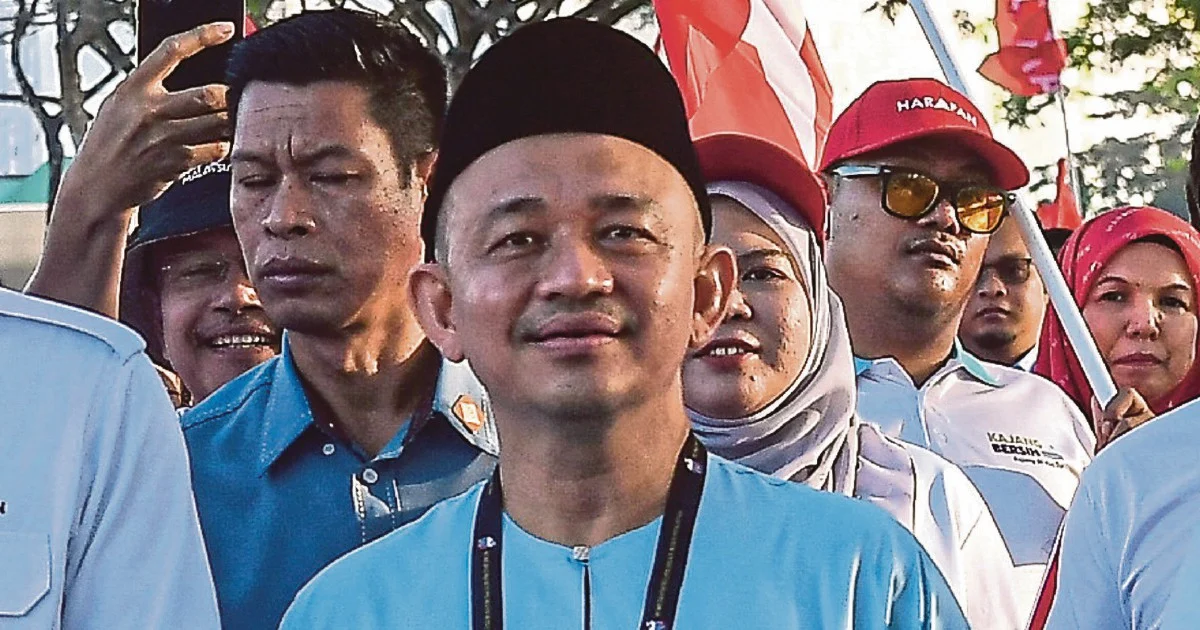
Dr Maszlee Malik, the former federal education minister, has positioned a Pakatan Harapan victory in the Johor state election as a watershed moment for the southern state's future trajectory. Speaking in Johor Baru, he contended that securing seats including Puteri Wangsa would initiate a substantive shift in how the state allocates resources and shapes its developmental agenda. His remarks underscore the coalition's framing of the election as not merely a routine political contest but as a pivotal choice between competing visions of Johor's destiny.
The invocation of a "new chapter" reflects broader coalition messaging that portrays opposition governance as fundamentally distinct from incumbent stewardship. This rhetorical positioning is particularly significant in Johor, where the Barisan Nasional has maintained dominance in recent decades and where shifting allegiances could signal wider realignments across Malaysia's political landscape. For Pakatan strategists, converting traditional strongholds into competitive battlegrounds represents both opportunity and risk, requiring focused campaigns in constituencies where demographic or economic grievances might favour change.
Puteri Wangsa, as a specifically named target, holds particular symbolic weight in the coalition's calculations. Naming individual seats during campaign rhetoric typically indicates both strategic priority and presumed vulnerability of incumbent representatives. The constituency's inclusion in Maszlee's remarks suggests Pakatan has identified it as achievable ground, possibly on the basis of voter sentiment analysis, demographic shifts, or localised dissatisfaction with current representation. This targeted approach contrasts with broader-brush appeals and implies a granular understanding of Johor's electoral map.
Maszlee's personal positioning as a former education minister carries credibility in policy discussions but also carries the burden of his ministry's tenure, which saw various controversies and policy shifts. His invocation of development-centred arguments appeals to voters concerned with infrastructure, economic opportunity, and institutional competence rather than identity-based or historical grievances. This reflects a tactical choice to emphasise bread-and-butter governance issues, which often resonate more durably than partisan rhetoric in local contests.
For Malaysian observers, Johor's election outcome holds implications extending beyond the state itself. As the country's second-most populous state and a significant economic hub, shifts in Johor's political colour would reshape the balance of forces within parliament and potentially open pathways to different coalition configurations at the federal level. The state has historically served as a bellwether for broader national sentiment, making even modest gains or losses in Johor carry disproportionate symbolic weight.
Pakatan's challenge in Johor operates against entrenched institutional advantages held by incumbents. Barisan Nasional's long tenure has generated deeply embedded administrative networks, resource distribution patterns, and voter-delivery mechanisms that opposition parties typically require sustained effort to overcome. Maszlee's emphasis on developmental renewal implicitly acknowledges that Pakatan must offer compelling reasons for voters to disrupt established political relationships.
The coalition's messaging around a "new chapter" also contains implicit criticism of existing development patterns. By suggesting that current governance has reached its limits or taken the state in undesirable directions, Pakatan positioning frames electoral choice as an opportunity for course correction. This requires articulating specific grievances about roads, schools, healthcare, or economic policies while simultaneously projecting confidence in alternative stewardship.
Johor's urban and rural constituencies present distinct electoral dynamics that coalition strategists must navigate simultaneously. Urban areas in Johor Baru, Iskandar Puteri, and other developed zones may respond to modernisation narratives and competence-based arguments, while rural constituencies require connection to land issues, agricultural policies, and community investment. A unified campaign message about development thus demands careful calibration to address these diverse concerns.
Maszlee's invocation of transformative change also reflects generational political currents within Pakatan itself. Younger coalition figures increasingly emphasise policy substance and institutional reform over the historical narratives that dominated earlier political disputes. This represents a meaningful shift in how opposition parties position themselves, moving incrementally away from predominantly anti-establishment framing toward affirmative governance arguments.
The timing of such statements within campaign cycles carries strategic significance. Comments made during active campaign periods serve multiple simultaneous functions: motivating party activists, appealing to swing voters, framing media narratives, and signalling factional emphases within coalition leadership. Maszlee's emphasis on development suggests that this faction within Pakatan prioritises technocratic and policy competence arguments over other available rhetorical strategies.
For Johor voters, the election presents a genuine choice between continuity and change in state governance. Whether the electorate finds Pakatan's development narrative sufficiently compelling to warrant breaking with Barisan Nasional will depend on concrete assessments of which coalition they believe better positioned to deliver on promised improvements. Local grievances, economic anxieties, and individual candidate credibility will likely outweigh national party-level rhetoric in determining constituency-level outcomes.
The election also tests whether two decades of Pakatan's existence as an organised coalition has fundamentally altered Malaysian voters' baseline willingness to consider non-Barisan governance at state level. Johor's result will provide empirical evidence of whether opposition consolidation has translated into genuine electoral competitiveness or whether structural advantages for incumbents remain overwhelming.

